![1,4-Diazabicyclo[2.2.2]octane Dihydrobromide (CAS 54581-69-0) - TCI D5250 - AMI Scientific](http://amiscientific.com/cdn/shop/files/TCI2510D5250.jpg?v=1768818344&width=1946)
![1,4-Diazabicyclo[2.2.2]octane Dihydrobromide (CAS 54581-69-0) - TCI D5250 - AMI Scientific](http://amiscientific.com/cdn/shop/files/TCI2510D5250.jpg?v=1768818344&width=1445)
1,4-Diazabicyclo[2.2.2]octane Dihydrobromide is an organic compound widely used in material research for perovskite solar cell applications. This compound plays a crucial role in the synthesis of semiconductor materials, particularly in the development of advanced photovoltaic technologies. Its unique cyclic structure and chemical stability make it a valuable component in laboratory settings where precision and reliability are essential. The compound is commonly employed in the fabrication of active layers in perovskite solar cells, contributing to the overall efficiency and performance of these devices.
The compound's reactivity and ability to form bonds with various substances make it a preferred choice for researchers working on renewable energy technologies. Its specific chemical characteristics, such as its interaction with bromide ions and its reactivity under different environmental conditions, allow for precise chemical reactions in laboratory processes. These properties are essential for achieving high-quality results in material synthesis. Additionally, its thermal stability ensures that it remains effective under a range of laboratory conditions, making it a reliable material for scientific applications.
In Indonesian laboratories, this compound is frequently used in research focused on perovskite solar cells. Its application is common in academic and industrial settings where the development of next-generation solar technologies is a priority. The compound's role in enabling precise and stable chemical reactions makes it an essential tool for scientists and researchers working on energy-related projects. Its reliability and performance have made it a standard in many research laboratories across Indonesia.
- Perovskite Solar Cell Fabrication: This compound is essential for creating active layers in perovskite solar cells due to its ability to form stable chemical bonds with other materials.
- Semiconductor Material Synthesis: Its unique structure and chemical stability make it ideal for synthesizing high-performance semiconductor materials used in photovoltaic applications.
- Chemical Reaction Precursor: The compound serves as a key precursor in various chemical reactions, particularly those requiring precise control over molecular interactions.
- Energy Research Development: It is widely used in research projects aimed at improving the efficiency and stability of renewable energy technologies.
- Material Characterization Studies: Its predictable chemical behavior allows for accurate material characterization in laboratory testing environments.
| Brand | TCI |
|---|---|
| CAS number | 54581-69-0 |
| Molecular formula | — |
| Purity | — |
| Category | Materials Science > Electronic Materials > Perovskite Solar Cell (PSC) Materials |
| Pack sizes | Available in various quantities as per standard laboratory supply options |
| Physical form | Solid powder |
| Storage | Store in a cool, dry place away from direct sunlight and moisture |
This compound should be stored in a cool, dry environment to maintain its chemical stability and prevent degradation. It is recommended to use airtight containers to protect it from moisture and air exposure. Proper ventilation is essential when handling the compound to minimize inhalation risks. Laboratory personnel should wear appropriate personal protective equipment, including gloves and safety goggles, when working with this material. The compound should be kept away from incompatible substances to avoid any potential chemical reactions. Regular monitoring of storage conditions ensures the material remains safe and effective for use in research applications.
—
Produk Terkait
-
Bis(1,3-dibutylbarbituricAcid)TrimethineOxonol TCI B5593
Regular price From Rp 2.174.550,00Regular price -
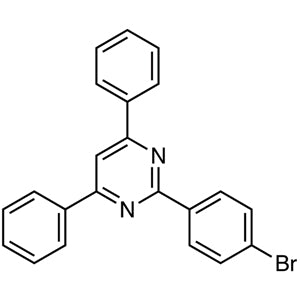
2-(4-Bromophenyl)-4,6-diphenylpyrimidine TCI B5797
Regular price From Rp 1.565.550,00Regular price -
4-([1,1'-Biphenyl]-4-yl)-6-chloro-2-phenylpyrimidine TCI B5802
Regular price From Rp 3.312.750,00Regular price -
2-(4-Bromophenyl)pyrimidine TCI B5806
Regular price From Rp 1.008.000,00Regular price -
2-(3-Bromophenyl)-4,6-diphenylpyrimidine TCI B5814
Regular price From Rp 2.439.150,00Regular price -
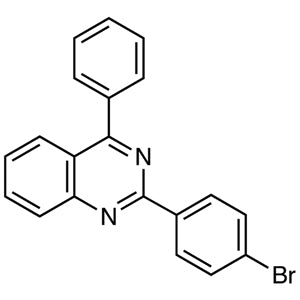
2-(4-Bromophenyl)-4-phenylquinazoline TCI B5829
Regular price From Rp 1.458.450,00Regular price -
SB239063 TCI B5898
Regular price From Rp 5.034.750,00Regular price -
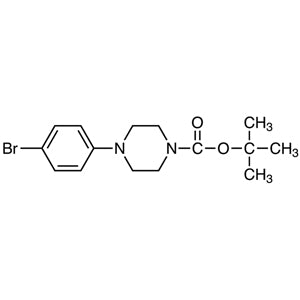
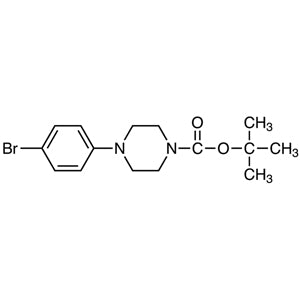
tert-Butyl4-(4-Bromophenyl)piperazine-1-carboxylate TCI B5941
Regular price From Rp 903.000,00Regular price

![4-([1,1'-Biphenyl]-4-yl)-6-chloro-2-phenylpyrimidine (CAS 1689538-58-6) - TCI B5802 - AMI Scientific](http://amiscientific.com/cdn/shop/files/TCI2510B5802.jpg?v=1768815900&width=533)