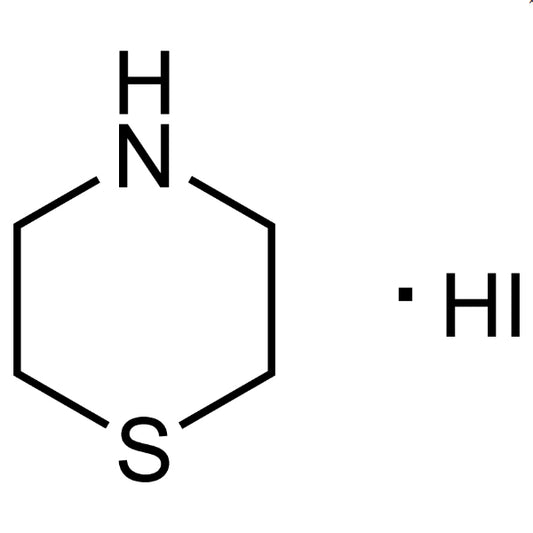
1,4-Diazabicyclo[2.2.2]octane Dihydriodide is a chemical compound widely used in materials science research, particularly in the development of perovskite solar cells. This compound plays a crucial role in the fabrication of active layers that enable the conversion of light into electrical energy. In laboratory settings, it is essential for the synthesis and characterization of materials with unique optical and electronic properties. Its chemical structure and reactivity make it a valuable tool for advanced material research.
The compound is preferred due to its stable cyclic structure and appropriate reactivity for specific chemical reactions. Its ability to participate in high-precision synthesis processes makes it ideal for creating novel materials with tailored properties. The compound's reactivity and compatibility with various molecular interactions further enhance its utility in material innovation. These characteristics make it a reliable choice for researchers working on cutting-edge technologies.
In Indonesian laboratories, this compound is commonly used in the development of perovskite solar cell technology. Local researchers rely on it to advance renewable energy solutions that are both environmentally friendly and efficient. Its application contributes to the broader scientific effort to increase the availability of clean energy in Indonesia. It is a key component in the pursuit of sustainable energy innovation.
TCI brochures (PDF)
- Organic-Inorganic Perovskite Precursors 2026-09-01 · p. 6
- Solar Cell Materials 2026-04-21 · p. 5
Related TCI products
- TCI D5251 49563-87-3 1,4-Diazabicyclo[2.2.2]octane Dihydrochloride
- TCI D5250 54581-69-0 1,4-Diazabicyclo[2.2.2]octane Dihydrobromide
- TCI P2492 58464-47-4 Piperazine Dihydriodide
- TCI H1759 1009321-13-4 1-Hexyl-1,4-diazabicyclo[2.2.2]octan-1-ium Iodide
- TCI A0008 124-42-5 Acetamidine Hydrochloride
- TCI T4375 118725-79-4 Thiomorpholine Hydroiodide
- Perovskite Solar Cell Fabrication: This compound is essential for creating the active layers in perovskite solar cells, enabling efficient light-to-electricity conversion.
- Material Synthesis and Characterization: Its stable structure and reactivity make it suitable for synthesizing and analyzing materials with unique optical and electronic properties.
- Electronic Material Research: It is used in studies focused on developing new electronic materials with improved performance and stability.
- Renewable Energy Innovation: Researchers use it to develop sustainable energy technologies that align with environmental goals and energy efficiency standards.
- Advanced Chemical Reactions: Its reactivity allows it to be a key player in complex chemical processes that require precise control and high yield.
| Brand | TCI |
|---|---|
| CAS number | 33322-06-4 |
| Molecular formula | — |
| Purity | — |
| Category | Materials Science > Electronic Materials > Perovskite Solar Cell (PSC) Materials |
| Pack sizes | As per supplier specifications |
| Physical form | Solid (as per standard product description) |
| Storage | Store in a cool, dry place away from moisture and direct sunlight |
This compound should be stored in a cool, dry environment, away from moisture and direct sunlight. It is recommended to use airtight containers to prevent exposure to air and humidity. Due to its reactivity, it should be handled with appropriate personal protective equipment, including gloves and safety goggles. Proper ventilation is essential when working with this material to minimize inhalation risks. Laboratory personnel should follow standard chemical safety protocols to ensure safe handling and storage. Regular inspections of storage conditions are advised to maintain the integrity and stability of the compound.
—
Produk Terkait
-
1,4-Diazabicyclo[2.2.2]octaneDihydrochloride TCI D5251
Regular price From Rp 1.961.400,00Regular priceRp 1.387.050,00Sale price From Rp 1.961.400,00 -
1,4-Diazabicyclo[2.2.2]octaneDihydrobromide TCI D5250
Regular price From Rp 1.008.000,00Regular priceRp 720.300,00Sale price From Rp 1.008.000,00 -
PiperazineDihydriodide TCI P2492
Regular price From Rp 1.008.000,00Regular priceRp 720.300,00Sale price From Rp 1.008.000,00 -
1-Hexyl-1,4-diazabicyclo[2.2.2]octan-1-iumIodide TCI H1759
Regular price Rp 2.147.250,00Regular priceRp 1.517.250,00Sale price Rp 2.147.250,00 -
AcetamidineHydrochloride TCI A0008
Regular price From Rp 610.050,00Regular priceRp 442.050,00Sale price From Rp 610.050,00 -
ThiomorpholineHydroiodide TCI T4375
Regular price From Rp 1.988.700,00Regular priceRp 1.405.950,00Sale price From Rp 1.988.700,00 -
TetrabutylammoniumTetrafluoroborate TCI T2648
Regular price Rp 2.809.800,00Regular priceRp 1.980.300,00Sale price Rp 2.809.800,00 -
Bis(sulfurDioxide)-1,4-diazabicyclo[2.2.2]octaneAdduct TCI B3960
Regular price From Rp 1.326.150,00Regular priceRp 942.900,00Sale price From Rp 1.326.150,00