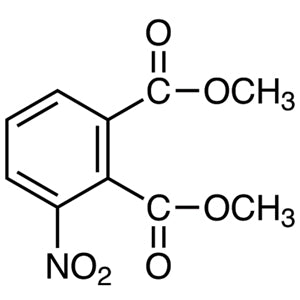
Dimethyl 3-nitrophthalate is a chemical compound widely used as a building block in various laboratory applications, particularly in the synthesis of complex organic molecules. It serves as a key intermediate in chemical reactions, enabling the formation of more intricate molecular structures. Its versatility makes it an essential component in the toolkit of chemists working on both academic and industrial research projects. This compound is commonly found in laboratory settings where precision and reliability are critical, supporting a wide range of chemical transformations.
One of the main reasons for its popularity is its chemical stability and reactivity. It exhibits consistent performance across different reaction conditions, making it a reliable choice for synthetic processes. Its ability to interact with a variety of reagents enhances its utility in diverse chemical applications. Additionally, its well-defined molecular structure allows for predictable behavior, which is crucial in laboratory environments that require high accuracy and reproducibility.
In Indonesian laboratories, dimethyl 3-nitrophthalate is frequently used in organic chemistry research and the synthesis of complex compounds. It is a preferred material for institutions and research centers that demand high-quality, consistent reagents. Its availability and reliability make it a go-to choice for both educational and industrial applications, supporting a wide array of chemical investigations and innovations.
- Organic synthesis is a primary application where dimethyl 3-nitrophthalate is used to build complex molecular structures due to its reactivity and stability.
- Pharmaceutical research benefits from this compound as it is often involved in the development of heterocyclic compounds and drug molecules.
- Industrial chemical production relies on this material for the creation of various chemical intermediates and specialty compounds.
- Academic research in chemistry utilizes it for teaching and experimental purposes, ensuring students gain hands-on experience with essential reagents.
- Analytical chemistry applications use it as a reference standard to ensure accuracy and consistency in chemical analysis procedures.
| Brand | TCI |
|---|---|
| CAS number | 13365-26-9 |
| Molecular formula | — |
| Purity | — |
| Category | Chemistry > Building Blocks > Non-Heterocyclic Building Blocks |
| Pack sizes | Available in various quantities as per supplier specifications |
| Physical form | Solid (as per standard product description) |
| Storage | Store in a cool, dry place away from direct sunlight and moisture |
Dimethyl 3-nitrophthalate should be stored in a cool, dry environment to maintain its chemical stability and prevent degradation. It is recommended to keep the compound in airtight containers to minimize exposure to moisture and air, which can affect its purity and reactivity. Proper labeling of storage containers is essential for safety and traceability. In laboratory settings, it should be handled with appropriate personal protective equipment, such as gloves and safety goggles, to ensure safe handling. Regular inspection of storage conditions and container integrity is advised to maintain the quality and usability of the compound.
—
Produk Terkait
-
4-NitrophthalicAnhydride TCI N0246
Regular price From Rp 4.797.450,00Regular price -
Dimethyl4-Nitrophthalate TCI D4424
Regular price Rp 717.150,00Regular price -
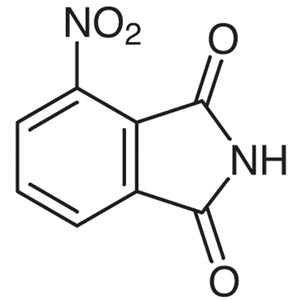
3-Nitrophthalimide TCI N0666
Regular price From Rp 2.439.150,00Regular price -
4-Nitrophthalimide TCI N0247
Regular price From Rp 717.150,00Regular price -
N-Hydroxy-4-nitrophthalimide TCI H1036
Regular price From Rp 1.458.450,00Regular price -
Monoethyl5-Nitroisophthalate TCI N0676
Regular price From Rp 1.193.850,00Regular price -
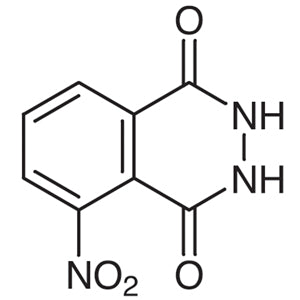
3-NitrophthalicHydrazide TCI N0622
Regular price From Rp 875.700,00Regular price -
3-NitrophthalicAnhydride TCI N0245
Regular price From Rp 1.829.100,00Regular price