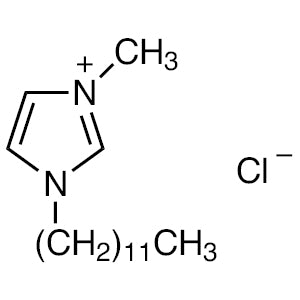
1-Dodecyl-3-methyl-1H-imidazol-3-ium Chloride is an ionic liquid widely utilized in chemical and synthetic applications within laboratory settings. As a member of the ionic liquid family, it offers unique properties that make it a versatile compound for various experimental processes. Its non-volatile nature and high boiling point make it an ideal candidate for use as a reaction medium or solvent in complex chemical reactions. This compound is particularly valuable for its ability to stabilize reactions and maintain consistent conditions during synthesis. Its role in laboratory research is crucial, especially in organic chemistry and specialty synthesis where stability and reactivity are key factors.
The compound's structure consists of a cationic imidazolium group and a chloride anion, which contributes to its exceptional reactivity and compatibility with a wide range of chemical species. These properties make it an excellent choice for applications requiring a stable and non-volatile environment. Its low viscosity and high thermal stability further enhance its utility in both research and industrial settings. The combination of these characteristics ensures that it remains a preferred material for scientists and researchers working in specialized chemical fields.
In Indonesian laboratories, this ionic liquid is commonly used in chemical research and organic synthesis experiments. It is a key component in studies involving catalytic reactions, polymer synthesis, and solvent-based processes. Many research institutions and universities in Indonesia rely on this compound for its reliability and performance in maintaining stable reaction conditions. Its widespread use underscores its importance in advancing chemical research and innovation in the region.
- Organic synthesis reactions benefit from this ionic liquid due to its non-volatile nature and ability to stabilize complex chemical processes.
- It is ideal for catalytic reactions where maintaining a stable and inert reaction medium is essential for successful outcomes.
- Polymer synthesis applications often use this compound as a solvent due to its low viscosity and high thermal stability.
- It serves as an effective reaction medium for electrochemical studies, providing a stable and non-reactive environment.
- In analytical chemistry, it is used as a solvent for sample preparation, offering excellent solvation properties for various compounds.
| Brand | TCI |
|---|---|
| CAS number | 114569-84-5 |
| Molecular formula | — |
| Purity | — |
| Category | Chemistry > Specialty Synthesis > Ionic Liquids |
| Pack sizes | Available in various quantities as per supplier specifications |
| Physical form | Liquid |
| Storage | Store in a cool, dry place away from direct sunlight |
This ionic liquid should be stored in a cool, dry environment to maintain its chemical integrity and prevent degradation. It is recommended to use sealed containers made of materials compatible with its chemical properties, such as glass or high-density polyethylene. Due to its non-volatile nature, it does not require special containment for vapor control, but it should be kept away from sources of heat or ignition. In laboratory settings, it is important to handle the compound with appropriate personal protective equipment to ensure safety during use and storage. Always follow standard laboratory safety protocols to minimize exposure and ensure a safe working environment.
—
Produk Terkait
-
1-Butyl-3-methylimidazoliumTrifluoroacetate TCI B5526
Regular price From Rp 1.829.100,00Regular price -
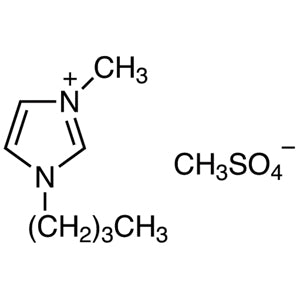
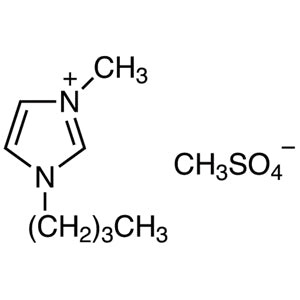
1-Butyl-3-methylimidazoliumMethylSulfate TCI B5527
Regular price From Rp 1.485.750,00Regular price -
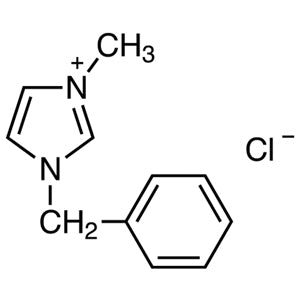
1-Benzyl-3-methylimidazoliumChloride TCI B5543
Regular price Rp 823.200,00Regular price -
1-Butyl-3-methylimidazoliumHydrogenSulfate TCI B5569
Regular price From Rp 823.200,00Regular price -
1-Butyl-3-methylimidazoliumAcetate TCI B5582
Regular price From Rp 875.700,00Regular price -
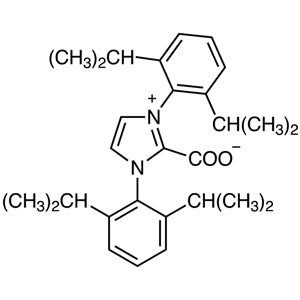
1,3-Bis(2,6-diisopropylphenyl)imidazolium-2-carboxylate TCI B5603
Regular price Rp 2.625.000,00Regular price -
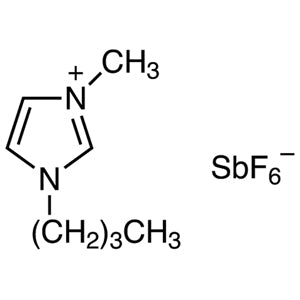
1-Butyl-3-methylimidazoliumHexafluoroantimonate TCI B5724
Regular price From Rp 1.749.300,00Regular price -
1-Benzyl-3-methylimidazoliumTetrafluoroborate TCI B5725
Regular price Rp 717.150,00Regular price