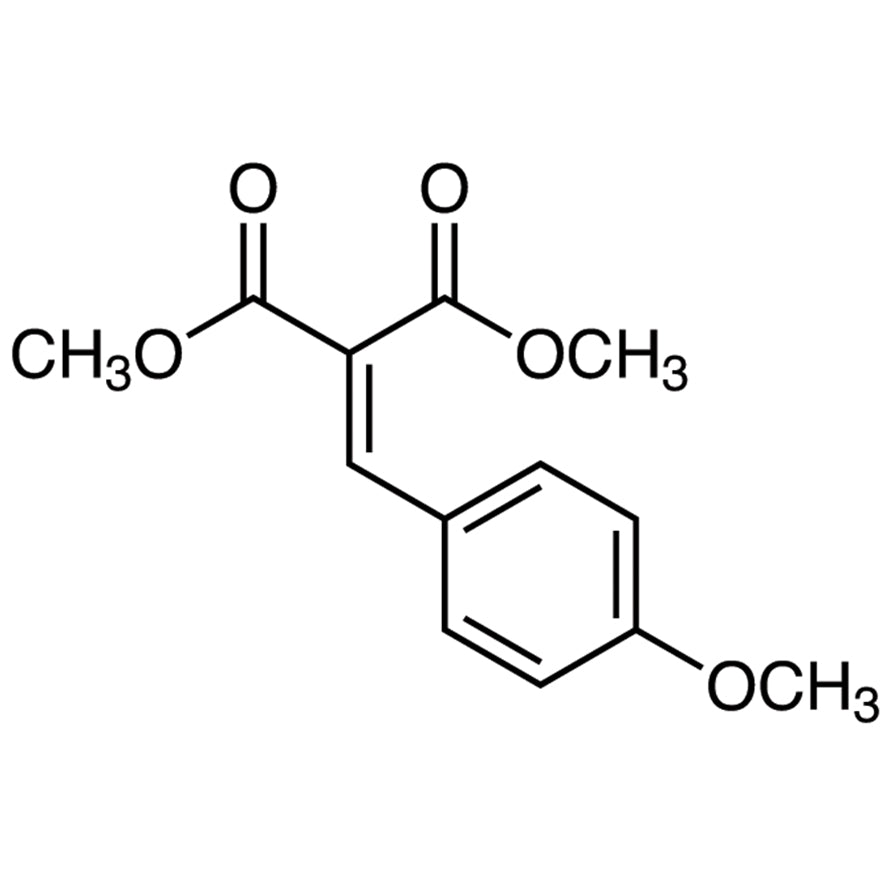
Dimethyl 2-(4-Methoxybenzylidene)malonate is a chemical compound widely used in laboratory settings for its versatility in chemical and materials science applications. This compound plays a crucial role in polymer synthesis and molecular structure modification, serving as a key reagent or additive in various experimental processes. Its ability to participate in complex reactions makes it an essential component for developing materials with specific physical and chemical properties. Due to its reactivity and molecular complexity, it is frequently utilized in research aimed at enhancing material performance, such as improving mechanical strength, solubility, or thermal stability.
The compound's high reactivity and molecular structure make it a preferred choice for researchers working on advanced material development. Its chemical and physical properties allow it to be used in a wide range of synthesis and modification processes, making it adaptable to different experimental needs. The compound's stability under controlled conditions ensures consistent results, which is vital for scientific accuracy. Additionally, its availability in various packaging options makes it accessible for both small-scale and large-scale laboratory applications.
In Indonesian laboratories, this compound is commonly used in composite material research, polymer development, and chemical synthesis projects. Its broad applicability across multiple scientific disciplines has made it a go-to material for researchers and scientists aiming to innovate and improve existing materials. Its role in creating materials with specific characteristics is essential for advancing scientific and industrial applications in Indonesia.
- Polymer synthesis and modification where high reactivity and molecular complexity are required for creating advanced materials.
- Composite material development to enhance mechanical and thermal properties through controlled chemical reactions.
- Chemical synthesis experiments focused on producing compounds with specific physical and chemical characteristics.
- Research in material science for improving solubility and stability in various chemical environments.
- Industrial applications in material development for manufacturing processes requiring precise chemical interactions.
| Brand | TCI |
|---|---|
| CAS number | 7443-25-6 |
| Molecular formula | — |
| Purity | — |
| Category | Materials Science > Polymer/Macromolecule Reagents > Polymer Additives |
| Pack sizes | Available in multiple packaging options to suit different experimental needs |
| Physical form | Solid or liquid, depending on the specific formulation |
| Storage | Store in a cool, dry place away from direct sunlight and moisture |
This compound should be stored in a cool, dry environment, away from direct sunlight and moisture to maintain its chemical integrity. It is recommended to use airtight containers to prevent exposure to air and humidity, which could affect its stability. Due to its reactivity, it should be handled with care, using appropriate personal protective equipment such as gloves and safety goggles. Proper ventilation is essential when working with this material to minimize inhalation risks. It is important to keep it away from incompatible substances to avoid any potential chemical reactions. Regular monitoring of storage conditions ensures the material remains effective for laboratory use.
—
Produk Terkait
-
DimethylMalonate TCI M0030
Regular price From Rp 505.050,00Regular price -
1,3,5-Tris(3,5-di-tert-butyl-4-hydroxybenzyl)-1,3,5-triazinane-2,4,6-trione TCI T3653
Regular price From Rp 1.485.750,00Regular price -
2,4,6-Tris(3',5'-di-tert-butyl-4'-hydroxybenzyl)mesitylene TCI T0916
Regular price From Rp 1.115.100,00Regular price -
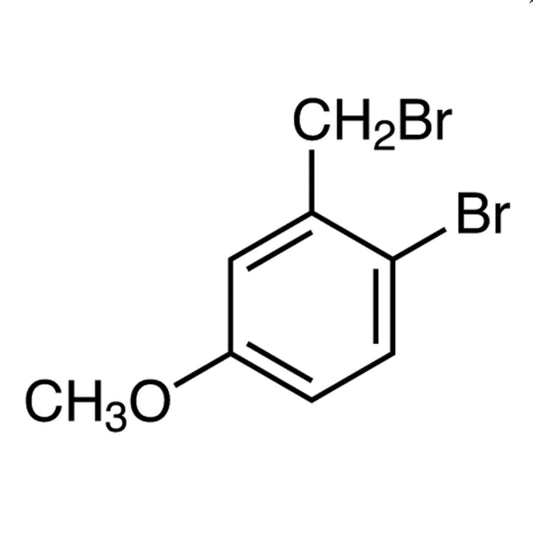
2-Bromo-5-methoxybenzylBromide TCI B4423
Regular price From Rp 1.298.850,00Regular price -
5-Bromo-2-methoxybenzylAlcohol TCI B3369
Regular price From Rp 1.035.300,00Regular price -
5-Bromo-2-hydroxybenzylAlcohol TCI B2164
Regular price From Rp 557.550,00Regular price -
3-Bromo-4-methoxybenzylCyanide TCI B1455
Regular price From Rp 1.246.350,00Regular price -
3,3'-Dichloro-N,N'-bis(4-methoxybenzylidene)benzidine TCI B0878
Regular price Rp 2.809.800,00Regular price