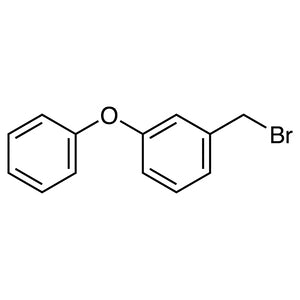
4,4'-Oxybis(phenoxybenzene) is a chemical compound widely used in laboratory settings for the synthesis of complex organic molecules. As a building block in chemical reactions, it serves as a foundational component in various synthetic pathways. Its molecular structure provides a stable platform for further functionalization, making it a versatile tool in organic chemistry. This compound is particularly valued for its ability to participate in substitution reactions, copolymerization processes, and molecular coupling, enabling the development of advanced chemical structures.
The compound's unique molecular architecture, featuring two phenyl groups connected by an oxygen bridge, contributes to its stability and reactivity. These characteristics make it a preferred choice for researchers aiming to design new compounds with specific functional properties. Its chemical inertness under controlled conditions ensures predictable behavior, which is essential for reproducible experimental outcomes. Additionally, its compatibility with a wide range of functional groups enhances its utility in diverse synthetic applications.
In Indonesian laboratories, 4,4'-Oxybis(phenoxybenzene) is commonly used in research focused on organic synthesis, particularly in academic and industrial settings. It plays a crucial role in the development of pharmaceutical compounds, advanced materials, and specialty chemicals. Its stability and reactivity make it a valuable resource for scientists working on innovation in chemistry and related fields.
- Organic synthesis applications benefit from its stable structure and reactivity, enabling the creation of complex molecular frameworks.
- It is ideal for copolymerization processes due to its ability to form stable linkages with other monomers.
- Molecular coupling reactions often utilize this compound for its compatibility with various functional groups.
- It supports the development of pharmaceutical compounds through its role in structural modification and functionalization.
- Research in advanced materials relies on its chemical stability and adaptability for creating new material properties.
| Brand | TCI |
|---|---|
| CAS number | 3379-41-7 |
| Molecular formula | — |
| Purity | — |
| Category | Chemistry > Building Blocks > Non-Heterocyclic Building Blocks |
| Pack sizes | Available in standard laboratory quantities |
| Physical form | Solid |
| Storage | Store in a cool, dry place away from direct sunlight |
This compound should be stored in a cool, dry environment to maintain its chemical stability. It is recommended to keep it in a sealed container to prevent exposure to moisture and air. Due to its chemical nature, it should be handled in a well-ventilated area to minimize inhalation risks. Avoid direct contact with skin or eyes, and use appropriate personal protective equipment when working with it. Proper labeling of storage containers is essential for safety and traceability. Regular inspection of storage conditions ensures that the compound remains in optimal condition for use in laboratory applications.
—
Produk Terkait
-
4,4'-Oxybis(butan-1-ol) TCI D6397
Regular price Rp 4.771.200,00Regular price -
1-(Bromomethyl)-3-phenoxybenzene TCI P2948
Regular price From Rp 3.155.250,00Regular price -
1-Methyl-4-phenoxybenzene TCI M3776
Regular price From Rp 980.700,00Regular price -
1-Methoxy-4-phenoxybenzene TCI M3535
Regular price From Rp 2.279.550,00Regular price -
1-Bromo-3-phenoxybenzene TCI B6471
Regular price From Rp 2.386.650,00Regular price -
1-Bromo-2-phenoxybenzene TCI B6454
Regular price Rp 3.976.350,00Regular price -
3-PhenoxybenzylAlcohol TCI P0979
Regular price From Rp 1.298.850,00Regular price -
1,3-Diphenoxybenzene TCI D2662
Regular price From Rp 1.485.750,00Regular price