![N,N'-Di([1,1'-biphenyl]-2-yl)ethanediamide (CAS 21022-17-3) - TCI D5834 - AMI Scientific](http://amiscientific.com/cdn/shop/files/TCI2510D5834.jpg?v=1767109276&width=1946)
![N,N'-Di([1,1'-biphenyl]-2-yl)ethanediamide (CAS 21022-17-3) - TCI D5834 - AMI Scientific](http://amiscientific.com/cdn/shop/files/TCI2510D5834.jpg?v=1767109276&width=1445)
TCI D5834 N,N'-Di([1,1'-biphenyl]-2-yl)ethanediamide is an oxalamide compound — a diamide built on an ethanediamide backbone with two biphenyl-2-yl groups attached to its nitrogen atoms. Oxalamide-class compounds such as this one are widely recognised in organic chemistry laboratories as supporting ligands for copper-based catalysis, particularly in coupling reactions that form carbon–nitrogen and carbon–oxygen bonds. Its role is to bind the metal centre through the two amide nitrogen atoms, forming an active complex that accelerates the catalytic cycle and keeps the catalyst in solution while the reaction proceeds.
The characteristics that make this compound a preferred choice are its rigid oxalamide framework, capable of bidentate chelation, combined with bulky biphenyl groups that provide directed steric hindrance around the metal centre. The combination of the electron-withdrawing electronic character of the amide and the spatial reach of those aryl groups helps suppress the aggregation of copper into inactive particles, improves catalytic turnover, and allows lower catalyst loadings to be used. The double amide backbone is also sufficiently stable towards the bases and reaction temperatures commonly employed in coupling chemistry.
In Indonesian laboratories, this building block is typically used in synthetic organic chemistry research groups at universities and research institutes, as well as in process development work where copper-catalysed coupling offers a practical alternative to more expensive metal systems. It is normally handled at the bench in small quantities as a ligand additive, weighed out alongside a copper source and base for reaction screening, method optimisation, and the preparation of intermediates for further study.
TCI brochures (PDF)
Related TCI products
- Copper-catalysed C–N coupling — serves as a bidentate supporting ligand that stabilises the copper centre and accelerates amination of aryl halides under practical laboratory conditions.
- Copper-catalysed C–O coupling — supports the formation of aryl ether linkages by keeping the active copper complex soluble and catalytically productive throughout the reaction period.
- Catalyst loading reduction studies — the improved turnover associated with this oxalamide framework allows researchers to systematically screen lower copper loadings without losing conversion.
- Ligand screening and method development — provides a well-defined, sterically demanding oxalamide reference ligand for comparison against other chelating additives in reaction optimisation campaigns.
- Synthesis of coupled intermediates — used as an additive when preparing aryl amine and aryl ether intermediates that require reliable, base-tolerant catalytic conditions at elevated reaction temperatures.
| Brand | TCI |
|---|---|
| CAS number | 21022-17-3 |
| Molecular formula | — |
| Purity | — |
| Category | Chemistry > Building Blocks > Non-Heterocyclic Building Blocks |
| Pack sizes | available in standard TCI catalogue pack sizes; please confirm the required size when ordering |
| Physical form | — |
| Storage | store in a tightly closed container in a cool, dry, well-ventilated place |
- Chemical name: N,N'-Di([1,1'-biphenyl]-2-yl)ethanediamide
- Product code: D5834
Store the material in its original tightly closed container in a cool, dry and well-ventilated area, away from moisture, direct sunlight and incompatible chemicals. Amber glass or the supplier's original packaging is suitable for keeping the compound protected from light and humidity. Handle in a fume hood using standard laboratory personal protective equipment — safety glasses, chemically resistant gloves and a laboratory coat — and avoid generating or inhaling dust while weighing. Reseal the container immediately after use, label any secondary containers clearly, and consult the manufacturer's safety data sheet before first use and for disposal guidance.
—
Produk Terkait
-
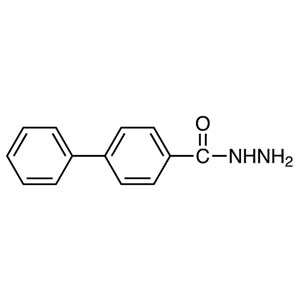
Biphenyl-4-carboxylicHydrazide TCI B4350
Regular price Rp 1.644.300,00Regular price -
Biphenyl-3-carboxaldehyde TCI B4186
Regular price From Rp 1.776.600,00Regular price -
Biphenyl-3-carboxylicAcid TCI B3850
Regular price From Rp 848.400,00Regular price -
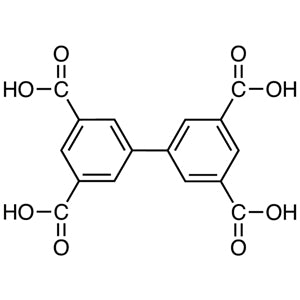
Biphenyl-3,3',5,5'-tetracarboxylicAcid TCI B3792
Regular price Rp 3.949.050,00Regular price -
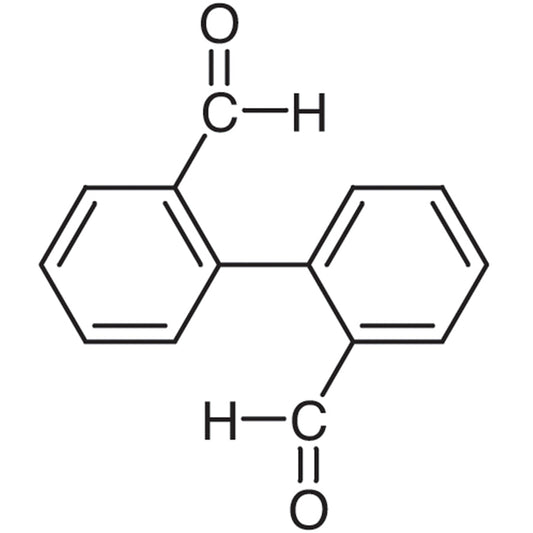
Biphenyl-2,2'-dicarboxaldehyde TCI B2056
Regular price Rp 4.028.850,00Regular price -
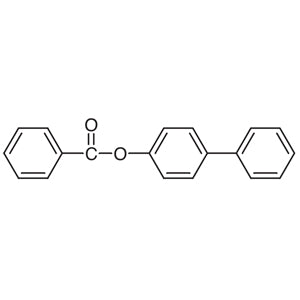
4-BiphenylBenzoate TCI B1866
Regular price From Rp 1.220.100,00Regular price -
Biphenyl-4-carboxaldehyde TCI B0242
Regular price From Rp 610.050,00Regular price -
Biphenyl-4-carboxylicAcid TCI P0961
Regular price From Rp 1.008.000,00Regular price