

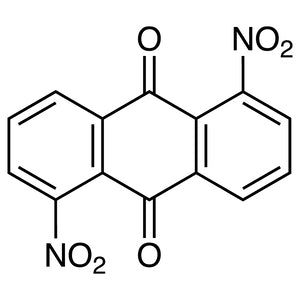
1,5-Dinitroanthracene-9,10-dione is a chemical compound widely used in organic reactions for the synthesis of complex molecules. As a building block in chemical research, it serves as a versatile intermediate that can be modified through various reagents to produce compounds with specific functionalities. Its aromatic structure and nitro groups make it a valuable tool in synthetic chemistry, enabling the creation of pharmaceuticals, industrial chemicals, and electronic materials. This compound is essential in laboratories where precision and control over reaction outcomes are critical.
The compound’s chemical properties include stability under controlled conditions and high reactivity in the presence of heat or moisture. Its aromatic framework provides structural stability, while the nitro groups contribute to its reactivity in substitution or oxidation reactions. These characteristics make it a preferred choice for chemists seeking to manipulate molecular structures with accuracy. The compound’s ability to participate in multiple reaction pathways enhances its utility in both academic and industrial research settings.
In Indonesian laboratories, 1,5-Dinitroanthracene-9,10-dione is commonly used in pure and applied chemical research. Educational institutions and research organizations rely on it to study the reactivity of aromatic compounds and to develop new chemical substances. Its role in advancing chemical knowledge and innovation makes it an important component in the chemical supply chain within the country.
Related TCI products
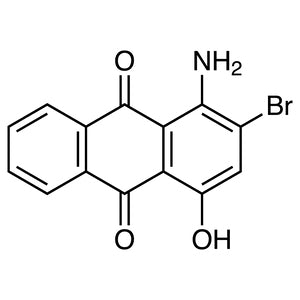
- TCI A1082 116-82-5 1-Amino-2-bromo-4-hydroxyanthracene-9,10-dione
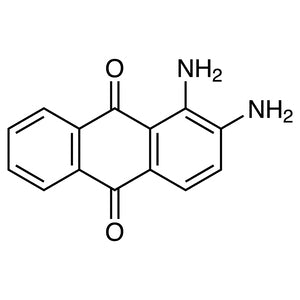
- TCI D6151 1758-68-5 1,2-Diaminoanthracene-9,10-dione
- TCI D2090 16954-74-8 2-(Dicyanomethylene)indan-1,3-dione
- TCI N0127 82-34-8 1-Nitroanthraquinone
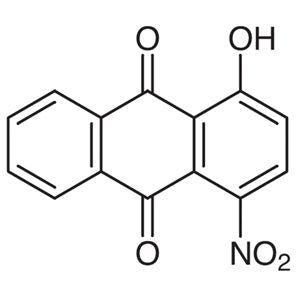
- TCI H0765 81-65-2 1-Hydroxy-4-nitroanthraquinone
- TCI T3799 15968-37-3 1,3,4,6-Tetrakis(butoxymethyl)tetrahydroimidazo[4,5-d]imidazole-2,5(1H,3H)-dione
- Organic synthesis of pharmaceuticals and industrial chemicals due to its reactivity and structural versatility.
- Development of electronic materials through controlled chemical modifications and functional group manipulations.
- Research on aromatic compound reactivity in both academic and industrial settings for advanced chemical studies.
- Production of specialized intermediates in chemical manufacturing processes requiring high precision and purity.
- Educational use in teaching organic chemistry principles and reaction mechanisms to students and researchers.
| Brand | TCI |
|---|---|
| CAS number | 82-35-9 |
| Molecular formula | — |
| Purity | — |
| Category | Chemistry > Building Blocks > Non-Heterocyclic Building Blocks |
| Pack sizes | Available in standard laboratory quantities as per supplier specifications |
| Physical form | Solid |
| Storage | Store in a cool, dry place away from direct sunlight and moisture |
This compound should be stored in a cool, dry place, away from direct sunlight and moisture to maintain its chemical stability. It is recommended to use airtight containers made of materials that are chemically inert to prevent contamination and degradation. Due to its reactivity, it should be handled with appropriate personal protective equipment, including gloves and safety goggles. Proper ventilation is essential when working with this material to minimize exposure. Storage should be in a secure location that is inaccessible to unauthorized personnel to ensure safety and compliance with laboratory protocols.
—
Produk Terkait
-
1-Amino-2-bromo-4-hydroxyanthracene-9,10-dione TCI A1082
Regular price Rp 795.900,00Regular price -
1,2-Diaminoanthracene-9,10-dione TCI D6151
Regular price From Rp 1.035.300,00Regular price -
2-(Dicyanomethylene)indan-1,3-dione TCI D2090
Regular price Rp 2.597.700,00Regular price -
1-Nitroanthraquinone TCI N0127
Regular price From Rp 2.094.750,00Regular price -
1-Hydroxy-4-nitroanthraquinone TCI H0765
Regular price From Rp 3.312.750,00Regular price -
1,3,4,6-Tetrakis(butoxymethyl)tetrahydroimidazo[4,5-d]imidazole-2,5(1H,3H)-dione TCI T3799
Regular price Rp 5.141.850,00Regular price -
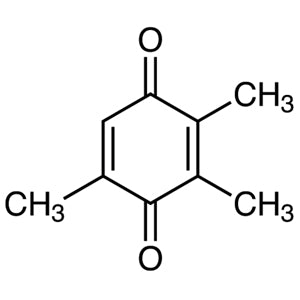
2,3,5-Trimethylcyclohexa-2,5-diene-1,4-dione TCI T3768
Regular price Rp 3.949.050,00Regular price -
1,3,4,6-Tetrakis(hydroxymethyl)tetrahydroimidazo[4,5-d]imidazole-2,5(1H,3H)-dione TCI T3297
Regular price From Rp 1.035.300,00Regular price


![15968-37-3 1,3,4,6-Tetrakis(butoxymethyl)tetrahydroimidazo[4,5-d]imidazole-2,5(1H,3H)-dione - AMI Scientific](http://amiscientific.com/cdn/shop/files/TCI2510T3799.jpg?v=1769058295&width=533)
![5395-50-6 1,3,4,6-Tetrakis(hydroxymethyl)tetrahydroimidazo[4,5-d]imidazole-2,5(1H,3H)-dione - AMI Scientific](http://amiscientific.com/cdn/shop/files/TCI2510T3297.jpg?v=1769181342&width=533)