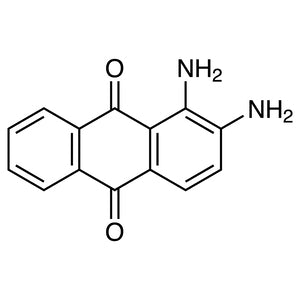
1,2-Diaminoanthracene-9,10-dione is a chemical compound widely used as a foundational material in the synthesis of complex molecules. Its unique molecular structure, featuring two amino groups attached to the anthracene ring, makes it a valuable tool for chemists seeking to build intricate organic structures. In the laboratory, this compound serves as a key building block for the development of heterocyclic compounds and aromatic derivatives, playing a critical role in various synthetic pathways. Its versatility allows it to be incorporated into a wide range of chemical reactions, making it an essential component in advanced organic chemistry research.
The compound is prized for its stable chemical properties and controlled reactivity, which make it suitable for use in a variety of experimental conditions. Its molecular structure provides a robust platform for further functionalization, enabling chemists to introduce additional substituents with precision. The compound’s ability to participate in substitution and aromatic reactions without undergoing unwanted side reactions enhances its reliability in laboratory settings. These characteristics ensure that it remains a preferred choice for researchers working on complex chemical syntheses and structural modifications.
In Indonesian laboratories, 1,2-Diaminoanthracene-9,10-dione is commonly used in organic chemistry research, particularly in the development of new compounds and the study of molecular structures. Its stability and reactivity make it a reliable material for use in both academic and industrial research environments. It is frequently employed in projects that require the synthesis of nitrogen-containing aromatic compounds, supporting the advancement of chemical knowledge and innovation in the field.
Related TCI products
- Organic synthesis of heterocyclic compounds due to its aromatic structure and amino groups, enabling the creation of complex nitrogen-containing molecules.
- Aromatic substitution reactions where the compound serves as a stable starting material for further functionalization and modification.
- Structural analysis in chemical research, as its molecular framework provides a basis for studying aromaticity and reactivity in synthetic pathways.
- Development of pharmaceutical and agrochemical compounds, where its nitrogen-based structure is useful in creating bioactive molecules.
- Teaching and research applications in Indonesian academic institutions, where it is used to demonstrate synthetic techniques and molecular construction principles.
| Brand | TCI |
|---|---|
| CAS number | 1758-68-5 |
| Molecular formula | — |
| Purity | — |
| Category | Chemistry > Building Blocks > Non-Heterocyclic Building Blocks |
| Pack sizes | Available in various quantities as per standard laboratory supply options |
| Physical form | Solid |
| Storage | Store in a cool, dry place away from direct sunlight and moisture |
This compound should be stored in a cool, dry environment to maintain its chemical stability and prevent degradation. It is recommended to keep it in a tightly sealed container to avoid exposure to moisture and air, which could affect its reactivity. Proper labeling of storage containers is essential to ensure safe handling and prevent accidental use. Due to its chemical nature, it should be handled with appropriate personal protective equipment, such as gloves and safety goggles, to minimize direct contact. In laboratory settings, it should be stored separately from incompatible materials to ensure safety and compliance with standard chemical storage protocols.
—
Produk Terkait
-
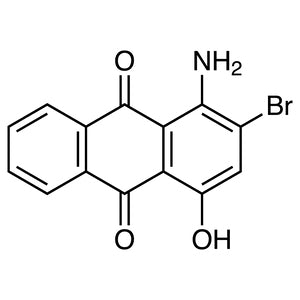
1-Amino-2-bromo-4-hydroxyanthracene-9,10-dione TCI A1082
Regular price Rp 795.900,00Regular price -
1,5-Dinitroanthracene-9,10-dione TCI D6017
Regular price From Rp 1.298.850,00Regular price -
2-(Dicyanomethylene)indan-1,3-dione TCI D2090
Regular price Rp 2.597.700,00Regular price -
1-Aminoanthraquinone TCI A0590
Regular price From Rp 717.150,00Regular price -
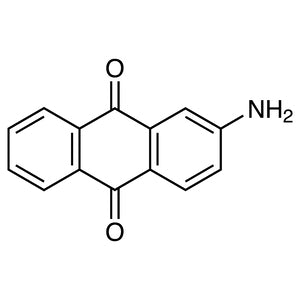
2-Aminoanthracene-9,10-dione TCI A3556
Regular price Rp 3.683.400,00Regular price -
1,4-Diaminoanthraquinone TCI D3539
Regular price Rp 980.700,00Regular price -
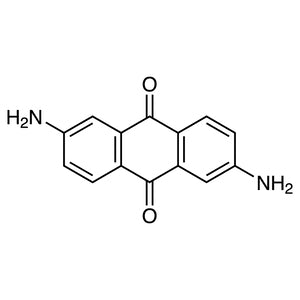
2,6-Diaminoanthraquinone TCI D3180
Regular price Rp 2.016.000,00Regular price -
1,4-Diaminoanthraquinone TCI D0075
Regular price From Rp 928.200,00Regular price