1-Aminoanthraquinone is a chemical compound widely used as a foundational building block in the synthesis of complex molecules. It is a key intermediate in organic chemistry, particularly in the development of pharmaceuticals and specialty materials. Its unique molecular structure, featuring an anthraquinone ring functionalized with an amino group, makes it highly versatile for chemical modifications. In laboratory settings, this compound plays a critical role in enabling the creation of new compounds through various synthetic pathways. Its presence in research labs across Indonesia underscores its importance in advancing scientific innovation and industrial applications.
The chemical properties of 1-Aminoanthraquinone make it a preferred choice for researchers. It exhibits stability under controlled conditions but remains reactive to environmental factors such as temperature and catalysts. This reactivity allows it to participate in a range of chemical reactions, including substitution, reduction, and oxidation, which are essential for synthesizing diverse organic compounds. Its ability to undergo structural modifications makes it a valuable tool for chemists working on drug discovery and material science. The compound’s unique molecular architecture further enhances its utility in complex synthetic processes.
In Indonesian laboratories, 1-Aminoanthraquinone is commonly used in organic chemistry research, especially in the pharmaceutical and materials science sectors. Local researchers frequently employ it for the development of new drugs, industrial raw materials, and scientific studies. Its role in advancing both academic and industrial research highlights its significance in the chemical sciences. The compound’s availability through suppliers like AMI Scientific ensures that it remains accessible for use in various research projects across the country.
Related TCI products
- Organic synthesis is a primary application where 1-Aminoanthraquinone is used to create complex molecules through chemical modifications.
- Pharmaceutical research benefits from this compound as it serves as a precursor in the development of new drug compounds.
- Material science applications rely on its reactivity to produce specialized materials with unique properties.
- Chemical modification studies utilize its structure to explore new synthetic pathways and reaction mechanisms.
- Industrial chemical production uses it as a building block for the manufacture of specialty chemicals and dyes.
| Brand | TCI |
|---|---|
| CAS number | 82-45-1 |
| Molecular formula | — |
| Purity | — |
| Category | Chemistry > Building Blocks > Non-Heterocyclic Building Blocks |
| Pack sizes | Available in various quantities as per supplier specifications |
| Physical form | Solid |
| Storage | Store in a cool, dry place away from direct sunlight and moisture |
1-Aminoanthraquinone should be stored in a cool, dry environment to maintain its chemical stability. It is recommended to keep it in airtight containers to prevent exposure to moisture and air, which may affect its reactivity. Due to its chemical nature, it should be handled in a well-ventilated area to minimize inhalation risks. Laboratory personnel should wear appropriate personal protective equipment, such as gloves and safety goggles, when working with this compound. It is important to avoid contact with skin and eyes, and to follow standard chemical safety protocols to ensure safe handling and storage. Regular monitoring of storage conditions is advised to maintain the integrity of the compound.
—
Produk Terkait
-
1-(Methylamino)anthraquinone TCI M0255
Regular price From Rp 1.723.050,00Regular priceRp 1.220.100,00Sale price From Rp 1.723.050,00 -
1-Nitroanthraquinone TCI N0127
Regular price From Rp 2.147.250,00Regular priceRp 1.517.250,00Sale price From Rp 2.147.250,00 -
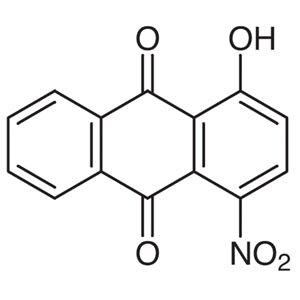
1-Hydroxy-4-nitroanthraquinone TCI H0765
Regular price From Rp 3.365.250,00Regular priceRp 2.368.800,00Sale price From Rp 3.365.250,00 -
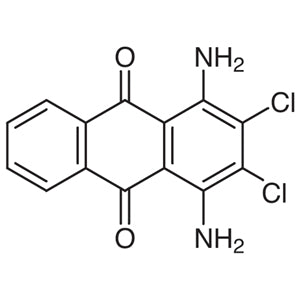
1,4-Diamino-2,3-dichloroanthraquinone TCI D2725
Regular price From Rp 637.350,00Regular priceRp 460.950,00Sale price From Rp 637.350,00 -
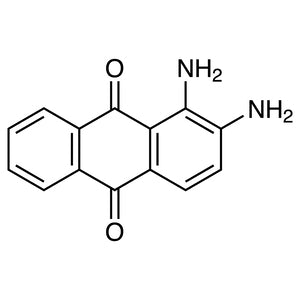
1,2-Diaminoanthracene-9,10-dione TCI D6151
Regular price From Rp 1.087.800,00Regular priceRp 775.950,00Sale price From Rp 1.087.800,00 -
2-Amino-3-hydroxyanthraquinone TCI A0315
Regular price From Rp 903.000,00Regular priceRp 631.050,00Sale price From Rp 903.000,00 -
1-Amino-2-methylanthraquinone TCI A1255
Regular price Rp 1.803.900,00Regular priceRp 1.261.050,00Sale price Rp 1.803.900,00 -
1-Amino-4-hydroxyanthraquinone TCI A0314
Regular price Rp 4.213.650,00Regular priceRp 2.962.050,00Sale price Rp 4.213.650,00