1-Amino-2-methylanthraquinone is a chemical compound widely used in organic synthesis reactions within laboratory settings. It serves as a building block for the creation of more complex molecules, particularly in the development of heterocyclic compounds and functionalized organic materials. Its unique molecular structure, featuring both an amino group and a quinone moiety, allows it to participate in a variety of chemical transformations, making it a versatile reagent in synthetic chemistry. This compound is essential for researchers aiming to explore new synthetic pathways and functional group modifications.
The compound’s chemical properties, including its stability and reactivity, make it a preferred choice for laboratory applications. Its ability to undergo substitution and reduction reactions efficiently enhances its utility in synthetic processes. The presence of multiple reactive sites in its structure enables interactions with various reagents and catalysts, which is crucial for achieving desired chemical outcomes. These characteristics ensure that it remains a valuable tool for chemists working on diverse research projects.
In Indonesian laboratories, 1-Amino-2-methylanthraquinone is commonly used in scientific research across disciplines such as organic chemistry, pharmaceutical development, and material science. Its availability through local distributors like AMI Scientific supports ongoing research initiatives, ensuring that researchers have access to high-quality reagents for their experiments. The compound’s favorable physical and chemical properties also simplify its handling and storage, making it a reliable choice for laboratory use.
- Organic synthesis is a primary application where this compound is used to build complex molecules due to its reactive functional groups.
- Pharmaceutical research benefits from its ability to participate in substitution and reduction reactions, aiding in drug molecule development.
- Material science applications leverage its structural versatility for creating functionalized organic materials with specific properties.
- Heterocyclic compound synthesis relies on its unique molecular structure to facilitate the formation of ring systems.
- Functional group modification experiments utilize its reactivity to introduce or alter specific chemical functionalities in target molecules.
| Brand | TCI |
|---|---|
| CAS number | 82-28-0 |
| Molecular formula | — |
| Purity | — |
| Category | Chemistry > Building Blocks > Non-Heterocyclic Building Blocks |
| Pack sizes | Available in various quantities as per supplier specifications |
| Physical form | Solid |
| Storage | Store in a cool, dry place away from light and incompatible materials |
This compound should be stored in a cool, dry environment, away from direct sunlight and sources of heat. It is recommended to use airtight containers to prevent moisture absorption and contamination. Due to its chemical reactivity, it should be kept separate from strong oxidizing agents and reducing agents to avoid unintended reactions. Proper labeling of containers is essential for safe handling and identification. Laboratory personnel should wear appropriate personal protective equipment, including gloves and safety goggles, when handling this compound. Regular inspection of storage conditions ensures the compound remains stable and suitable for use in research applications.
—
Product Categories
- Building BlocksNon-Heterocyclic Building BlocksCarbonyl Compounds [Non-Heterocyclic Building Blocks]
- Building BlocksNon-Heterocyclic Building BlocksNitrogen Compounds [Non-Heterocyclic Building Blocks]
- Stains and Dyes (for Research and Experimental Use)Disperse Dyes (for Research and Experimental Use)
- Stains and Dyes (for Research and Experimental Use)Dye Intermediates (for Research and Experimental Use)
Produk Terkait
-
1-(Methylamino)anthraquinone TCI M0255
Regular price From Rp 1.723.050,00Regular priceRp 1.220.100,00Sale price From Rp 1.723.050,00 -
2-Methylanthraquinone TCI M0156
Regular price From Rp 1.087.800,00Regular priceRp 775.950,00Sale price From Rp 1.087.800,00 -
2-Amino-3-hydroxyanthraquinone TCI A0315
Regular price From Rp 903.000,00Regular priceRp 631.050,00Sale price From Rp 903.000,00 -
1-Aminoanthraquinone TCI A0590
Regular price From Rp 769.650,00Regular priceRp 553.350,00Sale price From Rp 769.650,00 -
1-Amino-4-hydroxyanthraquinone TCI A0314
Regular price Rp 4.213.650,00Regular priceRp 2.962.050,00Sale price Rp 4.213.650,00 -
1-Nitroanthraquinone TCI N0127
Regular price From Rp 2.147.250,00Regular priceRp 1.517.250,00Sale price From Rp 2.147.250,00 -
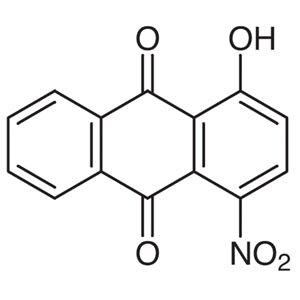
1-Hydroxy-4-nitroanthraquinone TCI H0765
Regular price From Rp 3.365.250,00Regular priceRp 2.368.800,00Sale price From Rp 3.365.250,00 -
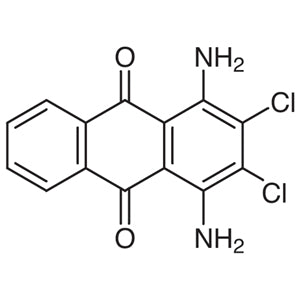
1,4-Diamino-2,3-dichloroanthraquinone TCI D2725
Regular price From Rp 637.350,00Regular priceRp 460.950,00Sale price From Rp 637.350,00