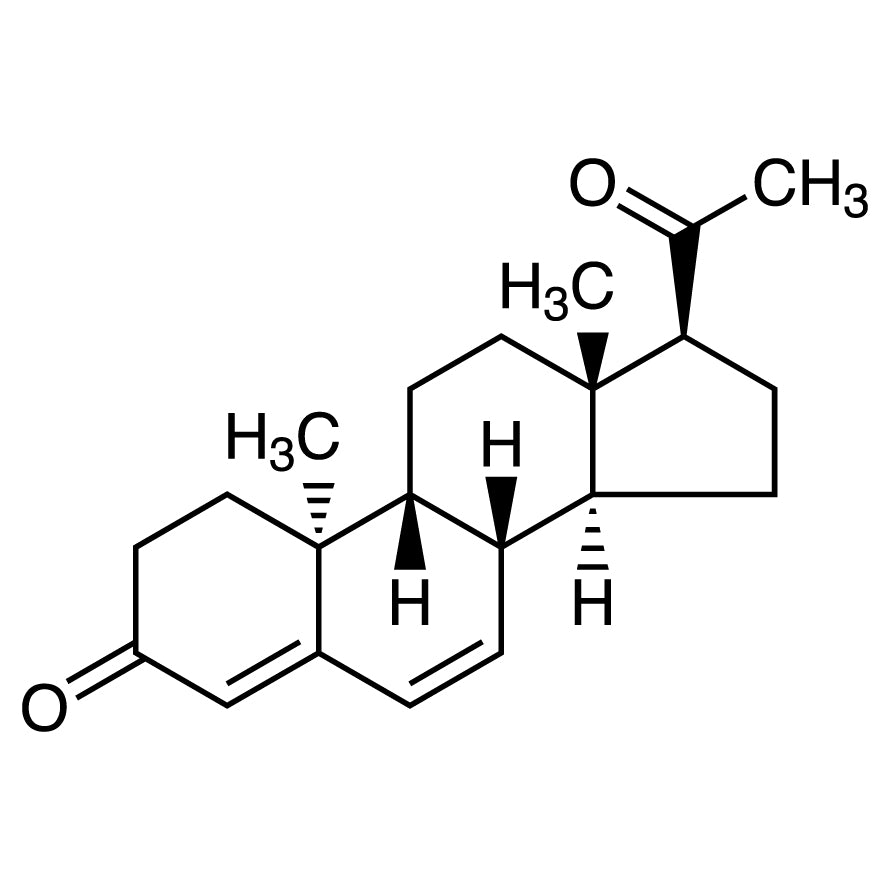
Dydrogesterone is a steroid compound widely used in biochemical and pharmacological research. As a synthetic derivative of progesterone, it plays a crucial role in laboratory settings where the study of hormonal mechanisms and their effects on biological systems is required. This compound is essential for investigating the behavior of steroid hormones in various physiological processes, including reproductive functions and endocrine regulation. Its presence in research protocols allows scientists to explore its potential therapeutic applications and biochemical interactions.
The stability and controlled reactivity of Dydrogesterone make it a preferred choice for researchers. It exhibits favorable solubility in organic solvents, which simplifies its use in analytical methods and synthetic procedures. Its chemical properties enable it to participate in a wide range of reactions under specific conditions, making it versatile for different experimental setups. Additionally, its resistance to environmental factors ensures consistent performance in long-term studies, enhancing the reliability of experimental outcomes.
In Indonesian laboratories, Dydrogesterone is commonly used in endocrinology and pharmacology research. It serves as a key reagent in the development of new pharmaceutical compounds and in the study of hormone-related diseases. Its application extends to both basic and applied research, supporting advancements in understanding steroid biology and its implications in human health and disease.
TCI brochures (PDF)
- Steroids 2026-07-28 · p. 4
- Endocrinology research utilizes Dydrogesterone to study hormone interactions and their impact on reproductive systems.
- Pharmacological studies benefit from its use in drug development and testing of steroid-based therapies.
- Biochemical experiments rely on its stability and reactivity for synthesizing complex steroid compounds.
- Toxicology research employs it to assess the effects of steroid compounds on cellular and tissue responses.
- Analytical chemistry applications take advantage of its solubility for chromatographic and spectroscopic analysis.
| Brand | TCI |
|---|---|
| CAS number | 152-62-5 |
| Molecular formula | — |
| Purity | — |
| Category | Life Science > Biochemicals and Reagents > Steroids |
| Pack sizes | Available in various quantities as per standard laboratory requirements |
| Physical form | Solid |
| Storage | Store in a cool, dry place away from light and moisture |
Dydrogesterone should be stored in a cool, dry environment, away from direct light and moisture to maintain its chemical integrity. It is recommended to use airtight containers to prevent exposure to humidity and contaminants. Due to its stability, it can be stored for extended periods without significant degradation. In laboratory settings, it is important to handle the compound with care, using appropriate personal protective equipment to ensure safety. Proper labeling of containers is essential for safe handling and to prevent cross-contamination. Regular inspection of storage conditions ensures that the material remains suitable for use in research applications.
—
Produk Terkait
-
Progesterone TCI P0478
Regular price From Rp 1.060.500,00Regular price -
MedroxyprogesteroneAcetate TCI M1964
Regular price Rp 1.060.500,00Regular price -
17alpha-HydroxyprogesteroneAcetate TCI H1527
Regular price From Rp 1.035.300,00Regular price -
17alpha-Hydroxyprogesterone TCI H1250
Regular price From Rp 1.856.400,00Regular price -
17alpha-HydroxyprogesteroneCaproate TCI H0994
Regular price Rp 2.411.850,00Regular price -
11alpha-Hydroxyprogesterone TCI H0498
Regular price From Rp 1.618.050,00Regular price -
16,17-Epoxyprogesterone TCI E0198
Regular price From Rp 903.000,00Regular price -
21-Hydroxyprogesterone TCI D6119
Regular price Rp 2.174.550,00Regular price