


TCI D6492 tert-Butyl 3-(Aminomethyl)-3-hydroxyazetidine-1-carboxylate is a building block that presents three useful functional groups at once within a remarkably compact azetidine framework: a primary amine on the aminomethyl group, a tertiary hydroxyl on the third carbon of the ring, and a ring nitrogen protected as a Boc carbamate. In the synthesis laboratory, this compound serves as a source of a rigid amino alcohol motif that is ready to be installed onto a target molecule, giving researchers a polar attachment point together with an element of structural rigidity without having to work through a long, multi-step sequence prone to loss of yield.
The property that makes this material sought after is its balance between polarity and rigidity. The tertiary hydroxyl group adds hydrophilic character that helps improve aqueous solubility, while its position on a quaternary ring carbon leaves it relatively sterically hindered and therefore less likely to interfere with reactions at the primary amine. The primary amine itself is a highly reactive nucleophile, ready to form amides, sulfonamides, ureas, and thioureas, or to create new bonds through reductive amination. The Boc group on the ring nitrogen ensures that these reactions proceed at the intended position, and it can be removed later when the ring nitrogen is needed for further elaboration.
In Indonesian laboratories, this building block is typically used in university and institutional research groups working on organic synthesis and medicinal chemistry, as well as in industrial research units developing new molecules. It is usually ordered in small quantities for exploratory routes and analogue series, then handled on a milligram to gram scale in standard synthetic glassware. Because it arrives with the ring nitrogen already protected, teams can begin building their target structures immediately rather than preparing the protected intermediate in house.
Related TCI products
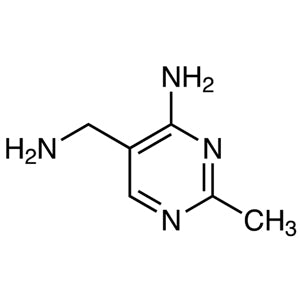
- TCI A2633 95-02-3 4-Amino-5-aminomethyl-2-methylpyrimidine
- TCI B4271 325775-44-8 tert-Butyl 3-(Aminomethyl)azetidine-1-carboxylate
- TCI D6517 1158758-85-0 tert-Butyl 3-(Aminomethyl)-3-methylazetidine-1-carboxylate
- TCI E1247 15400-53-0 Ethyl 2-Amino-4-hydroxypyrimidine-5-carboxylate
- TCI E1176 16732-57-3 Ethyl 5-Nitroindole-2-carboxylate
- TCI D6472 885270-84-8 tert-Butyl 2,6-Diazaspiro[3.4]octane-2-carboxylate
- Medicinal chemistry analogue synthesis: the compact azetidine core introduces three-dimensional character and a polar hydroxyl group that can improve aqueous solubility in candidate molecules under investigation.
- Amide and sulfonamide coupling: the reactive primary amine readily forms amide, sulfonamide, urea, and thiourea linkages, allowing rapid assembly of diverse compound sets from a single common intermediate.
- Reductive amination routes: the primary amine couples cleanly with aldehydes and ketones to generate secondary amines, providing a straightforward way to extend molecular frameworks from this starting point.
- Rigid amino alcohol scaffold installation: the fixed geometry of the four-membered ring constrains conformational freedom, which is valuable when a defined spatial arrangement of donor groups is required.
- Orthogonal protection strategies: the Boc-protected ring nitrogen allows chemistry to be performed selectively at the primary amine first, with the ring nitrogen deprotected and functionalised in a later, separate step.
| Brand | TCI (Tokyo Chemical Industry) |
|---|---|
| CAS number | 1008526-71-3 |
| Molecular formula | — |
| Purity | — |
| Category | Chemistry > Building Blocks > Non-Heterocyclic Building Blocks |
| Pack sizes | supplied in standard research-scale packs; please confirm the available size when ordering |
| Physical form | — |
| Storage | keep in the tightly closed original container under the conditions stated on the manufacturer's label and safety data sheet |
- Product code: TCI D6492
Store the material in its tightly closed original container, kept in a cool, dry, and well-ventilated place away from direct sunlight, moisture, and ignition sources, and follow the specific storage conditions printed on the manufacturer's label and safety data sheet. Boc-protected amino compounds are best protected from humidity and acidic vapours, so reseal the container promptly after each use. Handle the material in a fume hood while wearing a laboratory coat, chemical-resistant gloves, and safety goggles. Weigh out quantities using clean, dry spatulas and glassware to avoid contaminating the bulk stock. Consult the safety data sheet before first use and dispose of residues and contaminated consumables through your institution's chemical waste procedures.
—
Produk Terkait
-
4-Amino-5-aminomethyl-2-methylpyrimidine TCI A2633
Regular price Rp 4.743.900,00Regular price -
tert-Butyl3-(Aminomethyl)azetidine-1-carboxylate TCI B4271
Regular price From Rp 2.809.800,00Regular price -
tert-Butyl3-(Aminomethyl)-3-methylazetidine-1-carboxylate TCI D6517
Regular price From Rp 2.174.550,00Regular price -
Ethyl2-Amino-4-hydroxypyrimidine-5-carboxylate TCI E1247
Regular price From Rp 1.035.300,00Regular price -
Ethyl5-Nitroindole-2-carboxylate TCI E1176
Regular price Rp 1.936.200,00Regular price -
tert-Butyl2,6-Diazaspiro[3.4]octane-2-carboxylate TCI D6472
Regular price From Rp 2.650.200,00Regular price -
tert-Butyl(+/-)-2,5-Diazabicyclo[2.2.1]heptane-2-carboxylate TCI D6471
Regular price Rp 2.625.000,00Regular price -
1-(tert-Butoxycarbonyl)-3-hydroxyazetidine TCI B2922
Regular price From Rp 717.150,00Regular price


![tert-Butyl 2,6-Diazaspiro[3.4]octane-2-carboxylate (CAS 885270-84-8) - TCI D6472 - AMI Scientific](http://amiscientific.com/cdn/shop/files/TCI2510D6472.jpg?v=1767110253&width=533)
![tert-Butyl (+/-)-2,5-Diazabicyclo[2.2.1]heptane-2-carboxylate (CAS 198989-07-0) - TCI D6471 - AMI Scientific](http://amiscientific.com/cdn/shop/files/TCI2510D6471.jpg?v=1767110250&width=533)
