TCI D6517 tert-Butyl 3-(Aminomethyl)-3-methylazetidine-1-carboxylate is a heterocyclic building block built around an azetidine ring that carries both an aminomethyl group and a methyl group on the same quaternary carbon, with the ring nitrogen protected as a Boc carbamate. In synthetic laboratory work, this compound supplies a reactive primary amine on a small, rigid, sp3-rich framework. That arrangement makes it straightforward for researchers to attach a branched amine fragment to a target molecule without adding excessive molecular weight, while providing a defined geometry that open aliphatic chains cannot easily deliver.
The most notable characteristic of this material is the combination of a quaternary carbon and a free primary amine. Because the quaternary carbon bears the methyl group, there is no acidic proton at that position, so the framework becomes more resistant to elimination and to epimerisation over the course of a synthetic sequence. The methyl group also contributes a mild lipophilic character that is frequently useful for balancing the solubility of the final molecule. The primary amine, meanwhile, is a highly versatile nucleophile, ready to form amides, sulfonamides, ureas, thioureas, or secondary amines through reductive amination.
In Indonesian laboratories, this building block is typically found in university and institutional research groups working on medicinal chemistry and organic synthesis, as well as in contract and industrial research settings that prepare intermediates on a small scale. It is generally ordered as part of a fragment collection used for analogue preparation, where the Boc-protected ring nitrogen allows a coupling step to be performed first and the ring nitrogen to be released and functionalised later in the sequence.
Related TCI products
- TCI B4271 325775-44-8 tert-Butyl 3-(Aminomethyl)azetidine-1-carboxylate
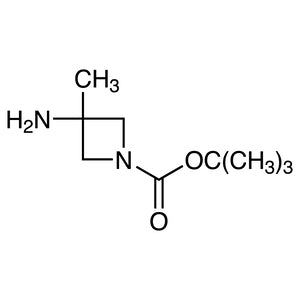
- TCI A3529 1158758-77-0 tert-Butyl 3-Amino-3-methylazetidine-1-carboxylate
- TCI D6492 1008526-71-3 tert-Butyl 3-(Aminomethyl)-3-hydroxyazetidine-1-carboxylate
- TCI M3507 887591-62-0 1-(tert-Butoxycarbonyl)-3-methylazetidine-3-carboxylic Acid
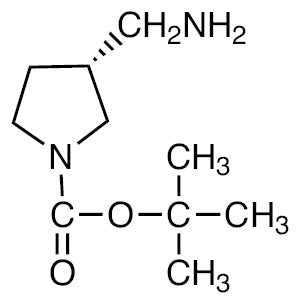
- TCI A3285 199174-29-3 (R)-3-(Aminomethyl)-1-(tert-butoxycarbonyl)pyrrolidine
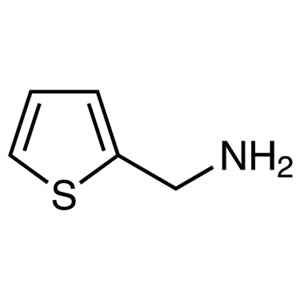
- TCI A2419 27757-85-3 2-(Aminomethyl)thiophene
- Amide bond formation: the free primary amine couples readily with carboxylic acids or activated esters, letting researchers install a compact azetidine fragment into a larger target scaffold.
- Reductive amination: the primary amine reacts with aldehydes and ketones to give secondary amines, providing a direct route to branched amine analogues on a rigid sp3 framework.
- Sulfonamide and urea synthesis: the amine handle is well suited to reaction with sulfonyl chlorides or isocyanates, generating sulfonamide, urea, and thiourea derivatives for structure-activity studies.
- Medicinal chemistry analogue preparation: the small, sp3-rich azetidine core adds three-dimensional character to a molecule without the excessive molecular weight that larger fragments contribute.
- Orthogonal two-stage functionalisation: the Boc-protected ring nitrogen lets chemists react the primary amine first, then deprotect and functionalise the ring nitrogen in a separate, controlled step.
| Brand | TCI (Tokyo Chemical Industry) |
|---|---|
| CAS number | 1158758-85-0 |
| Molecular formula | — |
| Purity | — |
| Category | Chemistry > Building Blocks > Heterocyclic Building Blocks |
| Pack sizes | available in standard research-scale pack sizes; please confirm the currently available options when ordering |
| Physical form | — |
| Storage | store according to the conditions stated on the manufacturer's label and safety data sheet |
- Catalogue number: D6517
Store this building block in its original tightly closed container, following the storage temperature and conditions given on the manufacturer's label and safety data sheet. Keep the container in a cool, dry, well-ventilated area away from moisture, direct sunlight, heat sources, and incompatible materials, and reseal it promptly after each use. Because the material carries a free primary amine and a Boc carbamate, exposure to acidic vapours and prolonged exposure to air or humidity should be avoided. Handle the compound in a fume hood using appropriate personal protective equipment, including safety glasses, a laboratory coat, and chemically resistant gloves. Weigh and transfer with clean, dry spatulas and glassware to prevent contamination, and dispose of any residues and contaminated materials in accordance with applicable laboratory waste procedures. Consult the full safety data sheet before first use.
—
Produk Terkait
-
tert-Butyl3-(Aminomethyl)azetidine-1-carboxylate TCI B4271
Regular price From Rp 2.809.800,00Regular price -
tert-Butyl3-Amino-3-methylazetidine-1-carboxylate TCI A3529
Regular price Rp 6.493.200,00Regular price -
tert-Butyl3-(Aminomethyl)-3-hydroxyazetidine-1-carboxylate TCI D6492
Regular price From Rp 1.856.400,00Regular price -
1-(tert-Butoxycarbonyl)-3-methylazetidine-3-carboxylicAcid TCI M3507
Regular price Rp 5.883.150,00Regular price -
(R)-3-(Aminomethyl)-1-(tert-butoxycarbonyl)pyrrolidine TCI A3285
Regular price From Rp 2.227.050,00Regular price -
2-(Aminomethyl)thiophene TCI A2419
Regular price From Rp 1.696.800,00Regular price -
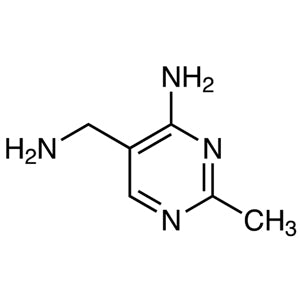
4-Amino-5-aminomethyl-2-methylpyrimidine TCI A2633
Regular price Rp 4.743.900,00Regular price -
2-(Aminomethyl)-1-ethylpyrrolidine TCI A2556
Regular price From Rp 557.550,00Regular price