2-(Aminomethyl)thiophene is a chemical compound widely used in organic synthesis reactions within laboratory settings. As a heterocyclic building block, it plays a crucial role in the development of complex molecular structures. This compound is particularly valuable for researchers working on the synthesis of thiophene derivatives and other heterocyclic compounds. Its versatility makes it an essential tool for chemists aiming to create new materials and pharmaceutical compounds.
The compound’s reactivity and unique molecular structure, featuring both sulfur and nitrogen atoms, make it a preferred choice in various chemical applications. These properties allow it to participate effectively in substitution and coupling reactions under different conditions. Its ability to react with a wide range of reagents, whether in acidic or basic environments, enhances its utility in synthetic chemistry. This reactivity is key to its application in the development of pharmaceuticals and advanced organic materials.
In Indonesian laboratories, 2-(Aminomethyl)thiophene is commonly used in organic chemistry research, especially in pharmaceutical and material science fields. It is a key component in the synthesis of various compounds and is frequently utilized by research institutions and universities. Its stability under certain conditions ensures its reliability in experimental processes, making it a staple in chemical laboratories across Indonesia.
TCI brochures (PDF)
- Thiophenes 2026-06-29 · p. 7
Related TCI products
- TCI B4271 325775-44-8 tert-Butyl 3-(Aminomethyl)azetidine-1-carboxylate
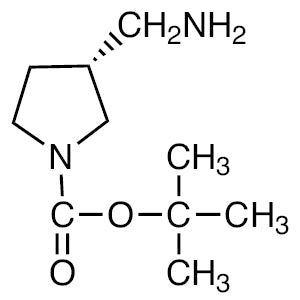
- TCI A3285 199174-29-3 (R)-3-(Aminomethyl)-1-(tert-butoxycarbonyl)pyrrolidine
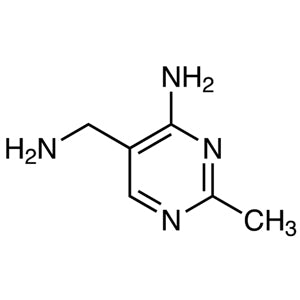
- TCI A2633 95-02-3 4-Amino-5-aminomethyl-2-methylpyrimidine
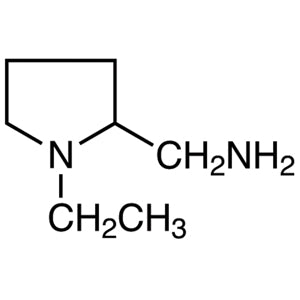
- TCI A2556 26116-12-1 2-(Aminomethyl)-1-ethylpyrrolidine
- TCI A1154 132664-85-8 2-(Aminomethyl)-5-methylpyrazine
- TCI I1057 1185167-55-8 2-Isopropyl-4-(N-methylaminomethyl)thiazole Dihydrochloride
- Organic synthesis: This compound is ideal for creating complex heterocyclic structures due to its reactivity and structural versatility.
- Pharmaceutical research: It is used in the development of new drugs, as its molecular framework can be modified to produce bioactive compounds.
- Material science: Its unique properties make it suitable for synthesizing advanced organic materials with specific functional characteristics.
- Heterocyclic compound synthesis: It serves as a foundational building block for creating thiophene derivatives and other heterocyclic compounds.
- Academic research: Widely used in Indonesian universities and research institutions for teaching and experimental studies in organic chemistry.
| Brand | TCI |
|---|---|
| CAS number | 27757-85-3 |
| Molecular formula | — |
| Purity | — |
| Category | Chemistry > Building Blocks > Heterocyclic Building Blocks |
| Pack sizes | Available in standard laboratory quantities |
| Physical form | Solid or liquid, depending on the supplier |
| Storage | Store in a cool, dry place away from direct sunlight |
This compound should be stored in a cool, dry environment to maintain its stability and prevent degradation. It is recommended to use airtight containers to minimize exposure to moisture and air. Due to its reactivity, it should be handled with care, using appropriate personal protective equipment such as gloves and goggles. Storage should be in a well-ventilated area to avoid the accumulation of harmful vapors. Avoid contact with incompatible substances to ensure safety during handling and storage. Proper labeling and storage conditions are essential to maintain the integrity of the compound in the laboratory setting.
—
Produk Terkait
-
tert-Butyl3-(Aminomethyl)azetidine-1-carboxylate TCI B4271
Regular price From Rp 2.862.300,00Regular priceRp 2.017.050,00Sale price From Rp 2.862.300,00 -
(R)-3-(Aminomethyl)-1-(tert-butoxycarbonyl)pyrrolidine TCI A3285
Regular price From Rp 2.279.550,00Regular priceRp 1.609.650,00Sale price From Rp 2.279.550,00 -
4-Amino-5-aminomethyl-2-methylpyrimidine TCI A2633
Regular price Rp 4.796.400,00Regular priceRp 3.369.450,00Sale price Rp 4.796.400,00 -
2-(Aminomethyl)-1-ethylpyrrolidine TCI A2556
Regular price From Rp 610.050,00Regular priceRp 442.050,00Sale price From Rp 610.050,00 -
2-(Aminomethyl)-5-methylpyrazine TCI A1154
Regular price Rp 6.465.900,00Regular priceRp 4.537.050,00Sale price Rp 6.465.900,00 -
2-Isopropyl-4-(N-methylaminomethyl)thiazoleDihydrochloride TCI I1057
Regular price From Rp 662.550,00Regular priceRp 478.800,00Sale price From Rp 662.550,00 -
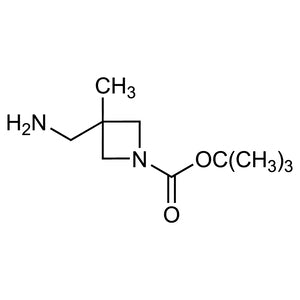
tert-Butyl3-(Aminomethyl)-3-methylazetidine-1-carboxylate TCI D6517
Regular price From Rp 2.227.050,00Regular priceRp 1.572.900,00Sale price From Rp 2.227.050,00 -
tert-Butyl3-(Aminomethyl)-3-hydroxyazetidine-1-carboxylate TCI D6492
Regular price From Rp 1.908.900,00Regular priceRp 1.350.300,00Sale price From Rp 1.908.900,00