TCI D6518 2,3,5,6-Tetramethyl-1,4-bis(trimethylsilyl)-1,4-dihydropyrazine is an organic synthetic reagent belonging to the reducing agent group. The molecule consists of an electron-rich dihydropyrazine ring bearing two nitrogen atoms, each carrying a trimethylsilyl group, together with four methyl substituents on the ring framework. In synthetic laboratory work, this compound functions as a neutral organic reductant capable of donating electrons while simultaneously releasing a silyl group, offering an alternative to metal-based reducing agents that often demand more complicated handling and generate metallic waste streams.
The property that makes this reagent attractive is the thermodynamic driving force supplied by aromatization. When the compound releases its electrons and trimethylsilyl groups, the dihydropyrazine ring converts into a far more stable aromatic pyrazine, and it is precisely this transformation that drives the reaction forward. Because the reagent is neutral and soluble in organic solvents, it can be employed under homogeneous conditions without requiring alkali metals or metal surfaces. The tetramethyl substituents on the ring help tune the electronic character while also providing steric protection, which contributes to the reagent's controlled reactivity profile.
In Indonesian laboratories, this reagent is typically used in organic synthesis research groups, university chemistry departments, and industrial research units that develop reduction methodologies. It suits work where a metal-free, homogeneous reduction pathway is preferred, particularly for substrates sensitive to heterogeneous metal conditions. Researchers exploring silyl transfer chemistry, single-electron reduction studies, and method development for new synthetic routes commonly select reagents of this class for controlled, reproducible laboratory-scale transformations.
Advantages (TCI brochure)
- Reduces impurities (Sn4+) in tin-based perovskite solar cells.
- Forms perovskite layers with excellent power conversion efficiency.
- Highly useful as an excellent organosilicon reducing agent in organic synthesis.
TCI brochures (PDF)
- Additive for Perovskite Solar Cells to Remove Tin(IV) Impurities TM-DHP 2026-07-16 · p. 1
- Reducing Agents 2026-04-06 · p. 8
- Solar Cell Materials 2026-04-21 · p. 9
- Please inquire for pricing and availability of listed products to our local sales representatives. Si Si Et 2026-07-16 · p. 10
Related TCI products
- TCI D3256 109838-85-9 (R)-2-Isopropyl-3,6-dimethoxy-2,5-dihydropyrazine
- TCI T3597 289706-46-3 4-[2,2,2-Trifluoro-1-[(trimethylsilyl)oxy]ethyl]morpholine
- TCI T2544 1001067-09-9 2-(Trimethylsilyl)ethyl 3-Nitro-1H-1,2,4-triazole-1-carboxylate
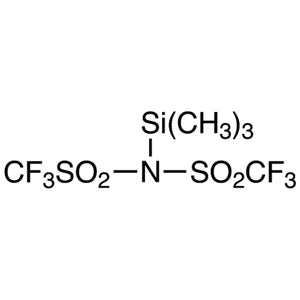
- TCI T2392 82113-66-4 N-(Trimethylsilyl)bis(trifluoromethanesulfonyl)imide
- TCI T1514 13411-42-2 2-Trimethylsilyl-1,3-dithiane
- TCI T1277 13368-42-8 N-(Trimethylsilyl)morpholine
- Metal-free organic reduction: serves as a neutral electron donor for substrates that require reduction without introducing alkali metals or heterogeneous metal surfaces into the reaction mixture.
- Single-electron transfer studies: its electron-rich dihydropyrazine core supports controlled electron donation, making it valuable for mechanistic investigations of radical and single-electron reduction pathways.
- Silyl group transfer chemistry: the two trimethylsilyl groups on nitrogen can be released during reaction, allowing simultaneous reduction and silylation in a single synthetic operation.
- Homogeneous reaction condition development: because the reagent dissolves in organic solvents, it enables fully homogeneous reduction systems that are easier to monitor, sample, and reproduce than slurry-based metal reductions.
- Synthetic methodology research: academic and industrial groups use it to explore new reduction routes where the aromatization driving force delivers predictable, thermodynamically favoured conversion of the reagent.
From the TCI brochure
- Additive for tin-based perovskite solar cells to remove Sn4+ impurities
- Organosilicon reducing agent in organic synthesis
| Brand | TCI (Tokyo Chemical Industry) |
|---|---|
| CAS number | 78279-92-2 |
| Molecular formula | — |
| Purity | — |
| Category | Chemistry > Synthetic Reagents > Reduction [Synthetic Reagents] |
| Pack sizes | available in standard TCI research-scale packaging; please confirm the currently offered pack size when ordering |
| Physical form | — |
| Storage | store according to the manufacturer's stated conditions on the product label and safety data sheet |
- Product code: D6518
Data from the TCI brochure
| PCE | 11.5% (Tidak disebutkan dalam brosur) |
|---|---|
| Voc | 0.76 V (Tidak disebutkan dalam brosur) |
Source: TCI brochure FF223 (2026-07-16)
Store the container tightly closed in a cool, dry, well-ventilated area away from heat, ignition sources, and incompatible materials, following the storage conditions specified by the manufacturer on the product label and safety data sheet. Silyl-containing reducing reagents are generally sensitive to moisture and air, so keep the container sealed and handle it under inert atmosphere where the experimental protocol requires it. Use the original manufacturer container or a chemically compatible, well-sealed glass vessel for any transfer. Handle inside a fume hood while wearing safety goggles, chemical-resistant gloves, and a laboratory coat. Consult the current safety data sheet before use, and dispose of residues and contaminated materials through the laboratory's established chemical waste procedures.
—
Produk Terkait
-
(R)-2-Isopropyl-3,6-dimethoxy-2,5-dihydropyrazine TCI D3256
Regular price From Rp 1.749.300,00Regular price -
4-[2,2,2-Trifluoro-1-[(trimethylsilyl)oxy]ethyl]morpholine TCI T3597
Regular price Rp 2.068.500,00Regular priceRp 1.461.600,00Sale price Rp 2.068.500,00 -
2-(Trimethylsilyl)ethyl3-Nitro-1H-1,2,4-triazole-1-carboxylate TCI T2544
Regular price Rp 3.815.700,00Regular priceRp 2.683.800,00Sale price Rp 3.815.700,00 -
N-(Trimethylsilyl)bis(trifluoromethanesulfonyl)imide TCI T2392
Regular price Rp 2.942.100,00Regular priceRp 2.072.700,00Sale price Rp 2.942.100,00 -
2-Trimethylsilyl-1,3-dithiane TCI T1514
Regular price Rp 4.133.850,00Regular priceRp 2.906.400,00Sale price Rp 4.133.850,00 -
N-(Trimethylsilyl)morpholine TCI T1277
Regular price Rp 1.483.650,00Regular priceRp 1.053.150,00Sale price Rp 1.483.650,00 -
2,5-Bis[(trimethylsilyl)ethynyl]thieno[3,2-b]thiophene TCI B5196
Regular price From Rp 3.446.100,00Regular price -
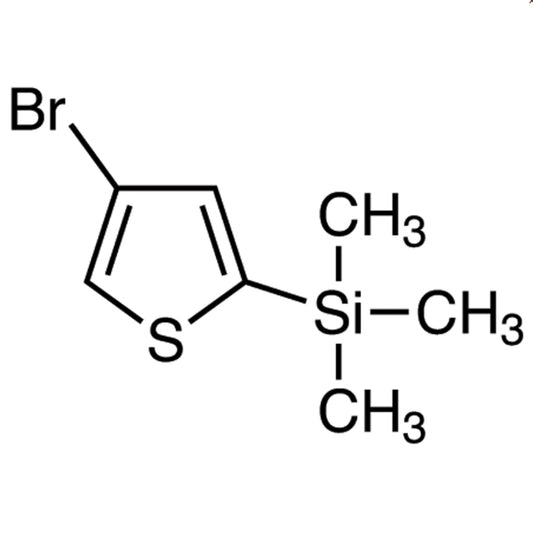
4-Bromo-2-(trimethylsilyl)thiophene TCI B4856
Regular price From Rp 2.518.950,00Regular price

![289706-46-3 4-[2,2,2-Trifluoro-1-[(trimethylsilyl)oxy]ethyl]morpholine - AMI Scientific](http://amiscientific.com/cdn/shop/files/TCI2510T3597.jpg?v=1769058256&width=533)



![139896-65-4 2,5-Bis[(trimethylsilyl)ethynyl]thieno[3,2-b]thiophene - AMI Scientific](http://amiscientific.com/cdn/shop/files/TCI2510B5196.jpg?v=1769055884&width=533)
![139896-65-4 2,5-Bis[(trimethylsilyl)ethynyl]thieno[3,2-b]thiophene - AMI Scientific](http://amiscientific.com/cdn/shop/files/TCI2510B5196_449fea7b-875a-48d6-a10c-58ae4c828801.jpg?v=1769145402&width=533)