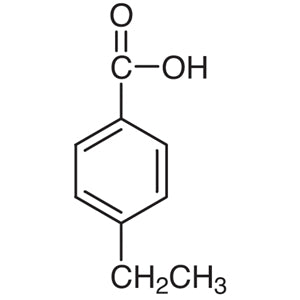
4-Ethylbenzoic Acid is a chemical compound widely used in laboratory settings for the synthesis of complex organic molecules. It serves as a fundamental building block in various chemical reactions, particularly in the development of pharmaceuticals, industrial chemicals, and organic compounds. Its molecular structure consists of a benzene ring with a carboxylic acid group and an ethyl chain attached at a specific position, making it versatile for chemical modifications. This compound is essential in organic chemistry laboratories where researchers aim to create new compounds with specific functional groups and properties.
The compound's stability and moderate reactivity make it a preferred choice for chemical synthesis. It dissolves well in organic solvents, which facilitates its use in purification and reaction processes. Its chemical properties allow it to participate in esterification and amidation reactions, which are common in organic synthesis. These characteristics make it a reliable and efficient reagent for a wide range of laboratory applications, especially in research involving functional group transformations and compound derivatization.
In Indonesian laboratories, 4-Ethylbenzoic Acid is extensively used in both pure and applied chemical research. It is commonly found in projects related to organic synthesis, drug development, and chemical reactivity studies. Its availability in solid form and ease of handling make it a practical choice for researchers. Its reliability and performance in various chemical processes contribute to its popularity in both academic and industrial research environments.
- Organic synthesis projects benefit from 4-Ethylbenzoic Acid due to its ability to participate in esterification and amidation reactions, enabling the creation of complex organic molecules.
- Pharmaceutical research utilizes this compound as a building block for the synthesis of drug molecules, offering structural versatility and chemical stability.
- Industrial chemical production relies on 4-Ethylbenzoic Acid for the development of specialty chemicals, leveraging its solubility and reactivity in organic solvents.
- Research on chemical reactivity often incorporates this compound to study functional group transformations and reaction mechanisms in controlled environments.
- Academic laboratories use 4-Ethylbenzoic Acid for teaching and experimental purposes, demonstrating its role in foundational organic chemistry processes.
| Brand | TCI |
|---|---|
| CAS number | 619-64-7 |
| Molecular formula | — |
| Purity | — |
| Category | Chemistry > Building Blocks > Non-Heterocyclic Building Blocks |
| Pack sizes | Available in various quantities as per supplier specifications |
| Physical form | Solid |
| Storage | Store in a cool, dry place away from moisture and direct sunlight |
4-Ethylbenzoic Acid should be stored in a cool, dry place, away from moisture and direct sunlight to maintain its chemical integrity. It is recommended to use airtight containers to prevent exposure to air and humidity, which could affect its stability. As a solid compound, it is generally safe to handle with standard laboratory precautions, including the use of gloves and safety goggles. Ensure proper ventilation when working with it to avoid inhalation of any airborne particles. Avoid contact with skin and eyes, and follow standard chemical safety protocols to ensure a safe working environment. Its stable nature makes it relatively easy to manage in laboratory settings, provided appropriate handling procedures are followed.
—
Produk Terkait
-
2-EthylbenzoicAcid TCI E1347
Regular price From Rp 1.353.450,00Regular price -
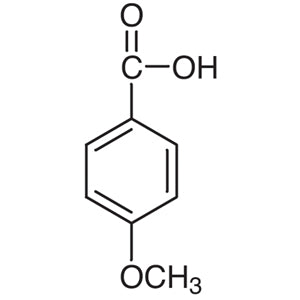
p-AnisicAcid TCI A0482
Regular price Rp 505.050,00Regular price -
4-BenzyloxybenzoicAcid TCI B1665
Regular price From Rp 1.485.750,00Regular price -
4-ButoxybenzoicAcid TCI B0896
Regular price Rp 1.856.400,00Regular price -
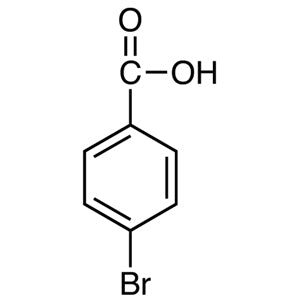
4-BromobenzoicAcid TCI B0553
Regular price From Rp 1.565.550,00Regular price -
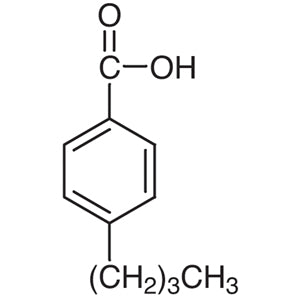
4-ButylbenzoicAcid TCI B0241
Regular price From Rp 477.750,00Regular price -
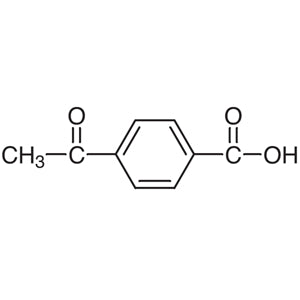
4-AcetylbenzoicAcid TCI A1024
Regular price From Rp 795.900,00Regular price -
4-AcetoxybenzoicAcid TCI A0885
Regular price From Rp 823.200,00Regular price