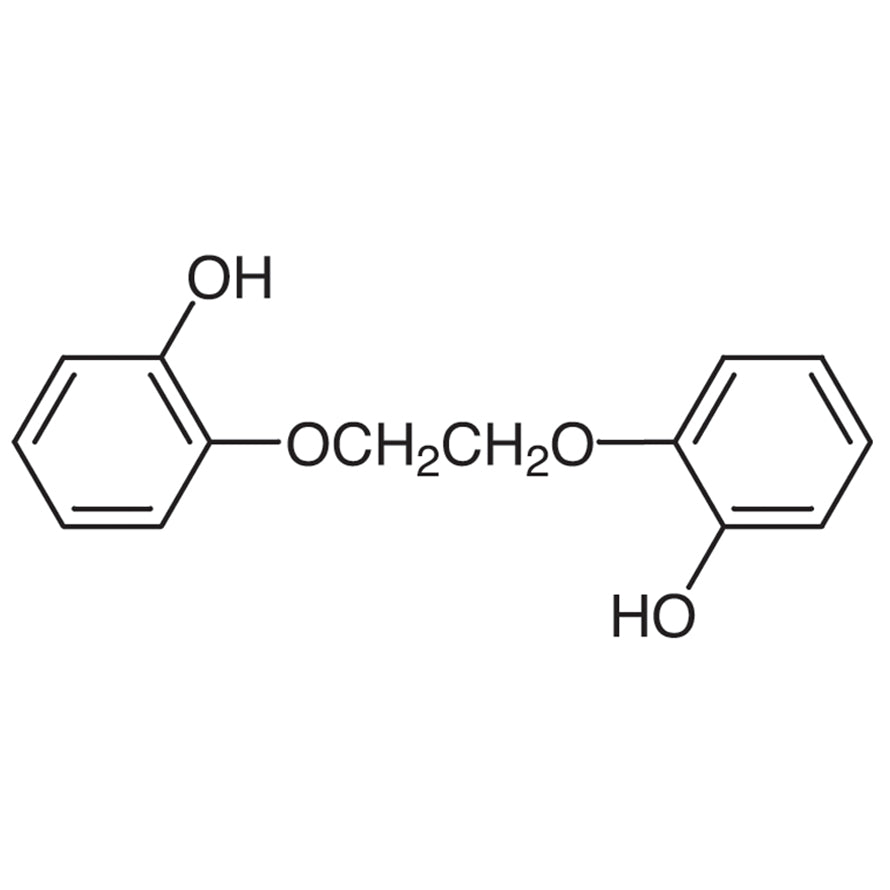
2,2'-Ethylenedioxydiphenol (EEDP) is a chemical compound widely used as a foundational building block in the synthesis of complex organic molecules. It serves as a key intermediate in various chemical reactions, particularly those involving aromatic structures with specific substitutions. This compound is essential for researchers aiming to create molecules with precise structural features, making it a versatile tool in organic chemistry. Its role in laboratory settings is crucial for the development of new compounds in pharmaceutical, material science, and chemical research fields.
EEDP is valued for its chemical stability under controlled conditions and its ability to participate in both electrophilic and nucleophilic reactions. The presence of two phenolic groups in its structure allows for multiple functionalization possibilities, enhancing its utility in synthetic pathways. Its solubility in organic solvents further simplifies purification and manipulation processes in the lab. These properties make EEDP a preferred choice for chemists seeking reliable and adaptable starting materials.
In Indonesian laboratories, EEDP is commonly used in research focused on drug development, polymer synthesis, and advanced chemical reactions. Its availability and chemical properties make it a staple in academic and industrial research settings. The compound's application is broad, supporting a wide range of experimental needs in both teaching and applied research environments.
Related TCI products
- TCI A1356 28657-75-2 6'-Amino-3',4'-(methylenedioxy)acetophenone
- TCI M1378 7797-83-3 2,3-(Methylenedioxy)benzaldehyde
- TCI M0874 3162-29-6 3',4'-(Methylenedioxy)acetophenone
- TCI D2150 15764-52-0 2,2'-Dihydroxydiphenyl Ether
- TCI D2121 1965-09-9 4,4'-Dihydroxydiphenyl Ether
- TCI P2421 17828-53-4 4,4'-(1,4-Phenylenedioxy)bisphthalic Anhydride
- Organic synthesis is a primary application where EEDP is used to build complex molecules with specific functional groups.
- Pharmaceutical research benefits from EEDP due to its ability to participate in reactions that lead to drug-like compounds.
- Material science applications utilize EEDP for creating polymers and other advanced materials with tailored properties.
- Chemical reaction intermediates often rely on EEDP as a stable and reactive starting material for further modifications.
- Analytical chemistry uses EEDP in the development of standards and reference compounds for qualitative and quantitative analysis.
| Brand | TCI |
|---|---|
| CAS number | 20115-81-5 |
| Molecular formula | — |
| Purity | — |
| Category | Chemistry > Building Blocks > Non-Heterocyclic Building Blocks |
| Pack sizes | Available in various quantities as per supplier specifications |
| Physical form | Solid |
| Storage | Store in a cool, dry place away from light and moisture |
EEDP should be stored in a cool, dry environment, away from direct light and moisture to maintain its chemical stability. It is recommended to use airtight containers made of glass or high-density polyethylene to prevent contamination and degradation. Due to its sensitivity to oxidation and hydrolysis, it should be handled with care, using appropriate personal protective equipment such as gloves and goggles. In laboratory settings, EEDP should be stored separately from strong oxidizing agents to avoid unwanted reactions. Regular monitoring of storage conditions is advised to ensure the compound remains in optimal condition for use.
—
Produk Terkait
-
6'-Amino-3',4'-(methylenedioxy)acetophenone TCI A1356
Regular price Rp 2.782.500,00Regular price -
2,3-(Methylenedioxy)benzaldehyde TCI M1378
Regular price From Rp 2.439.150,00Regular price -
3',4'-(Methylenedioxy)acetophenone TCI M0874
Regular price Rp 3.312.750,00Regular price -
2,2'-DihydroxydiphenylEther TCI D2150
Regular price Rp 5.274.150,00Regular price -
4,4'-DihydroxydiphenylEther TCI D2121
Regular price From Rp 2.916.900,00Regular price -
4,4'-(1,4-Phenylenedioxy)bisphthalicAnhydride TCI P2421
Regular price From Rp 2.942.100,00Regular price