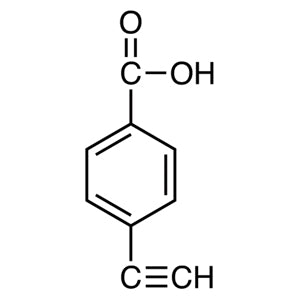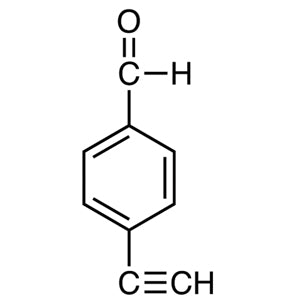
4-Ethynylbenzaldehyde is a chemical compound widely used in organic reactions for the synthesis of complex molecules. It serves as a key building block in laboratory settings, enabling the construction of intricate molecular structures. Its unique combination of an aldehyde group and a triple bond makes it highly versatile for various chemical transformations. This compound is particularly valuable in synthetic chemistry due to its reactivity and compatibility with multiple reaction mechanisms.
The compound’s reactivity stems from its dual functional groups, which allow it to participate in coupling, substitution, and electrophilic reactions. Its stability under controlled conditions ensures reliable performance in laboratory experiments. The consistent quality and purity of 4-Ethynylbenzaldehyde make it a preferred choice for researchers requiring precision and reproducibility. Its chemical properties also support its use in pharmaceutical and medicinal chemistry applications.
In Indonesian laboratories, 4-Ethynylbenzaldehyde is commonly used in scientific research, drug development, and organic chemistry studies. It is a critical component in the synthesis of new compounds and molecular modifications. Its relevance extends to academic institutions and research organizations focused on advancing chemical knowledge and innovation. The compound’s utility in these contexts underscores its importance in modern laboratory practices.
Advantages (TCI brochure)
- Benzaldehyde derivatives with NaBH3CN give N-terminally monobenzylated proteins
- Does not alter natural amino acid residues within proteins
- Functional groups of the benzyl moiety can react with fluorescent dyes
TCI brochures (PDF)
- Protein Site-specific Modification-related Reagents 2025-10-21 · p. 3
- Reagent for Incorporating a Protecting Group (Ph2P(O)) into Terminal Acetylenes 2025-06-03 · p. 2
- Click Chemistry 2026-09-08 · p. 11
- Organic synthesis applications benefit from 4-Ethynylbenzaldehyde’s reactivity and functional group versatility, enabling the creation of complex molecules.
- Pharmaceutical research utilizes this compound for the development of new drugs due to its structural adaptability and chemical reactivity.
- Academic research institutions use it as a building block for teaching and experimental purposes in organic chemistry courses.
- Industrial chemical processes incorporate it for the production of specialty chemicals and intermediates in various industries.
- Analytical laboratories employ it as a standard reference material for calibration and quality control in chemical analysis procedures.
From the TCI brochure
- Selective N-terminal modification of small proteins
- Labelling with fluorescent dyes via the benzyl moiety
| Brand | TCI |
|---|---|
| CAS number | 63697-96-1 |
| Molecular formula | — |
| Purity | — |
| Category | Chemistry > Building Blocks > Non-Heterocyclic Building Blocks |
| Pack sizes | Available in standard laboratory quantities |
| Physical form | Liquid |
| Storage | Store in a cool, dry place away from light and incompatible substances |
4-Ethynylbenzaldehyde should be stored in a cool, dry environment, away from direct sunlight and sources of heat. It is recommended to use airtight containers to prevent exposure to moisture and air, which may affect its stability. The compound should be kept in a well-ventilated area to minimize inhalation risks. Laboratory personnel should wear appropriate personal protective equipment, such as gloves and safety goggles, when handling this material. It is important to avoid contact with skin and eyes, and to ensure proper disposal according to local regulations. Regular monitoring of storage conditions ensures the compound remains safe and effective for use in research applications.
References cited in the TCI brochure
- Diao Chen. Selective N-terminal functionalization of native peptides and proteins Chemical Science, 2017. doi:10.1039/c6sc04744k
- Xiangdan Wang. Application of N-Terminal Site-Specific Biotin and Digoxigenin Conjugates to Clinical Anti-drug Antibody Assay Development Bioconjugate Chemistry, 2023. doi:10.1021/acs.bioconjchem.3c00421
Product Categories
Produk Terkait
-
2-Ethynylbenzaldehyde TCI E1420
Regular price Rp 3.658.200,00Regular priceRp 2.557.800,00Sale price Rp 3.658.200,00 -
1-Butyl-4-ethynylbenzene TCI B2301
Regular price From Rp 980.700,00Regular priceRp 685.650,00Sale price From Rp 980.700,00 -
1-Ethoxy-4-ethynylbenzene TCI E1029
Regular price From Rp 505.050,00Regular priceRp 352.800,00Sale price From Rp 505.050,00 -
3-EthynylbenzoicAcid TCI E1642
Regular price From Rp 1.749.300,00Regular priceRp 1.239.000,00Sale price From Rp 1.749.300,00 -
4-EthynylbenzoicAcid TCI E1041
Regular price Rp 5.910.450,00Regular priceRp 4.148.550,00Sale price Rp 5.910.450,00 -
1,4-Diethynylbenzene TCI D2151
Regular price From Rp 1.485.750,00Regular priceRp 1.038.450,00Sale price From Rp 1.485.750,00 -
Methyl4-Ethynylbenzoate TCI M2768
Regular price From Rp 2.969.400,00Regular priceRp 2.091.600,00Sale price From Rp 2.969.400,00 -
Ethyl4-Ethynylbenzoate TCI E1501
Regular price From Rp 2.384.550,00Regular priceRp 1.683.150,00Sale price From Rp 2.384.550,00