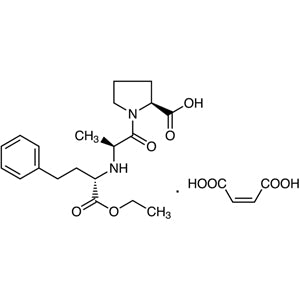
Enalapril Maleate TCI E1010 is a chemical compound widely used in pharmaceutical research and development. It plays a crucial role in laboratory settings by enabling the study of enzyme inhibition mechanisms, particularly the angiotensin-converting enzyme (ACE). This compound is essential for understanding how drugs affect blood pressure and cardiovascular health. Its application spans across drug discovery, pharmacological research, and the development of therapeutic agents for hypertension.
The compound is favored for its high purity and chemical stability, ensuring reliable and reproducible results in experimental studies. Its solubility in organic solvents such as ethyl acetate and acetone makes it versatile for various analytical techniques. The complex molecular structure allows for specific interactions with target enzymes, enhancing its utility in drug delivery system (DDS) research. These properties make it a preferred choice for researchers aiming for precision and accuracy in their experiments.
In Indonesian laboratories, Enalapril Maleate is commonly used in pharmacological studies, especially in the development of antihypertensive drugs. It is also employed in research focused on improving drug delivery mechanisms and understanding the pharmacokinetics of therapeutic agents. Its role in clinical testing and preclinical research makes it a valuable resource for scientists working in the field of drug discovery and development.
TCI brochures (PDF)
- Pharmacologically Active Metabolites 2025-07-22 · p. 1
- Pharmaceutical Ingredients for Research and Experimental Use 2026-03-09 · p. 20
- Enalapril Maleate is used in pharmacological research to study the effects of ACE inhibitors on blood pressure regulation.
- It supports drug development by providing a model compound for testing new antihypertensive agents.
- The compound is integral to drug delivery system (DDS) research, helping to evaluate the efficiency of targeted drug release mechanisms.
- It is applied in clinical testing to assess the efficacy and safety of new therapeutic formulations.
- Enalapril Maleate is used in molecular interaction studies to understand how drugs bind to and inhibit specific enzymes.
| Brand | TCI |
|---|---|
| CAS number | 76095-16-4 |
| Molecular formula | — |
| Purity | — |
| Category | Chemistry > Pharmaceutical Development and Drug Discovery Research Reagents > Drug Delivery Systems (DDS) |
| Pack sizes | — |
| Physical form | — |
| Storage | Store in a cool, dry place away from light |
Enalapril Maleate should be stored in a cool, dry place, away from direct light to maintain its chemical stability. It is recommended to keep the compound in a tightly sealed container to prevent moisture absorption and contamination. Laboratory personnel should handle the material with appropriate personal protective equipment, such as gloves and safety goggles, to ensure safety during handling. The compound is generally non-hazardous under normal conditions but should be stored separately from incompatible substances. Regular monitoring of storage conditions is advised to ensure the integrity of the material for research purposes. Proper labeling of containers is essential to prevent misidentification and ensure safe handling in the laboratory environment.
—
Product Categories
- Biochemicals and ReagentsEnzymes, Enzyme Inhibitors, Enzyme SubstratesEnzyme Inhibitors [Biochemicals and Reagents]
- Biochemicals and ReagentsPharmaceutical Research Reagents (for Experimental Use)Antihypertensive Ingredients (for Research and Experimental Use)
- Biochemicals and Reagents
- Pharmaceutical Development and Drug Discovery ResearchPharmaceutical Research Reagents (for Experimental Use)Antihypertensive Ingredients (for Research and Experimental Use)
- Pharmaceutical Development and Drug Discovery ResearchDrug Delivery Systems (DDS)Prodrug Ingredients
Produk Terkait
-
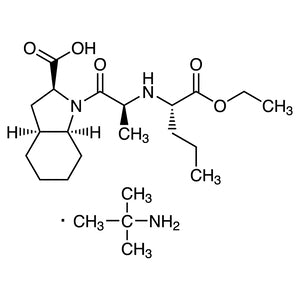
PerindoprilErbumine TCI P2968
Regular price From Rp 2.121.000,00Regular price -
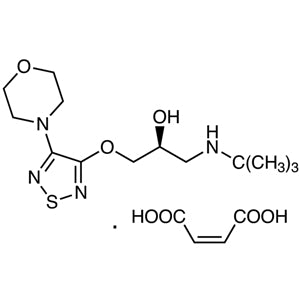
TimololMaleate TCI T2905
Regular price Rp 3.525.900,00Regular price -
BenazeprilHydrochloride TCI B3611
Regular price Rp 2.439.150,00Regular price -
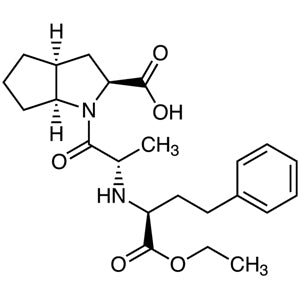
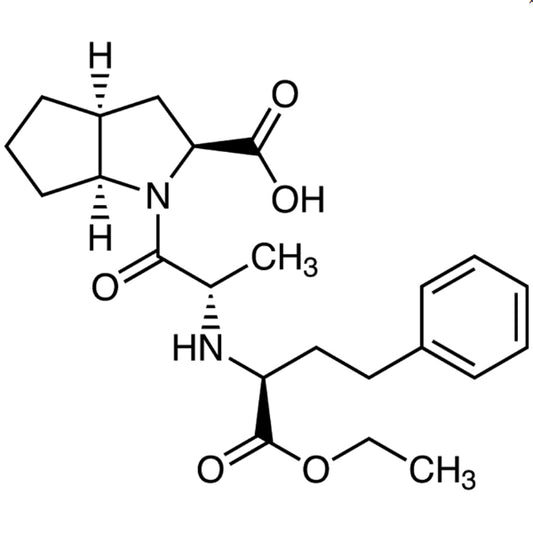
Ramipril TCI R0219
Regular price From Rp 3.180.450,00Regular price -
QuinaprilHydrochloride TCI Q0082
Regular price Rp 3.021.900,00Regular price -
FosinoprilSodium TCI F1242
Regular price Rp 4.213.650,00Regular price -
CandesartanCilexetil TCI C2635
Regular price From Rp 1.881.600,00Regular price -
Captopril TCI C1580
Regular price From Rp 1.803.900,00Regular price