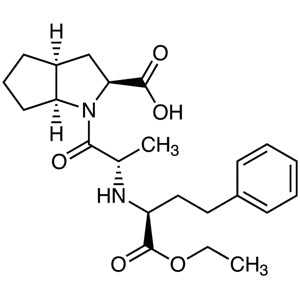
Ramipril is a chemical compound widely used in pharmaceutical research and drug development. As a member of the angiotensin-converting enzyme (ACE) inhibitor family, it plays a crucial role in the study of drug delivery systems and hypertension treatment research. In laboratories, Ramipril is essential for understanding how drugs interact with the cardiovascular system and how they can be effectively delivered to target sites. Its presence in research settings supports the development of new therapeutic agents and the optimization of existing ones.
Ramipril is valued for its chemical stability and solubility in organic solvents such as ethyl acetate and acetone. These properties make it a reliable reagent for various laboratory applications, including synthesis and biological activity testing. Its reactivity allows it to participate in a wide range of chemical reactions, making it a versatile tool for researchers. Additionally, its availability in multiple packaging formats ensures flexibility for different experimental needs, enhancing its usability in diverse research environments.
In Indonesian laboratories, Ramipril is commonly used in pharmacological, pharmacokinetic, and drug development studies. It supports research into hypertension treatment and the mechanisms of drug action. Its consistent performance and ease of handling make it a preferred choice for both academic and industrial research settings in the region.
TCI brochures (PDF)
- Pharmaceutical Ingredients for Research and Experimental Use 2026-03-09 · p. 21
- Pharmacological research: Ramipril is used to study the effects of ACE inhibitors on blood pressure regulation and cardiovascular function.
- Drug delivery system development: Its chemical properties make it ideal for testing new drug delivery methods and formulations.
- Hypertension treatment research: Ramipril is a key compound in studies aimed at developing more effective antihypertensive therapies.
- Biological activity testing: It is used to evaluate the pharmacological effects of compounds on cellular and tissue responses.
- Synthesis of new compounds: Its reactivity and solubility support its use in the synthesis of novel pharmaceutical agents.
| Brand | TCI |
|---|---|
| CAS number | 87333-19-5 |
| Molecular formula | — |
| Purity | — |
| Category | Chemistry > Pharmaceutical Development and Drug Discovery Research Reagents > Drug Delivery Systems (DDS) |
| Pack sizes | Available in various sizes to meet different research needs |
| Physical form | Solid |
| Storage | Store in a cool, dry place away from direct sunlight |
Ramipril should be stored in a cool, dry place, away from direct sunlight and sources of heat. It is recommended to use airtight containers to prevent moisture absorption and contamination. Due to its solubility in organic solvents, it should be kept in a secure location to avoid accidental exposure. In laboratory settings, proper personal protective equipment (PPE) should be worn when handling the compound. Regular monitoring of storage conditions ensures the compound remains stable and suitable for use in research applications. Always follow standard safety protocols to maintain a safe working environment.
—
Product Categories
- Biochemicals and ReagentsEnzymes, Enzyme Inhibitors, Enzyme SubstratesEnzyme Inhibitors [Biochemicals and Reagents]
- Biochemicals and ReagentsPharmaceutical Research Reagents (for Experimental Use)Antihypertensive Ingredients (for Research and Experimental Use)
- Pharmaceutical Development and Drug Discovery ResearchPharmaceutical Research Reagents (for Experimental Use)Antihypertensive Ingredients (for Research and Experimental Use)
- Pharmaceutical Development and Drug Discovery ResearchDrug Delivery Systems (DDS)Prodrug Ingredients
Produk Terkait
-
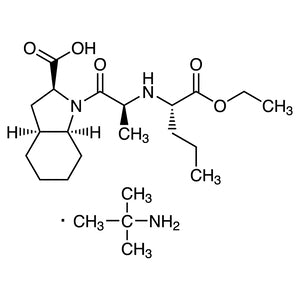
PerindoprilErbumine TCI P2968
Regular price Rp 2.173.500,00Regular priceRp 1.535.100,00Sale price Rp 2.173.500,00 -
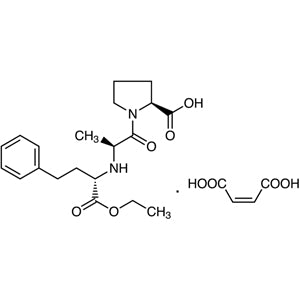
EnalaprilMaleate TCI E1010
Regular price Rp 1.351.350,00Regular priceRp 960.750,00Sale price Rp 1.351.350,00 -
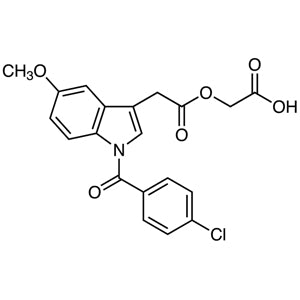
Acemetacin TCI A2452
Regular price Rp 900.900,00Regular priceRp 645.750,00Sale price Rp 900.900,00 -
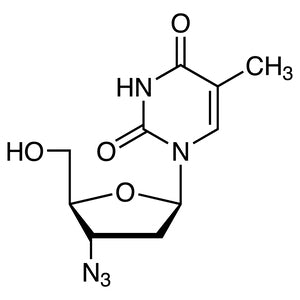
3'-Azido-3'-deoxythymidine TCI A2052
Regular price Rp 2.464.350,00Regular priceRp 1.738.800,00Sale price Rp 2.464.350,00 -
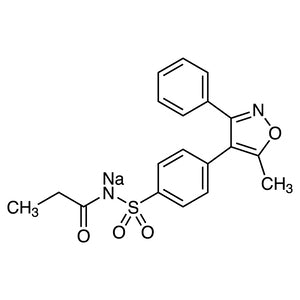
ParecoxibSodium TCI P3100
Regular price Rp 3.815.700,00Regular priceRp 2.683.800,00Sale price Rp 3.815.700,00 -
Parecoxib TCI P2579
Regular price Rp 5.405.400,00Regular priceRp 3.795.750,00Sale price Rp 5.405.400,00 -
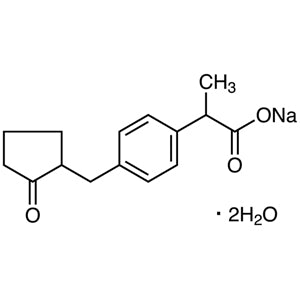
LoxoprofenSodiumSaltDihydrate TCI L0252
Regular price Rp 2.121.000,00Regular priceRp 1.498.350,00Sale price Rp 2.121.000,00 -
ImidaprilHydrochloride TCI I0901
Regular price Rp 4.161.150,00Regular priceRp 2.925.300,00Sale price Rp 4.161.150,00