3'-Azido-3'-deoxythymidine (AZT) is a chemical compound widely used in biochemical and pharmacological research. It plays a crucial role in laboratory settings where molecular interactions and drug development are studied. AZT is particularly valuable for its ability to participate in specific chemical reactions, making it a key component in conjugation chemistry and click chemistry applications. Its versatility allows researchers to modify molecular structures with precision, supporting the creation of compounds with targeted biological activities.
The properties of AZT that make it a preferred choice include its stable yet reactive chemical structure, as well as its ease of solubilization in various solvents. These characteristics enable efficient use in a wide range of experimental protocols. Additionally, its availability in solid form simplifies handling and storage, making it a practical option for laboratory use. The compound’s reactivity and specificity are essential for applications requiring high precision and controlled chemical transformations.
In Indonesian laboratories, AZT is commonly used in research related to infectious diseases, especially in the development of vaccines and therapeutic agents. Its role in biochemical studies that require precise chemical reactions underscores its importance in both academic and industrial research settings. The compound’s utility in molecular modification and its relevance to drug discovery make it a staple in modern laboratory practices.
Advantages (TCI brochure)
- Discovered by Mitsuya et al. in 1985; used for treatment of HIV infection
TCI brochures (PDF)
- Immunology Research Reagents 2026-06-03 · p. 9
- Nucleosides, Nucleotides, Nucleic Acids and Related Reagents 2026-03-23 · p. 3
- Click Chemistry 2026-09-08 · p. 7
- Antimicrobials and Antitumor Agents for Research and Experimental Use 2025-04-24 · p. 11
- Pharmaceutical Ingredients for Research and Experimental Use 2026-03-09 · p. 12
- Reagents for Biological Research 2025-03-11 · p. 39
- Drug development research benefits from AZT’s ability to participate in specific chemical reactions, enabling the synthesis of compounds with targeted biological activities.
- Infectious disease studies utilize AZT for investigating molecular interactions and developing therapeutic agents against viral infections.
- Conjugation chemistry applications rely on AZT’s reactivity and stability, allowing for the creation of complex molecular structures with high precision.
- Click chemistry experiments use AZT as a building block due to its compatibility with click reaction mechanisms, facilitating rapid and efficient molecular modifications.
- Biochemical assays incorporate AZT to study molecular interactions and evaluate the effects of chemical modifications on biological activity.
From the TCI brochure
- HIV infection treatment
| Brand | TCI |
|---|---|
| CAS number | 30516-87-1 |
| Molecular formula | — |
| Purity | — |
| Category | Chemistry > Chemical Biology > Conjugation Chemistry/Click Chemistry |
| Pack sizes | — |
| Physical form | Solid |
| Storage | Store in a cool, dry place away from light |
AZT should be stored in a cool, dry environment, away from direct light to maintain its chemical stability. It is recommended to use airtight containers to prevent moisture absorption and contamination. Due to its reactivity, it should be handled with care in a well-ventilated laboratory setting. Proper personal protective equipment, such as gloves and safety goggles, should be worn during handling. The compound is not flammable but may react with strong oxidizing agents, so compatibility with other chemicals should be considered. Storage conditions should be consistent to ensure the integrity of the material for extended use in research applications.
—
Product Categories
- Chemical BiologyConjugation Chemistry/Click ChemistryAzides [Conjugation Chemistry/Click Chemistry]
- Chemical BiologyConjugation Chemistry/Click ChemistryNucleoside Azides/Alkynes [Conjugation Chemistry/Click Chemistry]
- Pharmaceutical Development and Drug Discovery Research ReagentsDrug Delivery Systems (DDS)Prodrug Ingredients
- Biochemicals and ReagentsAntibioticsAntibiotics (by Application)
- Biochemicals and ReagentsEnzymes, Enzyme Inhibitors, Enzyme SubstratesEnzyme Inhibitors [Biochemicals and Reagents]
- Biochemicals and ReagentsNucleosides, Nucleotides, OligonucleotidesNucleoside Analogs
- Biochemicals and ReagentsPharmaceutical Research Reagents (for Experimental Use)Antiviral Research Reagents (for Experimental Use)
- Biochemicals and Reagents
- Cell BiologyCancer ResearchAntitumor Agents for Research
- Cell BiologyStem Cell BiologyRegenerative Medicine Research Reagents
- MicrobiologyAntibioticsAntibiotics (by Application)
- Molecular BiologyRegenerative Medicine Research Reagents
- Pharmaceutical Development and Drug Discovery ResearchConjugation Chemistry/Click ChemistryAzides [Conjugation Chemistry/Click Chemistry]
- Pharmaceutical Development and Drug Discovery ResearchConjugation Chemistry/Click ChemistryNucleoside Azides/Alkynes [Conjugation Chemistry/Click Chemistry]
- Pharmaceutical Development and Drug Discovery ResearchPharmaceutical Research Reagents (for Experimental Use)Antiviral Research Reagents (for Experimental Use)
- Pharmaceutical Development and Drug Discovery ResearchAntibioticsAntibiotics (by Application)
- Pharmaceutical Development and Drug Discovery ResearchDrug Delivery Systems (DDS)Prodrug Ingredients
Produk Terkait
-
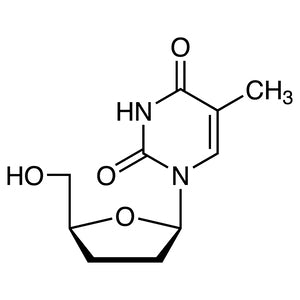
2',3'-Didehydro-3'-deoxythymidine TCI D3580
Regular price From Rp 1.643.250,00Regular priceRp 1.164.450,00Sale price From Rp 1.643.250,00 -
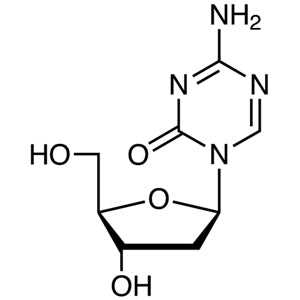
5-Aza-2'-deoxycytidine TCI A2232
Regular price From Rp 3.419.850,00Regular priceRp 2.406.600,00Sale price From Rp 3.419.850,00 -
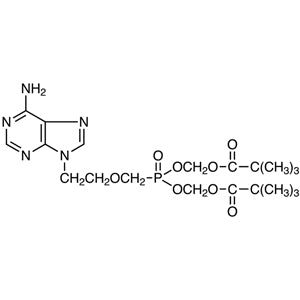
AdefovirDipivoxil TCI A2414
Regular price From Rp 1.033.200,00Regular priceRp 738.150,00Sale price From Rp 1.033.200,00 -
Ritonavir TCI R0116
Regular price From Rp 2.121.000,00Regular priceRp 1.498.350,00Sale price From Rp 2.121.000,00 -
Lamivudine TCI L0217
Regular price From Rp 1.087.800,00Regular priceRp 775.950,00Sale price From Rp 1.087.800,00 -
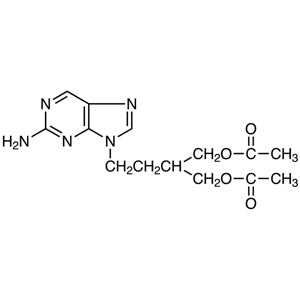
Famciclovir TCI F0842
Regular price Rp 1.908.900,00Regular priceRp 1.350.300,00Sale price Rp 1.908.900,00 -
2',3'-Dideoxyinosine TCI D3066
Regular price From Rp 1.060.500,00Regular priceRp 757.050,00Sale price From Rp 1.060.500,00 -
3'-Deoxythymidine TCI D6100
Regular price Rp 3.895.500,00Regular priceRp 2.739.450,00Sale price Rp 3.895.500,00