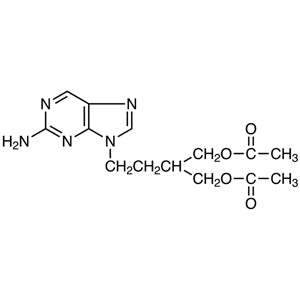
Famciclovir is a chemical compound widely used in pharmaceutical research and drug development. It serves as a key reagent in the synthesis of antiviral medications, particularly those targeting herpes virus infections. As a critical component in drug delivery systems, Famciclovir plays a vital role in the formulation of effective and safe therapeutic agents. Its application extends to both preclinical and clinical research, where it is essential for testing the efficacy and safety of new drug formulations. In laboratory settings, Famciclovir is a preferred choice due to its chemical stability and solubility in organic solvents. These properties make it suitable for various analytical techniques and experimental protocols. Its molecular structure also allows for detailed spectroscopic analysis and reactivity studies, enhancing its utility in pharmacological investigations.
Famciclovir is valued for its chemical stability, solubility in organic solvents, and high level of purity. These characteristics ensure consistent performance in laboratory experiments, making it a reliable reagent for research purposes. Its ability to maintain activity under various experimental conditions enhances its versatility in drug development and pharmacological studies. Additionally, Famciclovir is non-hazardous in laboratory settings, contributing to a safer working environment. Its compatibility with a wide range of analytical methods further supports its use in both basic and applied research. The compound's molecular complexity also allows for in-depth studies on its behavior and interactions, which is crucial for understanding its therapeutic potential.
In Indonesian laboratories, Famciclovir is commonly used in pharmacological research, particularly in the development of antiviral drugs. It is also utilized in drug delivery system studies to optimize the release and effectiveness of therapeutic agents. Researchers in Indonesia rely on Famciclovir for its reliability and performance in experimental setups, making it an essential component in both academic and industrial research environments.
TCI brochures (PDF)
- Nucleosides, Nucleotides, Nucleic Acids and Related Reagents 2026-03-23 · p. 4
- Antimicrobials and Antitumor Agents for Research and Experimental Use 2025-04-24 · p. 12
- Pharmaceutical Ingredients for Research and Experimental Use 2026-03-09 · p. 13
- Antiviral Drug Development: Famciclovir is used to synthesize and test antiviral compounds, particularly for herpes virus treatment, due to its chemical stability and solubility.
- Drug Delivery System Research: Its role in controlled drug release makes it ideal for studying how medications are absorbed and distributed in the body.
- Pharmacological Testing: Famciclovir supports in vitro and in vivo experiments to evaluate the efficacy and safety of new drug formulations.
- Spectroscopic Analysis: The compound's molecular structure allows for detailed analysis using techniques like UV-Vis and IR spectroscopy.
- Clinical Research: It is used in preclinical trials to assess the therapeutic potential of antiviral agents in controlled experimental conditions.
| Brand | TCI |
|---|---|
| CAS number | 104227-87-4 |
| Molecular formula | — |
| Purity | — |
| Category | Chemistry > Pharmaceutical Development and Drug Discovery Research Reagents > Drug Delivery Systems (DDS) |
| Pack sizes | Available in various quantities as per standard laboratory supply |
| Physical form | Solid powder (as per standard product description) |
| Storage | Store in a cool, dry place away from light and moisture |
Famciclovir should be stored in a cool, dry place, away from direct sunlight and moisture to maintain its chemical stability. It is recommended to use airtight containers to prevent exposure to humidity and contaminants. In laboratory settings, it is important to handle the compound with care, using appropriate personal protective equipment such as gloves and safety goggles. While it is generally considered safe, proper ventilation should be maintained when working with large quantities. The compound should not be stored near incompatible materials such as strong acids or bases. Regular monitoring of storage conditions ensures the integrity of the material and supports safe and effective use in research applications.
—
Product Categories
- Biochemicals and ReagentsAntibioticsAntibiotics (by Application)
- Biochemicals and ReagentsNucleosides, Nucleotides, OligonucleotidesNucleoside Analogs
- Biochemicals and ReagentsNucleosides, Nucleotides, OligonucleotidesNucleosides
- Biochemicals and ReagentsPharmaceutical Research Reagents (for Experimental Use)Antiviral Research Reagents (for Experimental Use)
- Biochemicals and Reagents
- MicrobiologyAntibioticsAntibiotics (by Application)
- Pharmaceutical Development and Drug Discovery ResearchPharmaceutical Research Reagents (for Experimental Use)Antiviral Research Reagents (for Experimental Use)
- Pharmaceutical Development and Drug Discovery ResearchAntibioticsAntibiotics (by Application)
- Pharmaceutical Development and Drug Discovery ResearchDrug Delivery Systems (DDS)Prodrug Ingredients
Produk Terkait
-
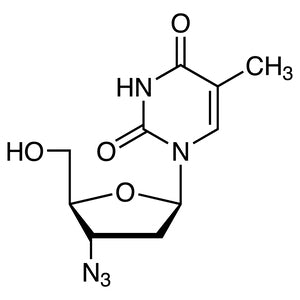
3'-Azido-3'-deoxythymidine TCI A2052
Regular price Rp 2.464.350,00Regular priceRp 1.738.800,00Sale price Rp 2.464.350,00 -
ValacyclovirHydrochloride TCI V0111
Regular price Rp 2.147.250,00Regular priceRp 1.517.250,00Sale price Rp 2.147.250,00 -
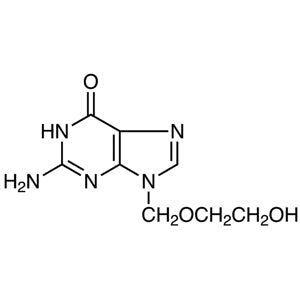
Acyclovir TCI A1915
Regular price Rp 530.250,00Regular priceRp 386.400,00Sale price Rp 530.250,00 -
Penciclovir TCI P2164
Regular price Rp 2.411.850,00Regular priceRp 1.702.050,00Sale price Rp 2.411.850,00 -
2',3'-Dideoxyinosine TCI D3066
Regular price Rp 1.060.500,00Regular priceRp 757.050,00Sale price Rp 1.060.500,00 -
Trifluorothymidine TCI T2511
Regular price Rp 3.232.950,00Regular priceRp 2.276.400,00Sale price Rp 3.232.950,00 -
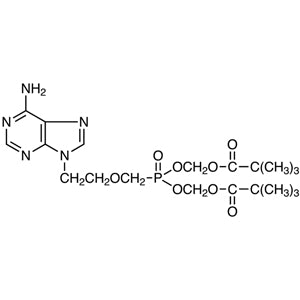
AdefovirDipivoxil TCI A2414
Regular price Rp 1.033.200,00Regular priceRp 738.150,00Sale price Rp 1.033.200,00 -
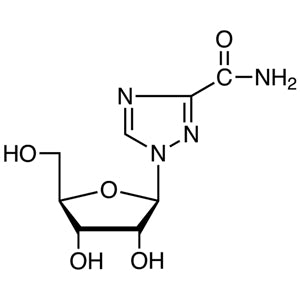
Ribavirin TCI R0077
Regular price Rp 1.008.000,00Regular priceRp 720.300,00Sale price Rp 1.008.000,00