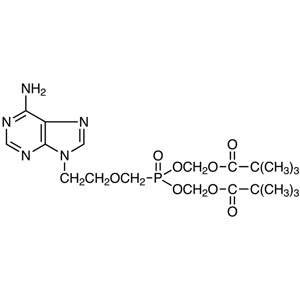
Adefovir Dipivoxil is a chemical compound widely used in life science research, particularly in biochemical and reagent applications. As a derivative of adefovir, it serves as a nucleoside analog, commonly employed in the treatment of hepatitis B virus infections. In laboratory settings, this compound plays a crucial role in the synthesis of active pharmaceutical ingredients and as a test material in pharmacological and virological studies. Its significance extends to drug development and antiviral therapy research, making it an essential tool for scientists working in diverse research fields.
This compound is preferred due to its stable chemical properties and compatibility with various experimental conditions. It can be dissolved in organic solvents such as ethylamine, which facilitates its use in a wide range of analytical and synthetic procedures. Its molecular structure, though complex, allows for consistent performance in laboratory experiments, ensuring reliable results. The compound’s unique characteristics make it suitable for high-precision research, where accuracy and reproducibility are paramount. Additionally, its availability in multiple packaging formats supports its use across different research scales, from small-scale experiments to large-scale studies.
In Indonesian laboratories, Adefovir Dipivoxil is commonly used in pharmaceutical and virology research. It is frequently applied in studies aimed at developing new antiviral treatments and understanding the mechanisms of viral infections. Its presence in research facilities across Indonesia highlights its importance in advancing scientific knowledge and supporting the development of innovative therapeutic solutions.
TCI brochures (PDF)
- Nucleosides, Nucleotides, Nucleic Acids and Related Reagents 2026-03-23 · p. 4
- Antimicrobials and Antitumor Agents for Research and Experimental Use 2025-04-24 · p. 12
- Pharmaceutical Ingredients for Research and Experimental Use 2026-03-09 · p. 12
- Reagents for Biological Research 2025-03-11 · p. 44
- Used in antiviral drug development for hepatitis B research due to its nucleoside analog properties and therapeutic potential.
- Applied in pharmacological studies to evaluate the efficacy and safety of antiviral compounds in controlled environments.
- Utilized in virology research to investigate the interaction between viral pathogens and potential therapeutic agents.
- Employed in biochemical synthesis processes for the production of active pharmaceutical ingredients and related compounds.
- Integrated into analytical testing protocols to assess the purity and stability of pharmaceutical formulations under various conditions.
| Brand | TCI |
|---|---|
| CAS number | 142340-99-6 |
| Molecular formula | — |
| Purity | — |
| Category | Life Science > Biochemicals and Reagents > Antibiotics |
| Pack sizes | Available in multiple packaging formats to suit different research scales |
| Physical form | Solid |
| Storage | Store in a cool, dry place away from direct light and moisture |
Adefovir Dipivoxil should be stored in a cool, dry environment, away from direct sunlight and moisture. It is recommended to keep the compound in a sealed container to prevent exposure to air and humidity, which may affect its stability. For optimal preservation, it should be stored at a temperature between 15°C and 25°C. When handling, it is important to use appropriate personal protective equipment, such as gloves and safety goggles, to ensure laboratory safety. The compound should be kept in a well-ventilated area to minimize any potential risks associated with its chemical properties. Regular monitoring of storage conditions is advised to maintain the integrity and effectiveness of the material in research applications.
—
Product Categories
- Biochemicals and ReagentsAntibioticsAntibiotics (by Application)
- Biochemicals and ReagentsEnzymes, Enzyme Inhibitors, Enzyme SubstratesEnzyme Inhibitors [Biochemicals and Reagents]
- Biochemicals and ReagentsNucleosides, Nucleotides, OligonucleotidesNucleoside Analogs
- Biochemicals and ReagentsPharmaceutical Research Reagents (for Experimental Use)Antiviral Research Reagents (for Experimental Use)
- Biochemicals and Reagents
- MicrobiologyAntibioticsAntibiotics (by Application)
- Pharmaceutical Development and Drug Discovery ResearchPharmaceutical Research Reagents (for Experimental Use)Antiviral Research Reagents (for Experimental Use)
- Pharmaceutical Development and Drug Discovery ResearchAntibioticsAntibiotics (by Application)
Produk Terkait
-
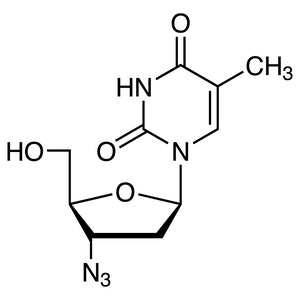
3'-Azido-3'-deoxythymidine TCI A2052
Regular price From Rp 2.464.350,00Regular priceRp 1.738.800,00Sale price From Rp 2.464.350,00 -
Lamivudine TCI L0217
Regular price From Rp 1.087.800,00Regular priceRp 775.950,00Sale price From Rp 1.087.800,00 -
2',3'-Didehydro-3'-deoxythymidine TCI D3580
Regular price From Rp 1.643.250,00Regular priceRp 1.164.450,00Sale price From Rp 1.643.250,00 -
2',3'-Dideoxyinosine TCI D3066
Regular price From Rp 1.060.500,00Regular priceRp 757.050,00Sale price From Rp 1.060.500,00 -
Telbivudine TCI T4158
Regular price Rp 2.411.850,00Regular priceRp 1.702.050,00Sale price Rp 2.411.850,00 -
Trifluorothymidine TCI T2511
Regular price From Rp 3.232.950,00Regular priceRp 2.276.400,00Sale price From Rp 3.232.950,00 -
Abacavir TCI A2694
Regular price Rp 2.782.500,00Regular priceRp 1.961.400,00Sale price Rp 2.782.500,00 -
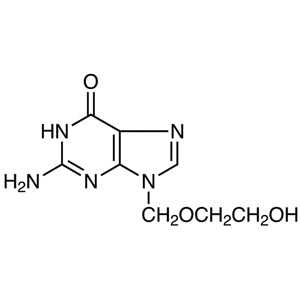
Acyclovir TCI A1915
Regular price From Rp 530.250,00Regular priceRp 386.400,00Sale price From Rp 530.250,00