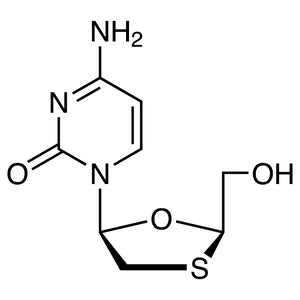
Lamivudine, with the CAS number 134678-17-4, is a widely used chemical compound in life sciences and biochemical research. It plays a crucial role in the study of antiretroviral drugs, particularly in the investigation of HIV-related therapies. As a key reagent, it is essential for analyzing viral mechanisms and understanding the body's immune response. Its application spans across various laboratory settings, making it a versatile tool for researchers and scientists.
Lamivudine is valued for its chemical stability and consistent performance under different laboratory conditions. Its unique molecular structure allows it to interact effectively with various substrates and enzymes, ensuring reliable results in experiments. These properties make it a preferred choice for applications requiring precision and reproducibility. Additionally, its resistance to certain environmental conditions enhances its usability and storage longevity, contributing to its popularity in scientific research.
In Indonesian laboratories, Lamivudine is commonly used in medical and pharmacological research to evaluate the effectiveness of antiretroviral treatments. It is also an important tool in educational and technological development initiatives, particularly in institutions focused on health sciences. Its role in advancing research and education underscores its significance in the scientific community.
TCI brochures (PDF)
- Nucleosides, Nucleotides, Nucleic Acids and Related Reagents 2026-03-23 · p. 4
- Antimicrobials and Antitumor Agents for Research and Experimental Use 2025-04-24 · p. 12
- Pharmaceutical Ingredients for Research and Experimental Use 2026-03-09 · p. 13
- Reagents for Biological Research 2025-03-11 · p. 61
- Antiretroviral Drug Testing: Lamivudine is essential for evaluating the efficacy of antiretroviral compounds against HIV, supporting research into new treatment options.
- Viral Activity Assays: It is used in experiments to measure the antiviral activity of compounds, aiding in the development of effective therapeutic agents.
- Immunological Response Studies: Lamivudine helps researchers understand how the body responds to viral infections, contributing to immunology and virology research.
- Pharmacological Research: It is a key reagent in studies assessing drug interactions and metabolic pathways in the context of HIV treatment.
- Educational and Training Programs: Its use in academic and training settings supports the development of skilled researchers and scientists in health-related fields.
| Brand | TCI |
|---|---|
| CAS number | 134678-17-4 |
| Molecular formula | — |
| Purity | — |
| Category | Life Science > Biochemicals and Reagents > Antibiotics |
| Pack sizes | Available in various quantities as per supplier specifications |
| Physical form | Solid (as per standard chemical properties) |
| Storage | Store in a cool, dry place away from direct sunlight |
Lamivudine should be stored in a cool, dry environment to maintain its chemical stability and prevent degradation. It is recommended to keep it in a sealed container to avoid exposure to moisture and air, which can affect its integrity. Proper labeling of storage containers is essential for safe handling and easy identification. In laboratory settings, it should be handled with appropriate personal protective equipment to ensure safety. Regular monitoring of storage conditions ensures that the compound remains effective for its intended applications. Maintaining a controlled environment minimizes the risk of contamination and ensures consistent performance in experiments.
—
Product Categories
- Biochemicals and ReagentsAntibioticsAntibiotics (by Application)
- Biochemicals and ReagentsEnzymes, Enzyme Inhibitors, Enzyme SubstratesEnzyme Inhibitors [Biochemicals and Reagents]
- Biochemicals and ReagentsNucleosides, Nucleotides, OligonucleotidesNucleoside Analogs
- Biochemicals and ReagentsPharmaceutical Research Reagents (for Experimental Use)Antiviral Research Reagents (for Experimental Use)
- Biochemicals and Reagents
- MicrobiologyAntibioticsAntibiotics (by Application)
- Pharmaceutical Development and Drug Discovery ResearchPharmaceutical Research Reagents (for Experimental Use)Antiviral Research Reagents (for Experimental Use)
- Pharmaceutical Development and Drug Discovery ResearchAntibioticsAntibiotics (by Application)
Produk Terkait
-
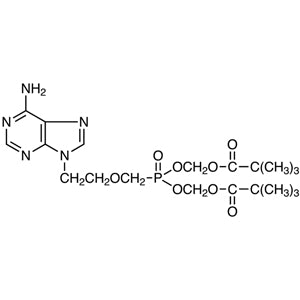
AdefovirDipivoxil TCI A2414
Regular price From Rp 1.033.200,00Regular priceRp 738.150,00Sale price From Rp 1.033.200,00 -
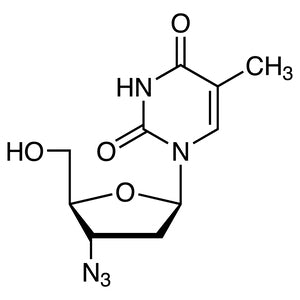
3'-Azido-3'-deoxythymidine TCI A2052
Regular price From Rp 2.464.350,00Regular priceRp 1.738.800,00Sale price From Rp 2.464.350,00 -
2',3'-Didehydro-3'-deoxythymidine TCI D3580
Regular price From Rp 1.643.250,00Regular priceRp 1.164.450,00Sale price From Rp 1.643.250,00 -
2',3'-Dideoxyinosine TCI D3066
Regular price From Rp 1.060.500,00Regular priceRp 757.050,00Sale price From Rp 1.060.500,00 -
Telbivudine TCI T4158
Regular price Rp 2.411.850,00Regular priceRp 1.702.050,00Sale price Rp 2.411.850,00 -
Trifluorothymidine TCI T2511
Regular price From Rp 3.232.950,00Regular priceRp 2.276.400,00Sale price From Rp 3.232.950,00 -
Abacavir TCI A2694
Regular price Rp 2.782.500,00Regular priceRp 1.961.400,00Sale price Rp 2.782.500,00 -
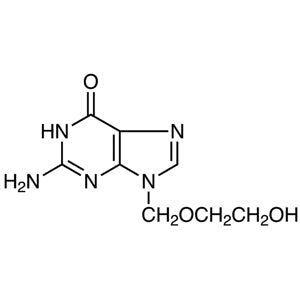
Acyclovir TCI A1915
Regular price From Rp 530.250,00Regular priceRp 386.400,00Sale price From Rp 530.250,00