

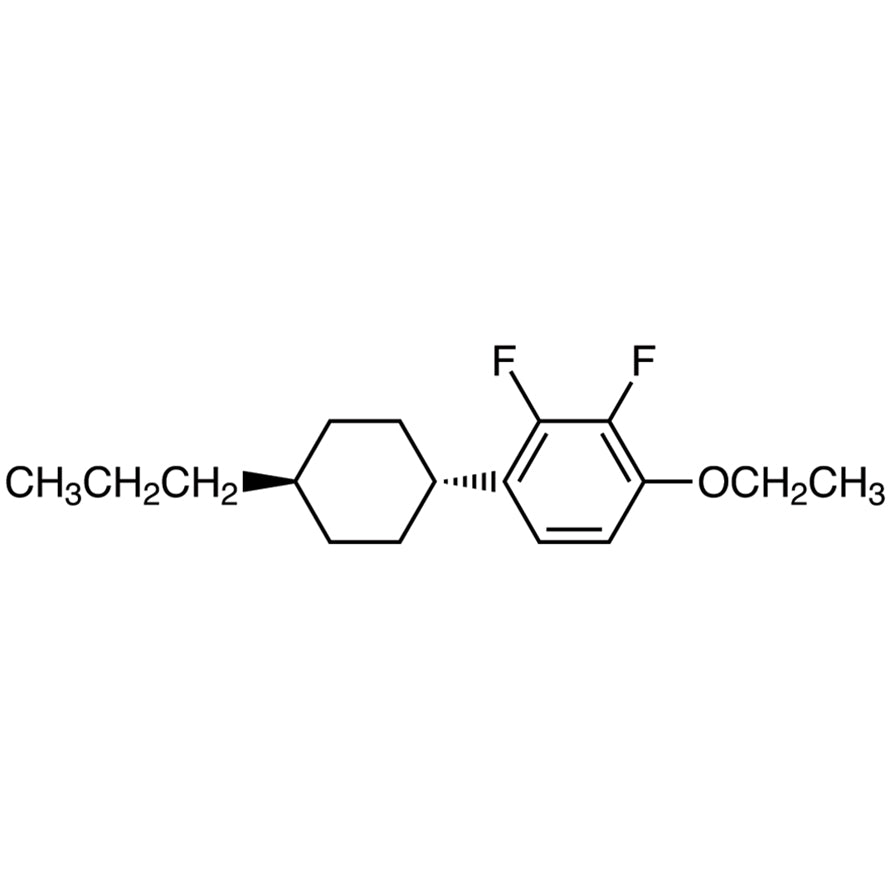
TCI E1230, with the CAS number 174350-05-1, is a specialized organic compound used in the field of liquid crystal (LC) material research. This compound is a key component in the development of advanced display technologies, such as LCD and OLED screens, due to its unique molecular structure. Its chemical composition includes ethoxy, difluoro, and trans-4-propylcyclohexyl groups, which contribute to its functional properties. In the laboratory, it serves as a critical building block for creating materials with precise molecular alignment and thermal stability.
The compound's chemical stability, solubility in organic solvents, and ability to form ordered molecular structures make it a preferred choice for researchers. These properties allow for the precise control of molecular orientation, which is essential in the design of high-performance liquid crystal materials. Its thermal characteristics also ensure reliability under varying experimental conditions, making it suitable for use in controlled laboratory environments. The combination of these features supports its application in both academic and industrial research settings.
In Indonesian laboratories, TCI E1230 is widely used in material science and information technology research. It is integrated into projects aimed at developing new liquid crystal materials for various industrial applications. Researchers in Indonesia rely on this compound for its consistent performance and compatibility with advanced fabrication techniques. Its role in supporting innovation in display technology and material science underscores its importance in the scientific community.
TCI brochures (PDF)
- Liquid Crystal Materials 2026-04-01 · p. 5
Related TCI products
- TCI B5364 208709-55-1 1-Butoxy-2,3-difluoro-4-(trans-4-propylcyclohexyl)benzene
- TCI P1617 61203-99-4 4-(trans-4-Propylcyclohexyl)benzonitrile
- TCI M3152 81936-32-5 1-Methoxy-4-(trans-4-propylcyclohexyl)benzene
- TCI E1487 124728-81-0 (trans,trans)-4-(4-Ethoxy-2,3-difluorophenyl)-4'-pentyl-1,1'-bi(cyclohexane)
- TCI E1477 253199-08-5 trans,trans-4-(4-Ethoxy-2,3-difluorophenyl)-4'-ethyl-1,1'-bi(cyclohexyl)
- TCI E1389 124729-02-8 trans-1-Ethoxy-2,3-difluoro-4-(4-pentylcyclohexyl)benzene
- Liquid Crystal Material Development: This compound is ideal for creating advanced LC materials used in display technologies due to its molecular structure and thermal stability.
- Organic Synthesis Research: Its chemical stability and solubility make it suitable for use in synthetic processes that require precise molecular interactions.
- Display Technology Innovation: It supports the development of next-generation LCD and OLED screens by enabling controlled molecular alignment.
- Material Science Studies: Researchers use it to investigate the behavior of LC materials under different environmental conditions.
- Industrial Material Prototyping: It is employed in the creation of prototype materials for use in electronic and optical applications.
| Brand | TCI |
|---|---|
| CAS number | 174350-05-1 |
| Molecular formula | — |
| Purity | — |
| Category | Materials Science > Electronic Materials > Liquid Crystal (LC) Materials |
| Pack sizes | Available in standard laboratory quantities as per supplier specifications |
| Physical form | Solid or liquid, depending on the specific formulation |
| Storage | Store in a cool, dry place away from direct sunlight and moisture |
This compound should be stored in a cool, dry environment, away from direct sunlight and moisture to maintain its chemical integrity. It is recommended to use airtight, sealed containers made of materials compatible with organic solvents to prevent contamination and evaporation. Due to its chemical nature, it should be handled with appropriate personal protective equipment, such as gloves and safety goggles, to ensure laboratory safety. Storage conditions should be controlled to avoid temperature fluctuations that could affect its stability. Always ensure proper ventilation when working with this material to minimize exposure risks. Regular monitoring of storage conditions is essential to maintain the compound's effectiveness and safety in laboratory settings.
—
Produk Terkait
-
1-Butoxy-2,3-difluoro-4-(trans-4-propylcyclohexyl)benzene TCI B5364
Regular price From Rp 1.696.800,00Regular price -
4-(trans-4-Propylcyclohexyl)benzonitrile TCI P1617
Regular price Rp 2.597.700,00Regular price -
1-Methoxy-4-(trans-4-propylcyclohexyl)benzene TCI M3152
Regular price From Rp 689.850,00Regular price -
(trans,trans)-4-(4-Ethoxy-2,3-difluorophenyl)-4'-pentyl-1,1'-bi(cyclohexane) TCI E1487
Regular price From Rp 795.900,00Regular price -
trans,trans-4-(4-Ethoxy-2,3-difluorophenyl)-4'-ethyl-1,1'-bi(cyclohexyl) TCI E1477
Regular price Rp 717.150,00Regular price -
trans-1-Ethoxy-2,3-difluoro-4-(4-pentylcyclohexyl)benzene TCI E1389
Regular price From Rp 2.094.750,00Regular price -
1-Ethoxy-4-(trans-4-propylcyclohexyl)benzene TCI E1369
Regular price From Rp 1.298.850,00Regular price -
1-Ethoxy-4-(trans-4-pentylcyclohexyl)benzene TCI E1367
Regular price From Rp 1.353.450,00Regular price


