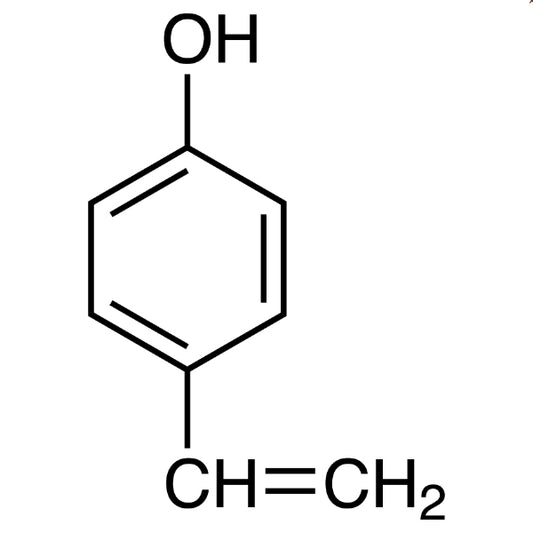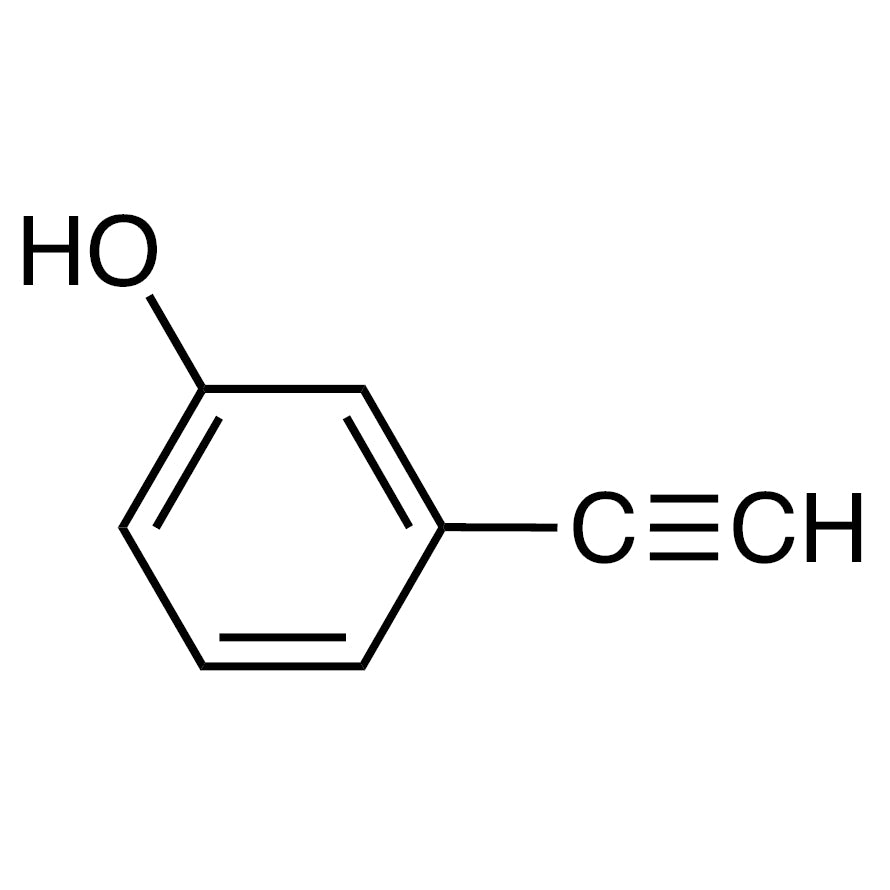
3-Ethynylphenol is a chemical compound widely used in laboratory settings for various chemical reactions and organic synthesis processes. It belongs to the category of non-heterocyclic building blocks and is recognized for its aromatic structure combined with an ethynyl group, which contributes to its reactivity and versatility. This compound plays a crucial role in the development of complex molecules, serving as a foundational element in the synthesis of derivatives such as phenolic compounds and heterocyclic structures. Its unique chemical properties make it an essential tool for chemists and researchers working in both academic and industrial environments.
The compound is valued for its stability and reactivity, allowing it to participate effectively in substitution and addition reactions. It exhibits good solubility in organic solvents, which simplifies mixing and reaction processes in the laboratory. These characteristics make it highly suitable for applications requiring precise chemical interactions. Additionally, its chemical stability under specific conditions ensures reliable results in experimental setups, making it a preferred choice for a wide range of chemical investigations.
In Indonesian laboratories, 3-Ethynylphenol is commonly used by researchers and students in fields such as organic chemistry, pharmaceutical sciences, and material development. It is essential for experiments involving the synthesis of new compounds or the modification of existing molecular structures. Its availability in the local market supports the ongoing research and development efforts in these scientific disciplines.
Related TCI products
- TCI V0088 2628-17-3 4-Vinylphenol (ca. 10% in Propylene Glycol)
- TCI N1177 104-40-5 4-Nonylphenol
- TCI N0300 84852-15-3 4-Nonylphenol (mixture of branched chain isomers)
- TCI M3600 7786-61-0 2-Methoxy-4-vinylphenol (stabilized with TBC)
- TCI E1563 42472-69-5 1-(4-Ethynylphenyl)ethan-1-one
- TCI T3151 177991-01-4 Tetrakis(4-ethynylphenyl)methane
- Organic synthesis experiments benefit from 3-Ethynylphenol due to its reactivity and ability to form complex molecular structures through various chemical reactions.
- Pharmaceutical research utilizes this compound as a building block for the development of new drug molecules and therapeutic agents.
- Material science applications leverage its chemical properties for the creation of advanced polymers and functional materials.
- Analytical chemistry laboratories use it as a standard reference compound for spectroscopic and chromatographic analyses.
- Teaching laboratories incorporate it into practical sessions to demonstrate organic reaction mechanisms and synthesis techniques.
| Brand | TCI |
|---|---|
| CAS number | 10401-11-3 |
| Molecular formula | — |
| Purity | — |
| Category | Chemistry > Building Blocks > Non-Heterocyclic Building Blocks |
| Pack sizes | Available in various quantities as per standard laboratory supply formats |
| Physical form | Solid or liquid, depending on the specific product variant |
| Storage | Store in a cool, dry place away from direct sunlight and incompatible materials |
3-Ethynylphenol should be stored in a cool, dry environment to maintain its chemical integrity and prevent degradation. It is recommended to keep it in a tightly sealed container to minimize exposure to moisture and air. Due to its reactivity, it should be stored away from strong oxidizing agents and incompatible substances. In laboratory settings, proper personal protective equipment, such as gloves and safety goggles, should always be worn when handling this compound. Regular monitoring of storage conditions ensures the compound remains stable and suitable for use in chemical experiments.
—
Produk Terkait
-
4-Vinylphenol(ca.10%inPropyleneGlycol) TCI V0088
Regular price From Rp 1.298.850,00Regular price -
4-Nonylphenol TCI N1177
Regular price From Rp 2.121.000,00Regular price -
4-Nonylphenol(mixtureofbranchedchainisomers) TCI N0300
Regular price From Rp 505.050,00Regular price -
2-Methoxy-4-vinylphenol(stabilizedwithTBC) TCI M3600
Regular price From Rp 2.862.300,00Regular price -
1-(4-Ethynylphenyl)ethan-1-one TCI E1563
Regular price From Rp 1.087.800,00Regular price -
Tetrakis(4-ethynylphenyl)methane TCI T3151
Regular price Rp 3.976.350,00Regular price -
9-Ethynylphenanthrene TCI E1301
Regular price From Rp 3.419.850,00Regular price -
9-(4-Ethynylphenyl)carbazole TCI E1055
Regular price From Rp 3.180.450,00Regular price