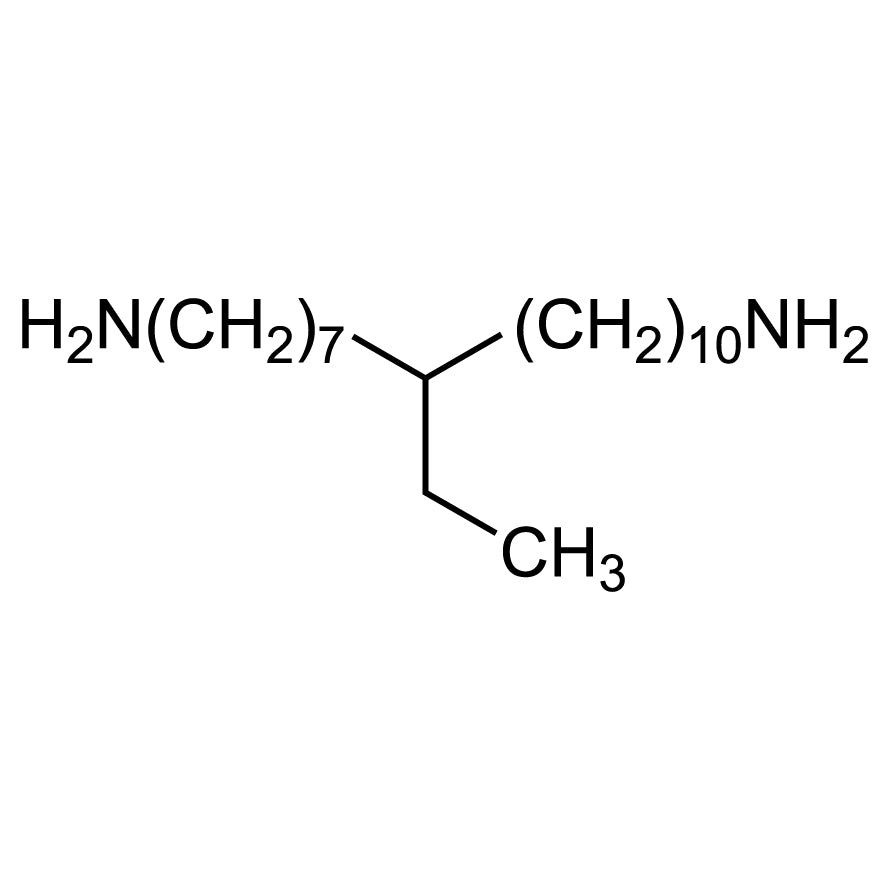
Ethyl-1,18-octadecanediamine is a long-chain aliphatic diamine supplied as a mixture of branched chain isomers. Its molecule carries two primary amine groups at the ends of a long carbon chain, a configuration that makes it a valuable bifunctional monomer in polymer chemistry. In the preparation of polyamides, polyureas, and epoxy-based systems, the diamine acts as the component that links other monomer units together into long chains or into three-dimensional networks. The eighteen-carbon chain length makes its own characteristic contribution to the final properties of the material that is formed.
The characteristic that leads researchers to select this material lies in the combination of a long hydrocarbon chain with reactive amine end groups. The long chain contributes hydrophobic character, flexibility, and a wide spacing between crosslink points, so the resulting material tends to be more pliable, more water resistant, and to show a lower glass transition temperature than products made from short-chain diamines. The branched isomer mixture adds a practical advantage as well: branching hinders crystalline packing, so the material is easier to handle and to blend with resins than a strictly linear diamine of comparable length.
In Indonesian laboratories, this monomer is typically used in university and institutional research settings working on polymer synthesis, coatings, and adhesives, as well as in industrial R&D groups developing formulated resin systems. It is normally handled on a bench or small pilot scale, weighed into reaction vessels together with diacids, diisocyanates, or epoxy resins, and studied for the way its chain length and branching modify the mechanical and thermal behaviour of the cured product.
Related TCI products
- TCI B3852 56602-77-8 Bis(aminomethyl)norbornane (mixture of isomers)
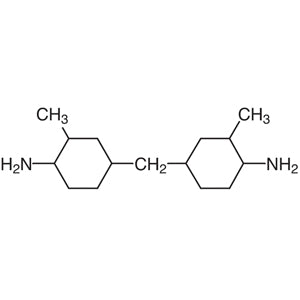
- TCI M1422 6864-37-5 4,4'-Methylenebis(2-methylcyclohexylamine) (mixture of isomers)
- TCI M0699 1761-71-3 4,4'-Methylenebis(cyclohexylamine) (mixture of isomers)
- TCI D6282 75389-89-8 2,4(or 4,6)-Diethyl-6(or 2)-methylbenzene-1,3-diamine (mixture of isomers)
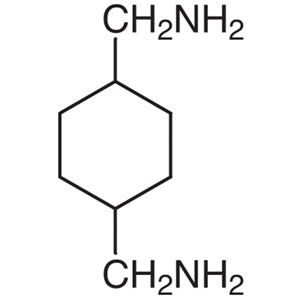
- TCI B1083 2549-93-1 1,4-Bis(aminomethyl)cyclohexane (cis- and trans- mixture)
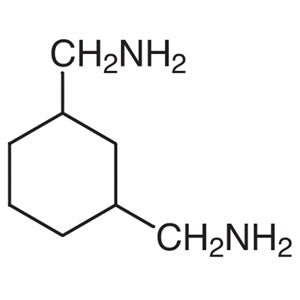
- TCI B1005 2579-20-6 1,3-Bis(aminomethyl)cyclohexane (cis- and trans- mixture)
- Polyamide synthesis research: the two terminal primary amine groups allow direct condensation with diacids or diesters, while the long chain lowers chain stiffness and produces softer, more flexible polyamide backbones.
- Epoxy curing agent studies: the primary amines react with epoxide rings to build crosslinked networks, and the eighteen-carbon spacer gives wide inter-crosslink spacing for toughened, less brittle cured resins.
- Polyurea and polyurethane formulation work: reaction of the amine ends with isocyanate functionality forms urea linkages, with the hydrophobic chain improving water resistance in the resulting elastomeric systems.
- Structure-property investigations in polymer science: comparing this long-chain branched diamine against short-chain linear analogues reveals how chain length and branching govern glass transition temperature and flexibility.
- Coating and adhesive development: the branched isomer mixture resists crystalline packing, so the diamine blends more readily with resin systems during formulation trials than comparable linear long-chain diamines.
| Brand | TCI |
|---|---|
| CAS number | 2759148-77-9 |
| Molecular formula | — |
| Purity | — |
| Category | Materials Science > Polymer/Macromolecule Reagents > Monomers |
| Pack sizes | available in standard TCI research pack sizes; please confirm the packaging option required |
| Physical form | — |
| Storage | keep in a cool, dry place in a tightly closed container, following the storage instructions on the manufacturer's label |
- Product code: E1568
- Composition: mixture of branched chain isomers
Store the container tightly closed in a cool, dry, well-ventilated area away from heat sources and away from incompatible materials such as strong acids and oxidising agents. Aliphatic amines readily absorb carbon dioxide and moisture from the air, so containers should be resealed promptly after use and, where practical, kept under an inert atmosphere. Handle in a fume hood using chemical-resistant gloves, safety goggles, and a laboratory coat, since primary amines are irritating to the skin, eyes, and respiratory tract. Use compatible glass or chemically resistant plastic containers for transfer and weighing, keep the workspace clean, and consult the manufacturer's safety data sheet before use and before disposal of residues.
—
Produk Terkait
-
Bis(aminomethyl)norbornane(mixtureofisomers) TCI B3852
Regular price From Rp 980.700,00Regular price -
4,4'-Methylenebis(2-methylcyclohexylamine)(mixtureofisomers) TCI M1422
Regular price From Rp 505.050,00Regular price -
4,4'-Methylenebis(cyclohexylamine)(mixtureofisomers) TCI M0699
Regular price From Rp 477.750,00Regular price -
2,4(or4,6)-Diethyl-6(or2)-methylbenzene-1,3-diamine(mixtureofisomers) TCI D6282
Regular price From Rp 1.618.050,00Regular price -
1,4-Bis(aminomethyl)cyclohexane(cis-andtrans-mixture) TCI B1083
Regular price From Rp 1.881.600,00Regular price -
1,3-Bis(aminomethyl)cyclohexane(cis-andtrans-mixture) TCI B1005
Regular price From Rp 505.050,00Regular price -
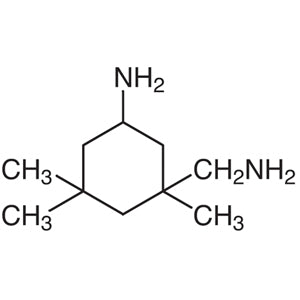
Isophoronediamine(cis-andtrans-mixture) TCI I0228
Regular price From Rp 477.750,00Regular price -
1,2-Cyclohexanediamine(cis-andtrans-mixture) TCI D0277
Regular price From Rp 795.900,00Regular price