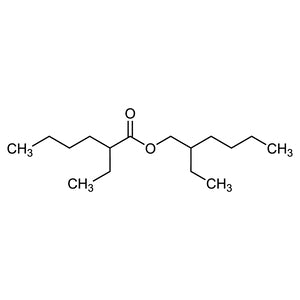
2-Ethylhexyl 2-Ethylhexanoate is a branched aliphatic ester formed from 2-ethylhexanoic acid and 2-ethylhexanol. Both halves of the molecule carry an ethyl branch at the alpha position, producing a compound that is strongly nonpolar, high-boiling, and not readily volatile at room temperature. In the laboratory, this material is used as a reference ester, a low-volatility solvent, a test substance for material compatibility work, and a model compound in studies of lubricants and ester-based formulations.
The characteristics that make it a preferred choice are its combination of stability and favourable physical behaviour. The highly branched structure hinders orderly molecular packing, so the compound remains liquid across a wide temperature range and shows low viscosity. The absence of double bonds and other reactive groups leaves it relatively inert towards oxidation and hydrolysis under normal storage conditions, while its long hydrocarbon chains give good dissolving power for nonpolar organic substances. These emollient and lubricating properties are the reason compounds of this type are examined in the development of cosmetic formulations and synthetic lubricating oils.
In Indonesian laboratories, the material is typically handled in university research groups, industrial quality-control units, and formulation development laboratories. Its low volatility makes it convenient for open-bench work in the warm, humid conditions common across the region, since evaporative losses during weighing and transfer remain small. It is generally purchased as a catalogue reference item for method development and comparative testing rather than as a bulk process chemical.
Related TCI products
- TCI S0862 19766-89-3 Sodium 2-Ethylhexanoate
- TCI E0404 94-04-2 Vinyl 2-Ethylhexanoate (stabilized with MEHQ)
- TCI E0121 3164-85-0 Potassium 2-Ethylhexanoate
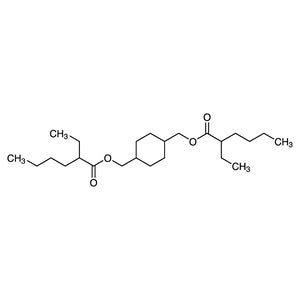
- TCI C1133 53148-32-6 1,4-Cyclohexanedimethanol Bis(2-ethylhexanoate) (cis- and trans- mixture)
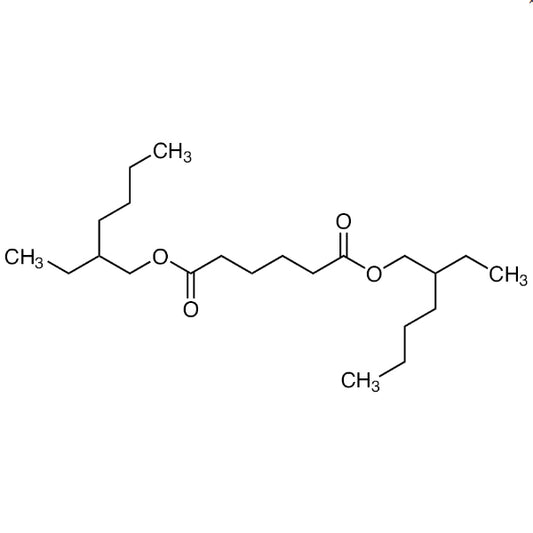
- TCI A0163 103-23-1 Bis(2-ethylhexyl) Adipate
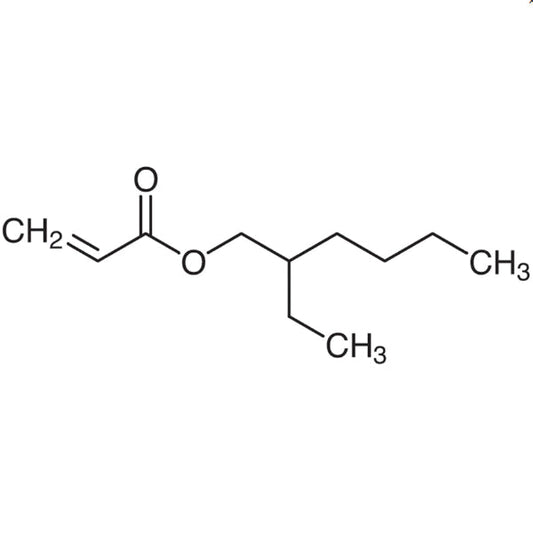
- TCI A0144 103-11-7 2-Ethylhexyl Acrylate Monomer (stabilized with MEHQ)
- Reference ester in analytical method development: its defined branched structure gives a consistent, well-behaved standard for chromatographic and spectroscopic comparison against other ester samples.
- Low-volatility solvent for bench procedures: the high boiling point limits evaporation during extended heating or open-vessel work, keeping solution concentrations stable throughout a run.
- Material compatibility testing: the compound is used to expose polymers, elastomers, gaskets, and coatings to a nonpolar ester environment and observe swelling or degradation effects.
- Model compound in lubricant studies: the branched, saturated backbone represents synthetic ester base oils, allowing researchers to examine lubricating behaviour without complex multicomponent mixtures.
- Ester-based formulation research: its emollient character and good solvency for nonpolar organics support exploratory work on cosmetic bases and synthetic oil formulations at laboratory scale.
| Brand | TCI (product code E1609) |
|---|---|
| CAS number | 7425-14-1 |
| Molecular formula | — |
| Purity | — |
| Category | Chemistry > Building Blocks > Non-Heterocyclic Building Blocks |
| Pack sizes | supplied in TCI standard laboratory catalogue pack sizes; please confirm the available option when ordering |
| Physical form | liquid at room temperature, low viscosity |
| Storage | keep in a cool, dry place in a tightly closed container, away from heat and ignition sources |
Store the container tightly closed in a cool, dry, well-ventilated area away from heat, sparks, and open flame. Chemically resistant glass bottles with solvent-compatible caps are suitable; verify that any plastic container or seal tolerates prolonged contact with a nonpolar ester before use. Handle in a fume hood or a well-ventilated workspace and wear safety glasses, a laboratory coat, and appropriate chemical-resistant gloves. Avoid contact with skin and eyes, and prevent release to drains. Keep the container closed when not in use to limit moisture ingress, and follow the supplier safety data sheet together with your institutional waste-disposal procedures.
—
Produk Terkait
-
Sodium2-Ethylhexanoate TCI S0862
Regular price Rp 452.550,00Regular price -
Vinyl2-Ethylhexanoate(stabilizedwithMEHQ) TCI E0404
Regular price Rp 1.167.600,00Regular price -
Potassium2-Ethylhexanoate TCI E0121
Regular price From Rp 1.167.600,00Regular price -
1,4-CyclohexanedimethanolBis(2-ethylhexanoate)(cis-andtrans-mixture) TCI C1133
Regular price Rp 2.809.800,00Regular price -
Bis(2-ethylhexyl)Adipate TCI A0163
Regular price Rp 452.550,00Regular price -
2-EthylhexylAcrylateMonomer(stabilizedwithMEHQ) TCI A0144
Regular price From Rp 505.050,00Regular price -
2-EthylhexylAcetate TCI A0031
Regular price From Rp 955.500,00Regular price -
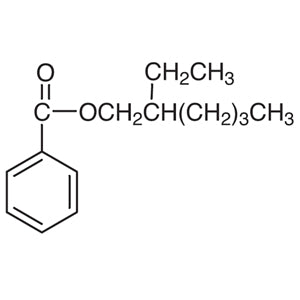
2-EthylhexylBenzoate TCI B1977
Regular price Rp 2.677.500,00Regular price