Ethenesulfonyl Chloride (TCI E1665), with CAS number 6608-47-5, is a chemical compound widely used as a building block in organic synthesis. It serves as a key reagent in laboratories for the creation of complex organic molecules. Its simple molecular structure plays a crucial role in various chemical reactions, particularly those involving electrophilic substrates. This compound is essential in the development of new compounds with potential applications in pharmaceuticals and industrial chemistry.
The reactivity of Ethenesulfonyl Chloride makes it a preferred choice for synthetic chemists. It is particularly effective in substitution and addition reactions due to its ability to form stable intermediates. Its high reactivity allows it to interact with a wide range of substrates, enabling the synthesis of diverse chemical structures. This versatility is highly valued in research settings where precise control over reaction outcomes is necessary.
In Indonesian laboratories, Ethenesulfonyl Chloride is commonly used in organic chemistry research. It is a staple in the development of new compounds with potential applications in drug discovery and chemical innovation. Its availability in various packaging options facilitates its use in both small-scale and large-scale experiments. Its role in advancing chemical research in Indonesia is significant and well-established.
Advantages (TCI brochure)
- Reacts rapidly with nucleophiles under mild conditions, enabling introduction of vinylsulfonyl groups.
- Diels-Alder reactions at room temperature have been reported.
- Suitable for sequential substituent introduction.
- Available in large quantities.
TCI brochures (PDF)
- Highly Reactive, Multi-Purpose Building Block Ethenesulfonyl Chloride 2026-04-16 · p. 1
Related TCI products
- TCI I0802 98995-40-5 4-Isopropoxybenzenesulfonyl Chloride
- TCI I0811 63059-29-0 2-Iodobenzenesulfonyl Chloride
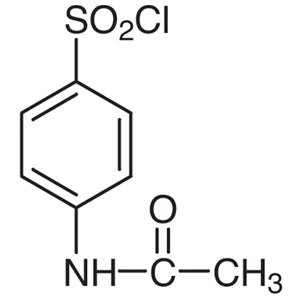
- TCI A0074 121-60-8 4-Acetamidobenzenesulfonyl Chloride
- TCI T2035 51527-73-2 2,4,6-Trichlorobenzenesulfonyl Chloride
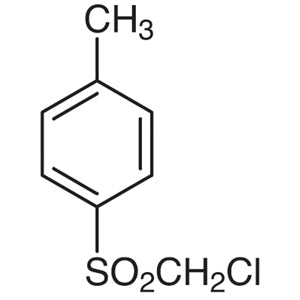
- TCI T1505 7569-26-8 p-Toluenesulfonylmethyl Chloride
- TCI B3965 23095-05-8 5-Bromo-2-methoxybenzenesulfonyl Chloride
- Organic synthesis is a primary application where Ethenesulfonyl Chloride is used to create complex organic molecules through substitution and addition reactions.
- Pharmaceutical research benefits from this compound as it helps in the development of new drugs by enabling the synthesis of functional groups.
- Industrial chemistry applications rely on Ethenesulfonyl Chloride for the production of specialty chemicals and intermediates.
- Academic research in chemical laboratories utilizes this compound for teaching and experimental purposes in synthetic chemistry courses.
- Chemical innovation projects use Ethenesulfonyl Chloride to explore new reaction pathways and develop novel compounds with unique properties.
From the TCI brochure
- Nucleophilic substitution to afford vinyl sulfonamides / vinyl sulfonates
- Vinyl sulfonamides as reactive moieties ('warheads') in covalent drug research
- Diels-Alder reaction
| Brand | TCI |
|---|---|
| CAS number | 6608-47-5 |
| Molecular formula | — |
| Purity | — |
| Category | Chemistry > Building Blocks > Non-Heterocyclic Building Blocks |
| Pack sizes | Available in various sizes to suit different experimental needs |
| Physical form | Liquid |
| Storage | Store in a cool, dry place away from light and moisture |
Ethenesulfonyl Chloride should be stored in a cool, dry environment, away from direct light and moisture. It is recommended to keep it in a tightly sealed container to prevent exposure to air and humidity. Due to its reactivity, it should be handled with care, using appropriate personal protective equipment such as gloves and safety goggles. It is important to ensure that the storage area is well-ventilated to minimize the risk of inhalation of vapors. Avoid contact with incompatible materials, such as strong bases or reducing agents, to prevent unwanted reactions. Proper labeling and storage practices are essential to maintain the integrity and safety of this compound in the laboratory.
References cited in the TCI brochure
- Florine Toulotte. Towards the design of ligands of the internal pocket TEADs C-terminal domain European Journal of Medicinal Chemistry, 2025. doi:10.1016/j.ejmech.2024.117026
- Robert M. Moriarty. Metal-Free Intramolecular Aziridination of Alkenes Using Hypervalent Iodine Based Sulfonyliminoiodanes Organic Letters, 2009. doi:10.1021/ol9026655
Produk Terkait
-
4-IsopropoxybenzenesulfonylChloride TCI I0802
Regular price From Rp 2.597.700,00Regular priceRp 1.816.500,00Sale price From Rp 2.597.700,00 -
2-IodobenzenesulfonylChloride TCI I0811
Regular price From Rp 4.506.600,00Regular priceRp 3.151.050,00Sale price From Rp 4.506.600,00 -
4-AcetamidobenzenesulfonylChloride TCI A0074
Regular price Rp 2.279.550,00Regular priceRp 1.609.650,00Sale price Rp 2.279.550,00 -
2,4,6-TrichlorobenzenesulfonylChloride TCI T2035
Regular price From Rp 2.016.000,00Regular priceRp 1.409.100,00Sale price From Rp 2.016.000,00 -
p-ToluenesulfonylmethylChloride TCI T1505
Regular price Rp 2.411.850,00Regular priceRp 1.686.300,00Sale price Rp 2.411.850,00 -
5-Bromo-2-methoxybenzenesulfonylChloride TCI B3965
Regular price From Rp 1.193.850,00Regular priceRp 834.750,00Sale price From Rp 1.193.850,00 -
4-(Bromomethyl)benzenesulfonylChloride TCI B3936
Regular price From Rp 1.353.450,00Regular priceRp 946.050,00Sale price From Rp 1.353.450,00 -
2-BromobenzenesulfonylChloride TCI B2702
Regular price From Rp 1.565.550,00Regular priceRp 1.094.100,00Sale price From Rp 1.565.550,00