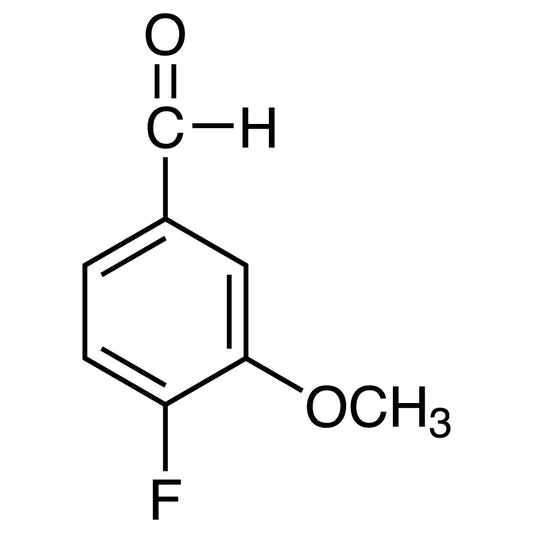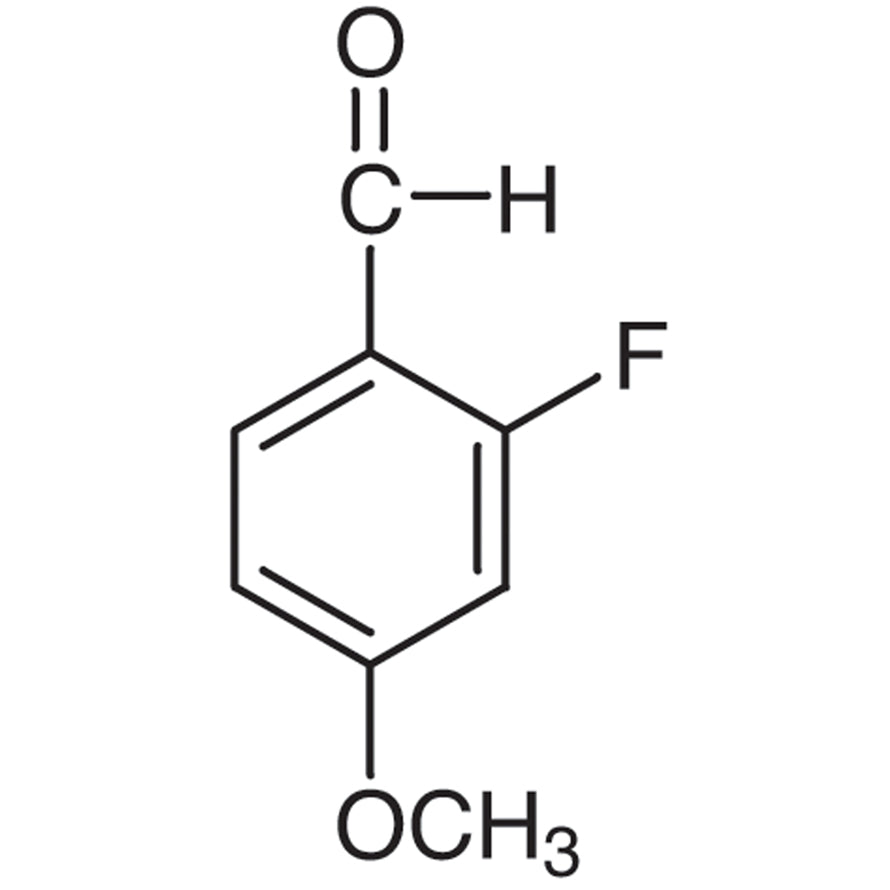
2-Fluoro-p-anisaldehyde is a chemical compound widely used in organic reactions as a building block or intermediate. It is a versatile reagent that plays a crucial role in the synthesis of complex molecules, particularly in the development of pharmaceuticals, industrial chemicals, and other organic compounds. Its unique molecular structure, featuring an aldehyde group and a fluorine atom at a specific position, contributes to its distinct chemical behavior and reactivity. This compound is essential in modern laboratory settings where precise chemical transformations are required.
The presence of the fluorine group in 2-Fluoro-p-anisaldehyde imparts unique stability and reactivity compared to its non-fluorinated analogs. This makes it an ideal choice for substitution and electrophilic reactions, where controlled reactivity is essential. Its solubility in organic solvents further enhances its utility, allowing for efficient separation and reaction processes. These properties make it a preferred reagent in synthetic chemistry, especially in applications requiring high specificity and reactivity.
In Indonesian laboratories, 2-Fluoro-p-anisaldehyde is extensively used in organic chemistry research, particularly in academic institutions and research centers. Its broad range of applications supports the development of new compounds and contributes to ongoing scientific advancements in the field. Researchers rely on this compound for its reliability and effectiveness in various synthetic processes, making it a key component in the chemical research landscape of Indonesia.
TCI brochures (PDF)
- Fluorination Reagents, Fluorinated Building Blocks 2026-03-18 · p. 22
- Organic synthesis of pharmaceuticals due to its reactivity and structural versatility.
- Development of industrial chemicals where fluorinated compounds are required for enhanced stability.
- Research in medicinal chemistry for the creation of novel drug molecules.
- Teaching and experimentation in undergraduate and graduate organic chemistry courses.
- Advanced research in fluorinated compound chemistry for specialized chemical applications.
| Brand | TCI |
|---|---|
| CAS number | 331-64-6 |
| Molecular formula | — |
| Purity | — |
| Category | Chemistry > Building Blocks > Fluorinated Building Blocks |
| Pack sizes | Available in various quantities as per standard chemical supply practices |
| Physical form | Liquid |
| Storage | Store in a cool, dry place away from light and incompatible materials |
2-Fluoro-p-anisaldehyde should be stored in a cool, dry environment, away from direct sunlight and sources of heat. It is recommended to keep the compound in a sealed container to prevent exposure to air and moisture. Suitable storage containers include glass or high-density polyethylene bottles, which are resistant to chemical degradation. In laboratory settings, it is important to handle the compound with appropriate personal protective equipment, such as gloves and safety goggles, to ensure safety. Proper ventilation should be maintained when working with this material to minimize inhalation risks. Due to its reactivity, it should be kept away from strong oxidizing agents and incompatible substances to prevent unwanted chemical reactions.
—
Produk Terkait
-
6-Fluoro-o-anisaldehyde TCI F1175
Regular price From Rp 903.000,00Regular price -
4-Fluoro-o-anisaldehyde TCI F0827
Regular price From Rp 1.378.650,00Regular price -
3-Fluoro-p-anisaldehyde TCI F0480
Regular price From Rp 505.050,00Regular price -
5-Fluoro-o-anisaldehyde TCI F0428
Regular price From Rp 505.050,00Regular price -
4-Fluoro-m-anisaldehyde TCI F0401
Regular price From Rp 477.750,00Regular price -
6-Fluoro-m-anisaldehyde TCI F0383
Regular price Rp 3.949.050,00Regular price -
5,6-Difluoro-o-anisaldehyde TCI D3885
Regular price From Rp 1.485.750,00Regular price -
2-Bromo-4'-fluoro-3'-(trifluoromethyl)acetophenone TCI B5213
Regular price From Rp 505.050,00Regular price