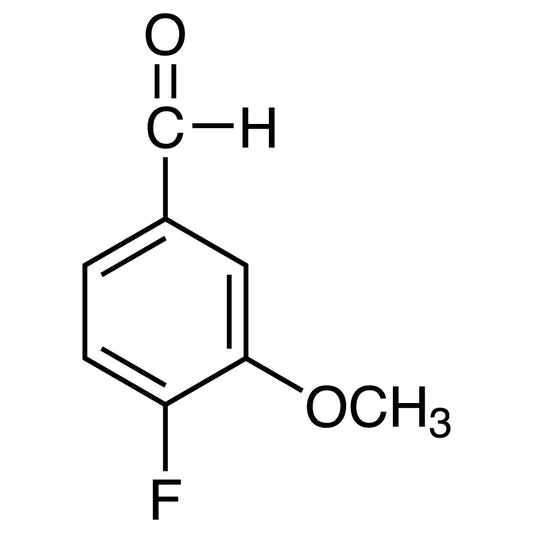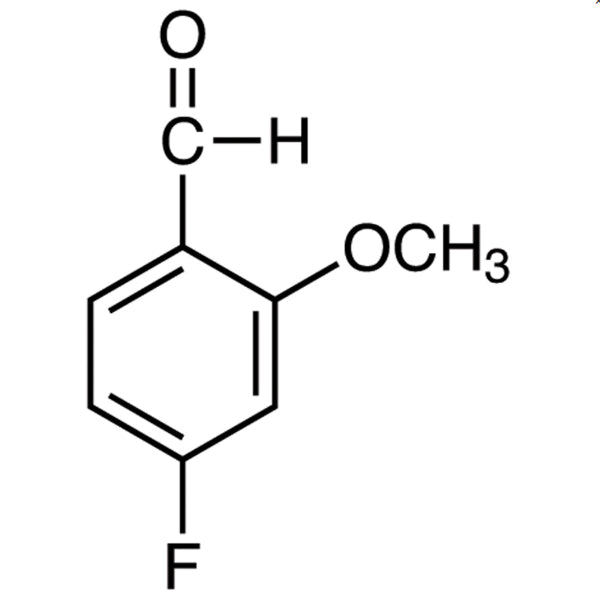
4-Fluoro-o-anisaldehyde is a chemical compound widely used in organic reactions for the synthesis of complex molecules. It contains both a fluorine group and an aldehyde functional group, making it a key building block in the production of aromatic and heterocyclic compounds. This compound plays a crucial role in various synthetic pathways within the laboratory, particularly in reactions that require the presence of a fluorinated group. Its unique structure allows it to participate in a range of chemical transformations, including coupling, halogenation, and Friedel-Crafts reactions.
The stability and controlled reactivity of 4-Fluoro-o-anisaldehyde make it a preferred choice for organic chemists. Its ability to undergo substitution, oxidation, and reduction reactions under specific conditions ensures its versatility in synthetic chemistry. The presence of the fluorine atom enhances the compound’s reactivity and selectivity, which is essential for creating complex molecular structures. This makes it an indispensable tool in both academic and industrial research settings.
In Indonesian laboratories, 4-Fluoro-o-anisaldehyde is commonly used by researchers in chemistry, pharmacy, and materials science. Its availability in small pack sizes such as 1g and 5g facilitates its use in both small-scale and mid-scale experiments. This compound is integral to the development of new products and scientific research that requires precise chemical intermediates.
TCI brochures (PDF)
- Fluorination Reagents, Fluorinated Building Blocks 2026-03-18 · p. 26
- Organic synthesis: This compound is ideal for creating complex molecules due to its fluorinated and aldehyde groups, enabling diverse chemical transformations.
- Pharmaceutical research: It is used in the development of new drugs as a key intermediate in the synthesis of pharmacologically active compounds.
- Materials science: Its unique structure allows for the synthesis of innovative materials with specific functional properties.
- Analytical chemistry: It serves as a standard reference material for spectroscopic and chromatographic analysis.
- Reaction intermediates: It is widely used in substitution, oxidation, and reduction reactions due to its controlled reactivity and stability.
| Brand | TCI |
|---|---|
| CAS number | 450-83-9 |
| Molecular formula | — |
| Purity | — |
| Category | Chemistry > Building Blocks > Fluorinated Building Blocks |
| Pack sizes | 1g, 5g |
| Physical form | Liquid |
| Storage | Store in a cool, dry place away from light and incompatible materials. |
This compound should be stored in a cool, dry place, away from direct sunlight and incompatible substances such as strong oxidizers. It is recommended to use airtight containers made of glass or inert plastic to prevent contamination and evaporation. Due to its chemical reactivity, it should be handled in a well-ventilated area, preferably under a fume hood. Personal protective equipment such as gloves, goggles, and lab coats should be worn at all times to ensure safety. Avoid contact with skin and eyes, and ensure proper disposal according to local regulations. Regular monitoring of storage conditions is essential to maintain the compound’s integrity and effectiveness in laboratory applications.
—
Produk Terkait
-
6-Fluoro-o-anisaldehyde TCI F1175
Regular price From Rp 903.000,00Regular price -
3-Fluoro-p-anisaldehyde TCI F0480
Regular price From Rp 505.050,00Regular price -
5-Fluoro-o-anisaldehyde TCI F0428
Regular price From Rp 505.050,00Regular price -
4-Fluoro-m-anisaldehyde TCI F0401
Regular price From Rp 477.750,00Regular price -
2-Fluoro-p-anisaldehyde TCI F0386
Regular price From Rp 1.696.800,00Regular price -
6-Fluoro-m-anisaldehyde TCI F0383
Regular price Rp 3.949.050,00Regular price -
5,6-Difluoro-o-anisaldehyde TCI D3885
Regular price From Rp 1.485.750,00Regular price -
2-Bromo-4'-fluoro-3'-(trifluoromethyl)acetophenone TCI B5213
Regular price From Rp 505.050,00Regular price