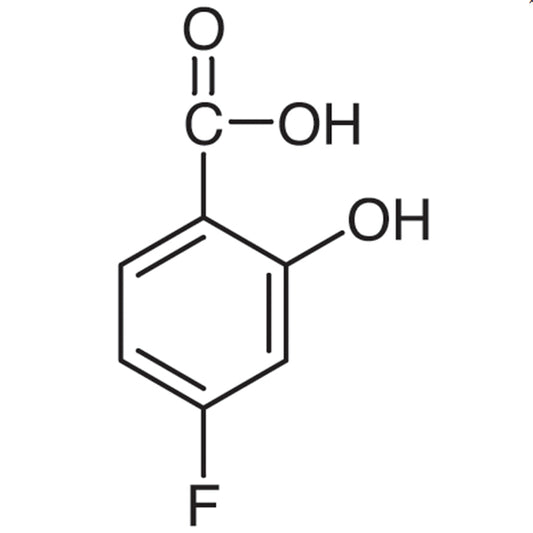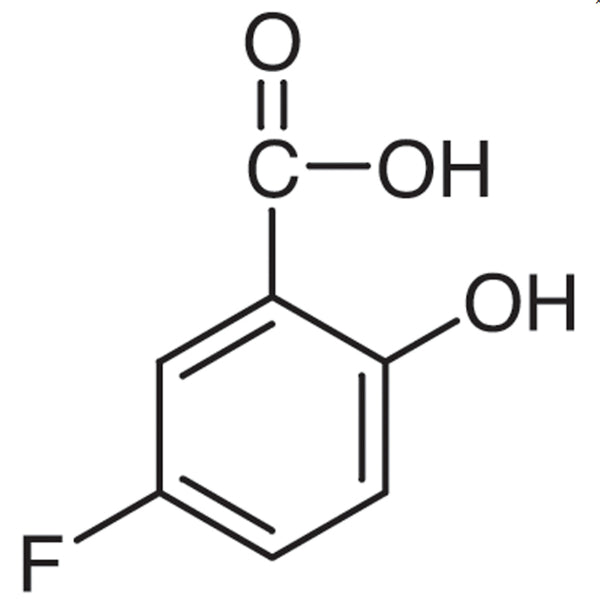
5-Fluorosalicylic Acid is a chemical compound widely used in laboratory settings for constructing complex molecules through various chemical reactions. As a fluorinated building block, it plays a crucial role in synthetic chemistry by enabling the incorporation of fluorine atoms into organic structures. This compound is commonly found in chemical laboratories as a precursor for the synthesis of organic compounds, particularly those requiring fluorine substitution. Its versatility makes it an essential component in both research and industrial applications.
The chemical properties of 5-Fluorosalicylic Acid make it a preferred choice in laboratory settings. It exhibits high polarity due to the presence of fluorine, allowing it to interact effectively with various functional groups. This property enhances its reactivity in substitution reactions and other fluorination processes. Additionally, its stability under controlled conditions ensures reliable performance in experimental procedures. These characteristics make it ideal for applications requiring precise chemical reactions and high-quality synthesis outcomes.
In Indonesian laboratories, 5-Fluorosalicylic Acid is extensively used in chemical research, particularly in organic synthesis and analytical chemistry. It is a key reagent in the development of pharmaceuticals and industrial chemicals. Many research institutions and universities rely on this compound for experiments that demand accuracy and consistency. Its widespread use underscores its importance in advancing scientific research and innovation in the chemical field.
TCI brochures (PDF)
- Fluorination Reagents, Fluorinated Building Blocks 2026-03-18 · p. 25
- Organic Synthesis: 5-Fluorosalicylic Acid is ideal for creating fluorinated organic compounds due to its reactivity and ability to form stable intermediates.
- Fluorination Reactions: Its high polarity and fluorine content make it suitable for introducing fluorine atoms into molecular structures efficiently.
- Pharmaceutical Development: The compound is used in the synthesis of drug molecules where fluorine substitution enhances biological activity and stability.
- Analytical Chemistry: It serves as a reagent for detecting and quantifying specific compounds in complex mixtures due to its chemical stability.
- Industrial Chemical Production: Its versatility supports the creation of various fluorinated materials used in manufacturing and specialty chemicals.
| Brand | TCI |
|---|---|
| CAS number | 345-16-4 |
| Molecular formula | — |
| Purity | — |
| Category | Chemistry > Building Blocks > Fluorinated Building Blocks |
| Pack sizes | Available in various quantities as per supplier specifications |
| Physical form | Solid or liquid, depending on the specific product variant |
| Storage | Store in a cool, dry place away from moisture and direct sunlight |
5-Fluorosalicylic Acid should be stored in a cool, dry environment to maintain its chemical stability. It is recommended to keep the compound in airtight containers to prevent moisture absorption and contamination. Due to its reactivity, it should be handled with care, using appropriate personal protective equipment such as gloves and safety goggles. Avoid exposure to incompatible substances to ensure safety in the laboratory. Proper labeling and storage conditions are essential to maintain the integrity of the compound and ensure safe handling during experiments.
—
Produk Terkait
-
3-FluorosalicylicAcid TCI F0845
Regular price From Rp 1.008.000,00Regular price -
4-FluorosalicylicAcid TCI F0637
Regular price From Rp 795.900,00Regular price -
6-FluorosalicylicAcid TCI F0553
Regular price From Rp 1.565.550,00Regular price -
3,4,5,6-TetrafluorosalicylicAcid TCI T1988
Regular price Rp 6.386.100,00Regular price -
6-Fluorosalicylaldehyde TCI F0988
Regular price From Rp 2.199.750,00Regular price -
3-Fluorosalicylaldehyde TCI F0625
Regular price From Rp 1.696.800,00Regular price -
5-Fluorosalicylaldehyde TCI F0574
Regular price From Rp 1.803.900,00Regular price -
3,5,6-TrichlorosalicylicAcid TCI T1406
Regular price From Rp 769.650,00Regular price