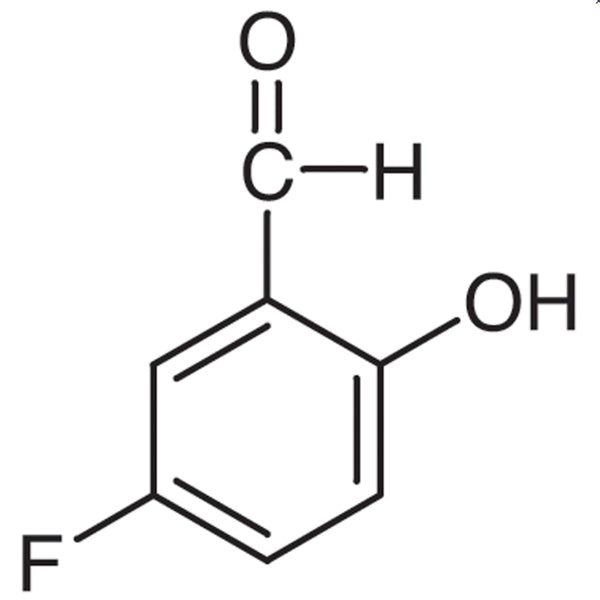
5-Fluorosalicylaldehyde is a chemical compound widely used as a building block in the synthesis of complex organic compounds. It serves as a fundamental component in various chemical reactions that require fluorine substitution on the salicylaldehyde structure. In laboratory settings, this compound plays a crucial role in the development of new substances, particularly in pharmaceutical and organic chemistry research. Its versatility makes it an essential tool for chemists seeking to create novel molecules with specific functional properties.
The compound's stability and favorable reactivity make it a preferred choice for a wide range of chemical applications. Its molecular structure is simple yet highly adaptable, enabling it to form bonds with various functional groups. This flexibility allows it to be incorporated into diverse synthetic pathways. Additionally, its good solubility in organic solvents simplifies mixing and reaction processes, enhancing efficiency in laboratory workflows. These properties contribute to its widespread use in both academic and industrial research environments.
In Indonesian laboratories, 5-Fluorosalicylaldehyde is commonly used in the development of bioactive compounds and pharmaceutical research. Its non-toxic nature and low reactivity make it a safe option for routine use. Researchers in Indonesia frequently rely on this compound for its reliability and performance in chemical synthesis, supporting advancements in medicinal chemistry and organic synthesis.
- Organic synthesis: 5-Fluorosalicylaldehyde is ideal for synthesizing complex organic molecules due to its reactivity and structural adaptability.
- Pharmaceutical research: It is frequently used in the development of new drugs, as it can be modified to create bioactive compounds with therapeutic potential.
- Fluorinated compound production: Its fluorine content makes it a key component in the synthesis of fluorinated compounds, which are important in various chemical industries.
- Catalytic reactions: The compound's stability and reactivity make it suitable for use in catalytic processes, enhancing reaction efficiency and selectivity.
- Functional group modification: Its ability to form bonds with various functional groups allows it to be used in modifying existing molecules for new applications.
| Brand | TCI |
|---|---|
| CAS number | 347-54-6 |
| Molecular formula | — |
| Purity | — |
| Category | Chemistry > Building Blocks > Fluorinated Building Blocks |
| Pack sizes | Available in various quantities as per supplier specifications |
| Physical form | Solid or crystalline, depending on the batch |
| Storage | Store in a cool, dry place away from direct sunlight |
5-Fluorosalicylaldehyde should be stored in a cool, dry environment to maintain its chemical stability. It is recommended to keep it in a sealed container to prevent moisture absorption and contamination. Due to its non-reactive nature, it does not require special handling under normal laboratory conditions. However, it should be stored away from incompatible materials to ensure safety. Proper labeling of containers is essential for safe handling and easy identification. Regular inspection of storage conditions is advised to maintain the integrity of the compound. Always follow standard laboratory safety protocols when working with this material.
—
Produk Terkait
-
6-Fluorosalicylaldehyde TCI F0988
Regular price From Rp 2.199.750,00Regular price -
3-Fluorosalicylaldehyde TCI F0625
Regular price From Rp 1.696.800,00Regular price -
3-FluorosalicylicAcid TCI F0845
Regular price From Rp 1.008.000,00Regular price -
4-FluorosalicylicAcid TCI F0637
Regular price From Rp 795.900,00Regular price -
6-FluorosalicylicAcid TCI F0553
Regular price From Rp 1.565.550,00Regular price -
5-FluorosalicylicAcid TCI F0469
Regular price From Rp 1.035.300,00Regular price -
3,4,5,6-TetrafluorosalicylicAcid TCI T1988
Regular price Rp 6.386.100,00Regular price -
SalicylaldehydeAzine TCI S0850
Regular price From Rp 1.776.600,00Regular price