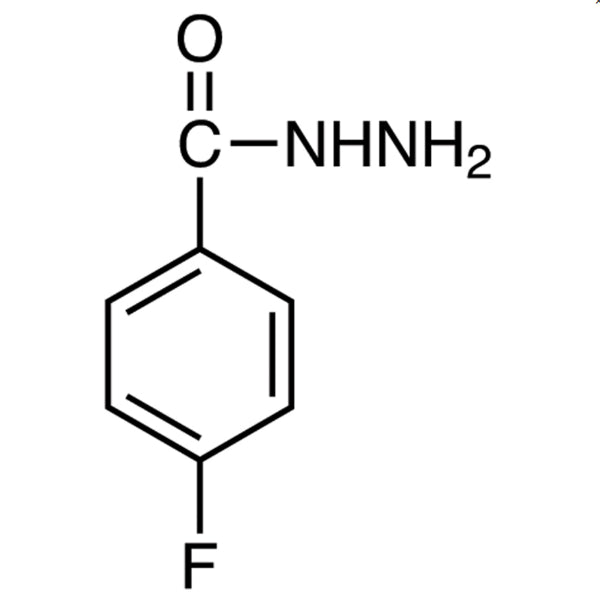
4-Fluorobenzohydrazide is a chemical compound widely used in laboratory settings for its versatility in organic synthesis. As a fluorinated building block, it plays a crucial role in the development of complex molecular structures, particularly in the synthesis of heterocyclic compounds and organofluorine derivatives. Its unique chemical structure enables it to participate in various reaction pathways, making it a valuable reagent for chemists working on advanced synthetic routes. This compound is commonly found in chemical laboratories where the manipulation of fluorinated systems is required for research and development purposes.
The compound is known for its stability and controlled reactivity, which allows for precise chemical transformations under specific reaction conditions. Its molecular structure contains both a fluorine group and a hydrazide functional group, contributing to its reactivity and utility in a range of chemical reactions. These properties make it an ideal choice for laboratories aiming to explore new synthetic methodologies or develop compounds with specific functional groups. Its solid form and ease of handling further enhance its appeal in both academic and industrial research environments.
In Indonesian laboratories, 4-Fluorobenzohydrazide is frequently utilized in organic chemistry research, especially in the development of pharmaceutical and industrial compounds. Its role in the synthesis of new compounds with potential applications in drug discovery and material science makes it a key component in various research programs. The availability of this compound supports the advancement of chemical research in Indonesia, contributing to the country's growing scientific capabilities in the field of organic chemistry.
TCI brochures (PDF)
- Fluorination Reagents, Fluorinated Building Blocks 2026-03-18 · p. 15
- Organic synthesis of heterocyclic compounds due to its fluorinated structure and hydrazide functionality.
- Development of organofluorine derivatives for pharmaceutical and industrial applications.
- Hidrazinasi reactions where the hydrazide group facilitates the formation of new nitrogen-containing compounds.
- Reductive processes that benefit from the compound's controlled reactivity and stability.
- Synthesis of complex molecular structures requiring precise fluorine substitution in organic frameworks.
| Brand | TCI |
|---|---|
| CAS number | 456-06-4 |
| Molecular formula | — |
| Purity | — |
| Category | Chemistry > Building Blocks > Fluorinated Building Blocks |
| Pack sizes | Available in standard laboratory quantities |
| Physical form | Solid |
| Storage | Store in a cool, dry place away from moisture and direct sunlight |
4-Fluorobenzohydrazide should be stored in a cool, dry environment to maintain its chemical stability. It is recommended to keep the compound in a sealed container to prevent exposure to moisture and air. Due to its hydrazide functionality, it is important to handle the material with care to avoid any potential chemical reactions with incompatible substances. The compound should be stored away from strong oxidizing agents and reactive materials to ensure safety in the laboratory. Proper labeling and storage conditions help maintain the integrity of the compound and ensure safe handling during experimental procedures.
—
Produk Terkait
-
3-Fluorobenzohydrazide TCI F1332
Regular price From Rp 557.550,00Regular price -
2-Fluorobenzohydrazide TCI F0616
Regular price Rp 1.008.000,00Regular price -
4-(Trifluoromethyl)benzohydrazide TCI T3372
Regular price From Rp 743.400,00Regular price -
2,4-Dichlorobenzohydrazide TCI D4867
Regular price From Rp 637.350,00Regular price -
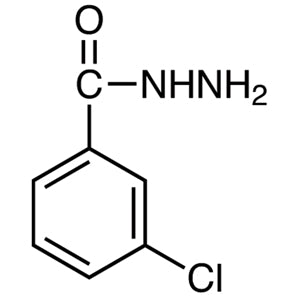
3-Chlorobenzohydrazide TCI C2648
Regular price From Rp 1.908.900,00Regular price -
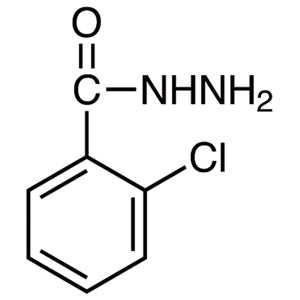
2-Chlorobenzohydrazide TCI C2116
Regular price Rp 1.273.650,00Regular price -
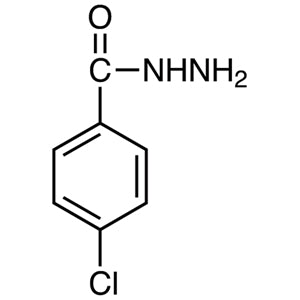
4-Chlorobenzohydrazide TCI C2060
Regular price From Rp 664.650,00Regular price -
3-Bromobenzohydrazide TCI B4148
Regular price Rp 505.050,00Regular price