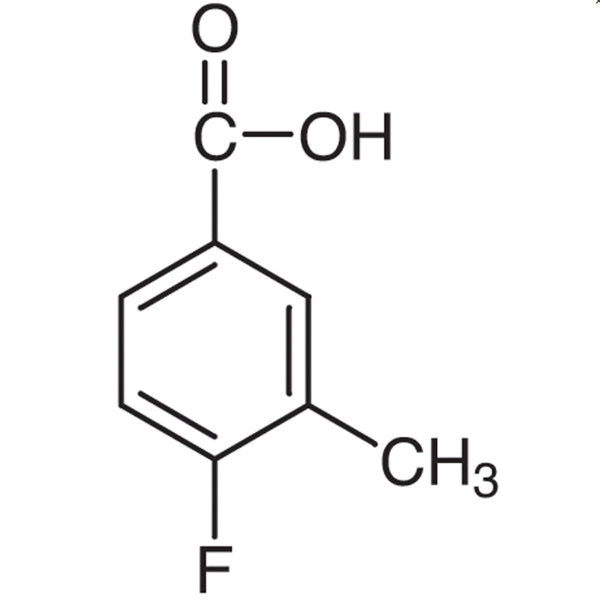
4-Fluoro-3-methylbenzoic Acid is a chemical compound widely used in organic synthesis reactions. It serves as a key building block in the development of complex chemical structures, making it essential in both academic and industrial laboratory settings. This fluorinated compound is particularly valuable for its ability to modify molecular structures and enhance specific chemical properties. Its presence in laboratory workflows allows chemists to design and synthesize a variety of compounds with tailored functionalities.
The unique combination of a fluorine group and a methyl group provides this compound with chemical stability and controlled reactivity. The fluorine group contributes to electrophilic stability, while the carboxylic acid group enables bonding with various ligands or reagents. These properties make it a versatile reagent in synthetic pathways, offering chemists the flexibility to create new compounds with desired characteristics.
In Indonesian laboratories, 4-Fluoro-3-methylbenzoic Acid is commonly used for scientific research, chemical product development, and educational purposes. It is a fundamental component in experiments that require precise chemical building blocks, supporting both teaching and innovation in the field of chemistry. Its reliability and chemical versatility make it a preferred choice for researchers and students alike.
TCI brochures (PDF)
- Fluorination Reagents, Fluorinated Building Blocks 2026-03-18 · p. 19
Related TCI products
- Organic synthesis applications benefit from this compound’s ability to modify molecular structures and enhance chemical properties, making it ideal for creating complex pharmaceutical and industrial compounds.
- Pharmaceutical research utilizes this reagent for the development of new drugs, as its fluorinated structure can improve the stability and efficacy of target molecules.
- Industrial chemical synthesis relies on this compound for the production of specialized materials, where controlled reactivity and stability are crucial for process efficiency.
- Educational institutions use it in teaching laboratories to demonstrate organic synthesis techniques and the role of fluorinated building blocks in chemical reactions.
- Research laboratories incorporate it into experimental workflows for the design and testing of novel chemical structures and functional groups.
| Brand | TCI |
|---|---|
| CAS number | 403-15-6 |
| Molecular formula | — |
| Purity | — |
| Category | Chemistry > Building Blocks > Fluorinated Building Blocks |
| Pack sizes | Available in various quantities as per supplier specifications |
| Physical form | Solid (crystalline or powder, depending on supplier) |
| Storage | Store in a cool, dry place away from light and moisture |
This compound should be stored in a cool, dry environment, away from direct sunlight and moisture to maintain its chemical integrity. It is recommended to use airtight containers made of materials such as glass or polyethylene to prevent contamination and degradation. Due to its chemical nature, it should be handled with appropriate personal protective equipment, including gloves and safety goggles, to ensure laboratory safety. While it is generally stable under normal storage conditions, it should be kept away from incompatible substances such as strong bases or oxidizing agents. Proper labeling and storage practices are essential to prevent accidental exposure and ensure safe handling in laboratory settings.
—
Produk Terkait
-
2-Fluoro-3-methylbenzoicAcid TCI F0949
Regular price From Rp 1.220.100,00Regular price -
5-Fluoro-2-methylbenzoicAcid TCI F0844
Regular price From Rp 1.167.600,00Regular price -
2-Fluoro-4-methylbenzoicAcid TCI F0813
Regular price From Rp 928.200,00Regular price -
4-Fluoro-2-methylbenzoicAcid TCI F0559
Regular price From Rp 1.670.550,00Regular price -
3-Fluoro-4-methylbenzoicAcid TCI F0552
Regular price From Rp 1.458.450,00Regular price -
2-Fluoro-5-methylbenzoicAcid TCI F0426
Regular price From Rp 477.750,00Regular price -
2,3,5,6-Tetrafluoro-4-methylbenzoicAcid TCI T2323
Regular price Rp 1.803.900,00Regular price -
2-Bromo-4'-fluoro-3'-(trifluoromethyl)acetophenone TCI B5213
Regular price From Rp 505.050,00Regular price