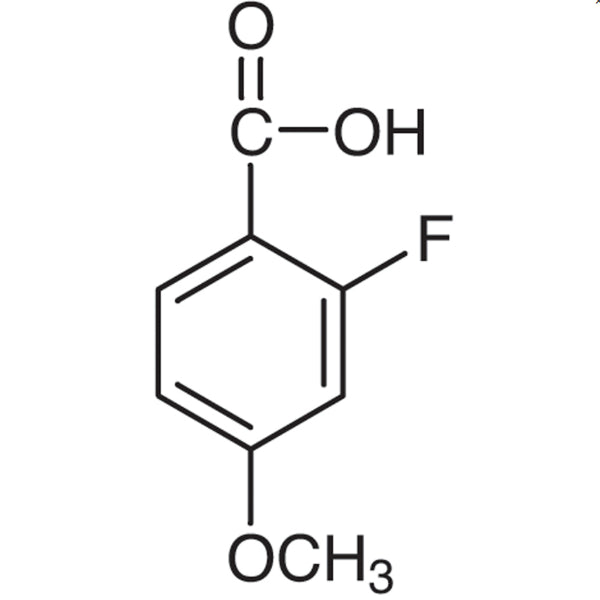
2-Fluoro-4-methoxybenzoic Acid is a chemical compound widely utilized in the synthesis of complex organic molecules. This compound serves as a crucial building block in organic chemistry, offering versatility in various synthetic pathways. Its molecular structure contains both fluoro and methoxy groups, which significantly influence its chemical behavior and reactivity. In laboratory settings, it is frequently used as a foundational material for the development of pharmaceuticals, industrial chemicals, and organic compounds with diverse applications.
The unique combination of fluoro and methoxy groups gives this compound distinct reactivity and functional versatility. The fluoro group enhances molecular stability and modifies polarity, while the methoxy group increases reactivity in substitution and electrophilic reactions. These properties make it highly valuable in the synthesis of bioactive compounds. Its ability to participate in multiple chemical reactions makes it an essential tool for chemists working in research and development.
In Indonesian laboratories, 2-Fluoro-4-methoxybenzoic Acid is commonly used in both fundamental and applied chemical research. It plays a key role in the development of new compounds with potential applications in pharmaceuticals and materials science. Researchers and academic institutions in Indonesia rely on this compound for its reliability and effectiveness in various synthetic processes.
TCI brochures (PDF)
- Fluorination Reagents, Fluorinated Building Blocks 2026-03-18 · p. 22
Related TCI products
- TCI F1218 137654-20-7 2-Fluoro-3-methoxybenzoic Acid
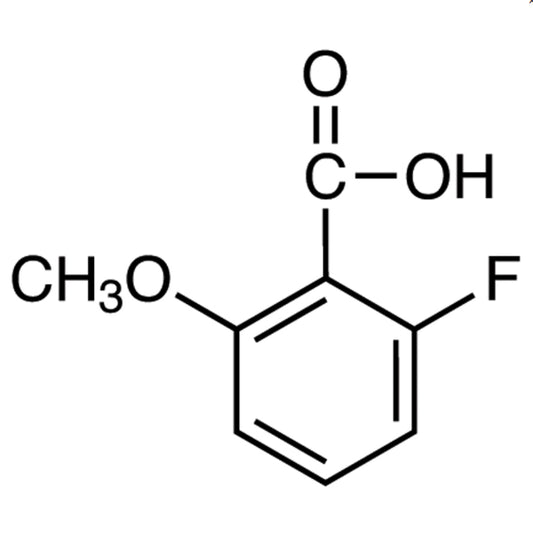
- TCI F1146 137654-21-8 2-Fluoro-6-methoxybenzoic Acid
- TCI F0681 82846-18-2 4-Fluoro-3-methoxybenzoic Acid
- TCI F0680 395-82-4 4-Fluoro-2-methoxybenzoic Acid
- TCI F0543 403-20-3 3-Fluoro-4-methoxybenzoic Acid
- TCI T1917 112811-65-1 2,4,5-Trifluoro-3-methoxybenzoic Acid
- Pharmaceutical research and development as a key intermediate in the synthesis of bioactive compounds due to its reactivity and structural versatility.
- Organic synthesis of complex molecules where the fluoro and methoxy groups provide unique functional properties for targeted chemical modifications.
- Industrial chemical production for the creation of specialty chemicals with specific functional group requirements.
- Material science applications in the development of advanced polymers and functional materials through controlled chemical reactions.
- Academic research in chemistry departments for teaching and experimental studies involving fluorinated and methoxy-containing compounds.
| Brand | TCI |
|---|---|
| CAS number | 394-42-3 |
| Molecular formula | — |
| Purity | — |
| Category | Chemistry > Building Blocks > Fluorinated Building Blocks |
| Pack sizes | Available in standard laboratory quantities as per supplier specifications |
| Physical form | Solid crystalline powder |
| Storage | Store in a cool, dry place away from moisture and direct sunlight |
This compound should be stored in a cool, dry environment to maintain its chemical integrity and prevent degradation. It is recommended to use airtight containers to protect it from moisture and air exposure. Due to its reactivity, it should be handled in a well-ventilated area, preferably under a fume hood. Avoid contact with strong acids or bases to prevent unwanted chemical reactions. Always wear appropriate personal protective equipment, such as gloves and safety goggles, when handling this material. Proper labeling and storage conditions are essential to ensure safety and maintain the compound’s effectiveness in laboratory applications.
—
Produk Terkait
-
2-Fluoro-3-methoxybenzoicAcid TCI F1218
Regular price From Rp 980.700,00Regular price -
2-Fluoro-6-methoxybenzoicAcid TCI F1146
Regular price From Rp 689.850,00Regular price -
4-Fluoro-3-methoxybenzoicAcid TCI F0681
Regular price From Rp 1.008.000,00Regular price -
4-Fluoro-2-methoxybenzoicAcid TCI F0680
Regular price From Rp 664.650,00Regular price -
3-Fluoro-4-methoxybenzoicAcid TCI F0543
Regular price From Rp 848.400,00Regular price -
2,4,5-Trifluoro-3-methoxybenzoicAcid TCI T1917
Regular price From Rp 477.750,00Regular price -
2,4-Difluoro-3-methoxybenzoicAcid TCI D5309
Regular price Rp 1.908.900,00Regular price -
2-Bromo-4'-fluoro-3'-(trifluoromethyl)acetophenone TCI B5213
Regular price From Rp 505.050,00Regular price