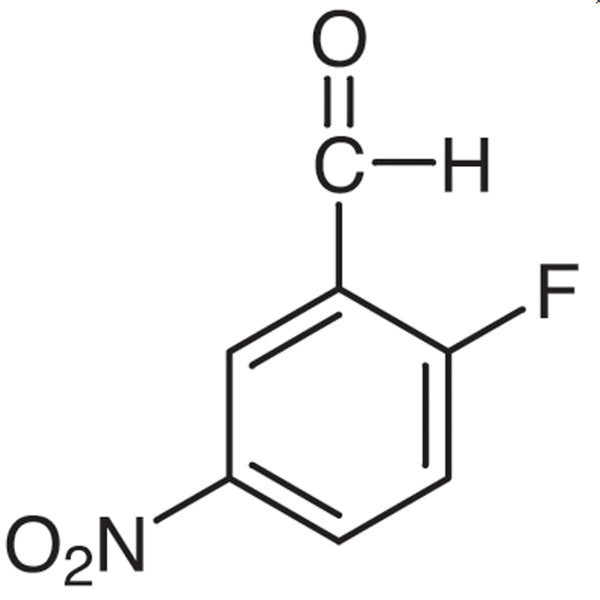
TCI F0618, CAS 27996-87-8, is 2-Fluoro-5-nitrobenzaldehyde, an aromatic compound that combines an aldehyde group, a fluorine atom, and a nitro group on a single benzene ring. This arrangement makes it one of the most productive fluorinated building blocks in organic synthesis laboratories, because it offers three reactive sites that can be addressed sequentially and in a controlled direction. The compound is widely used to construct nitrogen-containing heterocyclic frameworks, multiply substituted aromatic compounds, and a range of intermediates in drug development and agricultural active ingredient research.
Its principal advantage lies in the fluorine atom, which is strongly activated toward nucleophilic aromatic substitution. The powerfully electron-withdrawing nitro group stabilises the reaction intermediate, so amines, thiolates, or alkoxides can displace the fluorine under relatively mild conditions. After that step, the aldehyde group remains available for reductive amination, Knoevenagel condensation, Schiff base formation, or cyclisation into quinolines and benzimidazoles. The nitro group itself can be reduced to an amine at a later stage, opening a further route to functionalisation. This clear order of reactivity is what makes the material so useful to synthetic chemists.
In Indonesian laboratories, TCI F0618 is typically handled in university and institutional synthetic chemistry groups, in pharmaceutical research and development units, and in laboratories developing agrochemical active ingredients. It is normally used at the small scale characteristic of route exploration and intermediate preparation, where a building block with a predictable and stepwise reactivity pattern allows a target scaffold to be assembled over several planned stages rather than a single uncontrolled transformation.
TCI brochures (PDF)
- Fluorination Reagents, Fluorinated Building Blocks 2026-03-18 · p. 19
Related TCI products
- TCI F1130 160538-51-2 3-Fluoro-4-nitrobenzaldehyde
- TCI F0956 42564-51-2 4-Fluoro-3-nitrobenzaldehyde
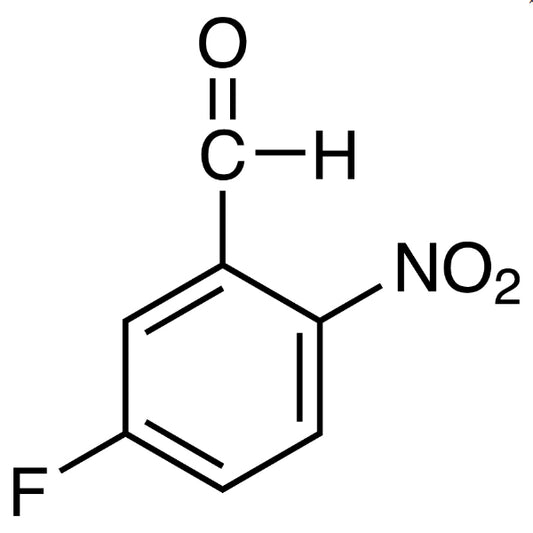
- TCI F0645 395-81-3 5-Fluoro-2-nitrobenzaldehyde
- TCI B5213 537050-14-9 2-Bromo-4'-fluoro-3'-(trifluoromethyl)acetophenone
- TCI B5074 749927-69-3 4-Bromo-2-fluoro-N-methylbenzamide
- TCI B4872 10472-88-5 2-Bromo-4-fluoro-6-nitroaniline
- Nucleophilic aromatic substitution — the nitro group activates the ring so that amines, thiolates, or alkoxides can displace the fluorine atom under relatively mild reaction conditions.
- Nitrogen heterocycle construction — the aldehyde allows cyclisation into quinoline and benzimidazole frameworks, making this compound a direct entry point to nitrogen-containing ring systems.
- Schiff base formation — the free aldehyde group condenses readily with primary amines, giving imine products used as ligands and as intermediates toward larger molecular structures.
- Pharmaceutical intermediate preparation — the three orthogonal reactive sites allow a drug development scaffold to be elaborated stage by stage without protecting-group complications at each step.
- Agrochemical active ingredient research — the fluorinated, multiply substituted aromatic core serves as a starting point for intermediates in the development of agricultural active compounds.
| Brand | TCI (Tokyo Chemical Industry) |
|---|---|
| CAS number | 27996-87-8 |
| Molecular formula | — |
| Purity | — |
| Category | Chemistry > Building Blocks > Fluorinated Building Blocks |
| Pack sizes | available in standard TCI research-scale packaging; please confirm the sizes currently offered |
| Physical form | — |
| Storage | keep in a closed original container in a cool, dry place away from light |
- Chemical name: 2-Fluoro-5-nitrobenzaldehyde
Store the material in its original tightly closed container, in a cool, dry, well-ventilated area away from direct sunlight, heat sources, and incompatible reagents such as strong oxidising agents and strong bases. Use amber glass or the supplied container rather than transferring to unsuitable vessels. Handle in a fume hood using nitrile gloves, safety goggles, and a laboratory coat, since nitroaromatic aldehydes can be irritating to skin, eyes, and the respiratory tract. Weigh out quantities promptly and reseal the container to limit moisture uptake and aldehyde oxidation. Consult the manufacturer's safety data sheet before use, and dispose of residues and contaminated materials through the laboratory's chemical waste stream.
—
Produk Terkait
-
3-Fluoro-4-nitrobenzaldehyde TCI F1130
Regular price From Rp 2.545.200,00Regular price -
4-Fluoro-3-nitrobenzaldehyde TCI F0956
Regular price From Rp 477.750,00Regular price -
5-Fluoro-2-nitrobenzaldehyde TCI F0645
Regular price From Rp 955.500,00Regular price -
2-Bromo-4'-fluoro-3'-(trifluoromethyl)acetophenone TCI B5213
Regular price From Rp 505.050,00Regular price -
4-Bromo-2-fluoro-N-methylbenzamide TCI B5074
Regular price From Rp 1.035.300,00Regular price -
2-Bromo-4-fluoro-6-nitroaniline TCI B4872
Regular price Rp 1.140.300,00Regular price -
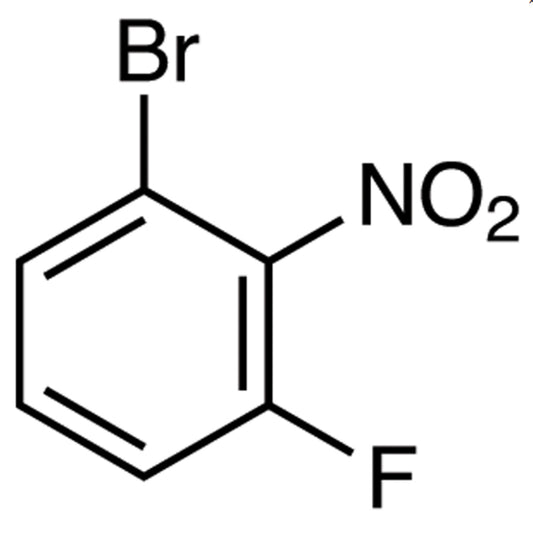
1-Bromo-3-fluoro-2-nitrobenzene TCI B4842
Regular price From Rp 1.273.650,00Regular price -
N2-(tert-Butoxycarbonyl)-4-fluoro-1,2-phenylenediamine TCI B4237
Regular price From Rp 980.700,00Regular price