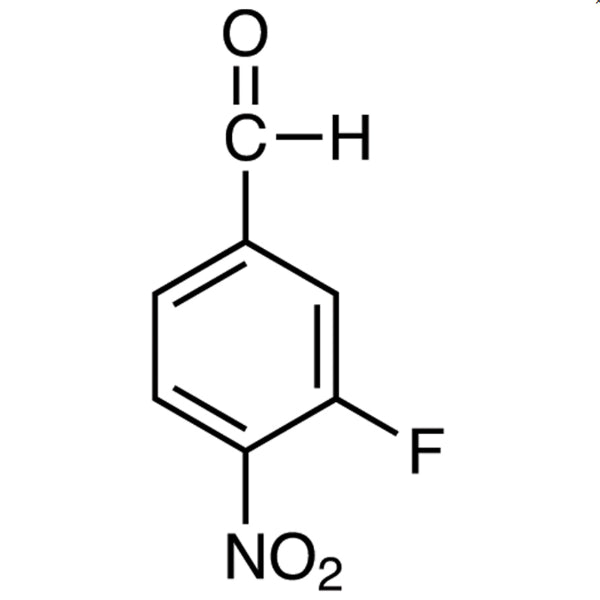
3-Fluoro-4-nitrobenzaldehyde is a chemical compound widely used in organic reactions for the synthesis of complex molecules. It is a key building block in the field of fluorinated chemistry, offering unique reactivity due to its fluoro and nitro substituents. In the laboratory, it serves as an essential reagent for various synthetic pathways, enabling the creation of compounds with specific functional groups and properties. Its versatility makes it a valuable asset for chemists working on diverse projects, from pharmaceutical development to industrial chemical synthesis.
This compound is preferred for its chemical stability and reactivity, which are enhanced by the presence of both fluorine and nitro groups. These substituents influence the polarity and reactivity of the molecule, allowing it to participate in a range of chemical transformations. Its ability to undergo substitution, reduction, and oxidation reactions makes it suitable for a wide array of synthetic applications. The combination of these properties ensures that it remains a reliable and effective tool in modern chemical research.
In Indonesian laboratories, 3-Fluoro-4-nitrobenzaldehyde is commonly used in organic chemistry research, particularly in the synthesis of bioactive compounds. It is frequently found in studies related to drug development, industrial chemical production, and analytical chemistry. Its availability in the local market supports ongoing scientific investigations and contributes to the advancement of chemical research in Indonesia.
Related TCI products
- TCI F0956 42564-51-2 4-Fluoro-3-nitrobenzaldehyde
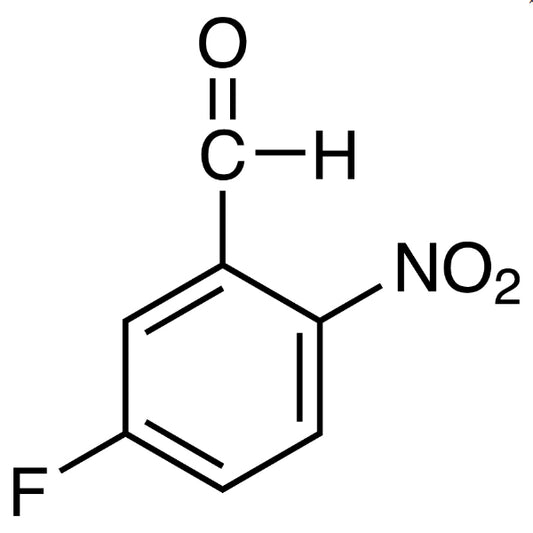
- TCI F0645 395-81-3 5-Fluoro-2-nitrobenzaldehyde
- TCI F0618 27996-87-8 2-Fluoro-5-nitrobenzaldehyde
- TCI B5213 537050-14-9 2-Bromo-4'-fluoro-3'-(trifluoromethyl)acetophenone
- TCI B5074 749927-69-3 4-Bromo-2-fluoro-N-methylbenzamide
- TCI B4872 10472-88-5 2-Bromo-4-fluoro-6-nitroaniline
- Organic synthesis applications benefit from its reactivity and stability, enabling the creation of complex molecules with precise functional groups.
- Pharmaceutical research utilizes its unique substituents to develop compounds with desired biological activities and pharmacological properties.
- Industrial chemical production relies on its versatility for the synthesis of various chemical intermediates and specialty compounds.
- Analytical chemistry applications use its distinct chemical profile for identification and quantification in complex mixtures.
- Research in bioactive compound development leverages its structural features to design molecules with targeted biological effects.
| Brand | TCI |
|---|---|
| CAS number | 160538-51-2 |
| Molecular formula | — |
| Purity | — |
| Category | Chemistry > Building Blocks > Fluorinated Building Blocks |
| Pack sizes | — |
| Physical form | — |
| Storage | Store in a cool, dry place away from light and incompatible materials |
3-Fluoro-4-nitrobenzaldehyde should be stored in a cool, dry environment away from direct sunlight and sources of heat. It is recommended to keep it in a sealed container to prevent exposure to moisture and air. The compound is generally stable under normal laboratory conditions but should be handled with care to avoid contact with incompatible substances. Proper ventilation is essential when working with this material to ensure safe handling. Laboratory personnel should wear appropriate personal protective equipment, including gloves and safety goggles, to minimize exposure. Regular monitoring of storage conditions ensures the compound remains in optimal condition for use in chemical experiments.
—
Produk Terkait
-
4-Fluoro-3-nitrobenzaldehyde TCI F0956
Regular price From Rp 477.750,00Regular price -
5-Fluoro-2-nitrobenzaldehyde TCI F0645
Regular price From Rp 955.500,00Regular price -
2-Fluoro-5-nitrobenzaldehyde TCI F0618
Regular price From Rp 477.750,00Regular price -
2-Bromo-4'-fluoro-3'-(trifluoromethyl)acetophenone TCI B5213
Regular price From Rp 505.050,00Regular price -
4-Bromo-2-fluoro-N-methylbenzamide TCI B5074
Regular price From Rp 1.035.300,00Regular price -
2-Bromo-4-fluoro-6-nitroaniline TCI B4872
Regular price Rp 1.140.300,00Regular price -
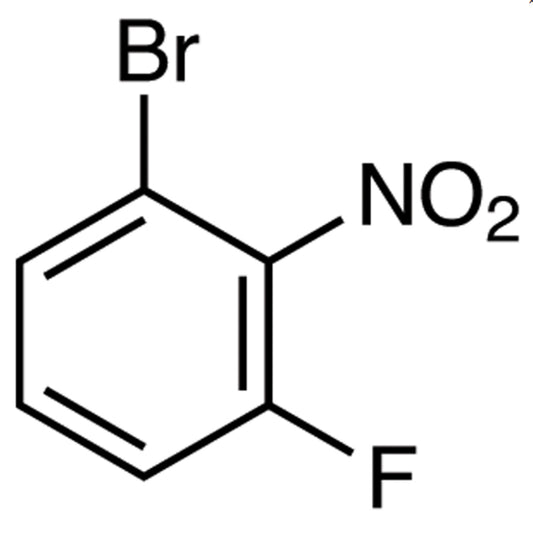
1-Bromo-3-fluoro-2-nitrobenzene TCI B4842
Regular price From Rp 1.273.650,00Regular price -
N2-(tert-Butoxycarbonyl)-4-fluoro-1,2-phenylenediamine TCI B4237
Regular price From Rp 980.700,00Regular price