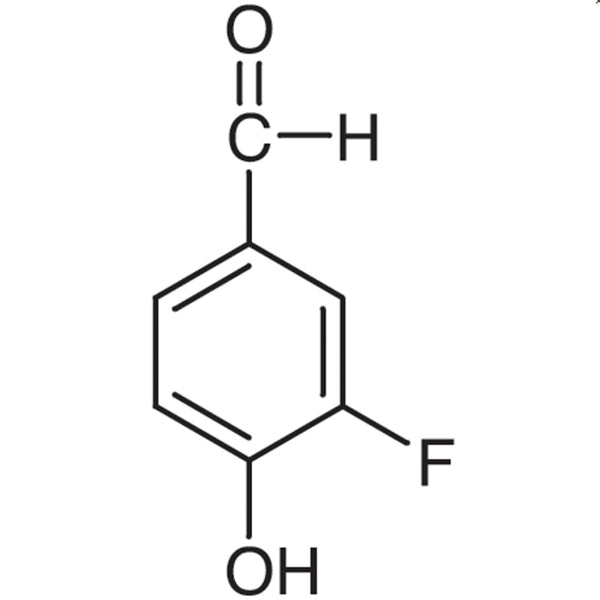
TCI F0725 is 3-Fluoro-4-hydroxybenzaldehyde, a benzaldehyde derivative carrying a phenolic hydroxyl group and a fluorine atom on adjacent ring positions. The combination of three functional groups on a single aromatic ring makes it a highly versatile building block. In the laboratory, this compound is widely used as a starting point for the synthesis of Schiff bases, stilbene derivatives, heterocyclic compounds, and a range of pharmaceutical intermediates. Its structural similarity to vanillin and other hydroxybenzaldehyde derivatives means it adapts readily to procedures already familiar to organic chemistry researchers.
The characteristic that makes this material a preferred choice is its dual reactivity, which can be differentiated with ease. The aldehyde group is ready to condense with primary amines, active methylene compounds, and phosphonium ylides, while the phenolic hydroxyl group can be alkylated, acylated, or protected first so that reactions proceed selectively. The fluorine atom positioned adjacent to the phenol lowers the acidity value of the hydroxyl group so that its acidic character is strengthened, while at the same time exerting an electronic influence that stabilises the ring against oxidation. From an analytical standpoint, the presence of fluorine provides a distinct nuclear magnetic resonance signal that simplifies monitoring of reaction progress.
In Indonesian laboratories, this compound is typically found in university organic synthesis groups, medicinal chemistry research units, and industrial research and development laboratories developing fluorinated active compounds. It is commonly used at bench scale for exploratory route development, for preparing ligands and Schiff base complexes, and for producing intermediates that are then carried forward to further reaction stages. Because the procedures involved follow well-established hydroxybenzaldehyde chemistry, the material integrates easily into existing laboratory workflows without requiring specialised handling techniques.
TCI brochures (PDF)
- Fluorination Reagents, Fluorinated Building Blocks 2026-03-18 · p. 22
Related TCI products
- TCI B5213 537050-14-9 2-Bromo-4'-fluoro-3'-(trifluoromethyl)acetophenone
- TCI B5074 749927-69-3 4-Bromo-2-fluoro-N-methylbenzamide
- TCI B4872 10472-88-5 2-Bromo-4-fluoro-6-nitroaniline
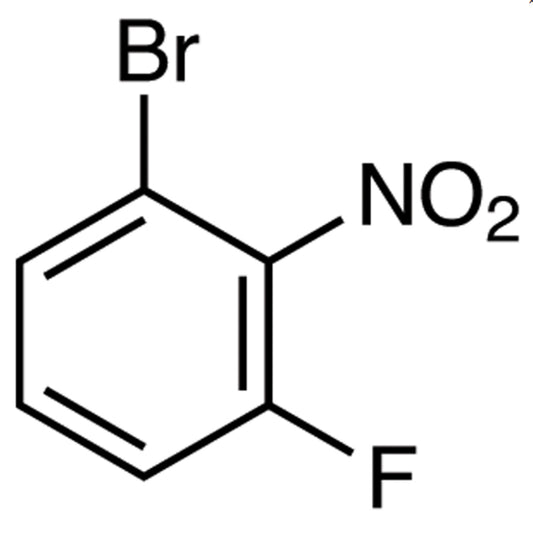
- TCI B4842 886762-70-5 1-Bromo-3-fluoro-2-nitrobenzene
- TCI B4237 362670-07-3 N2-(tert-Butoxycarbonyl)-4-fluoro-1,2-phenylenediamine
- TCI B4236 579474-47-8 N1-(tert-Butoxycarbonyl)-4-fluoro-1,2-phenylenediamine
- Schiff base synthesis — the aldehyde group condenses readily with primary amines, making this compound a direct starting point for imine ligands and their metal complexes.
- Stilbene derivative preparation — the aldehyde reacts with phosphonium ylides in olefination chemistry, allowing researchers to construct fluorinated stilbene scaffolds from a single, readily available precursor.
- Heterocyclic compound construction — the combination of aldehyde and phenolic hydroxyl functionality on one ring supports ring-closing routes toward a wide variety of heterocyclic targets.
- Pharmaceutical intermediate synthesis — the fluorine substituent is carried through to downstream products, which is valuable in medicinal chemistry programmes developing fluorinated active compounds.
- Selective functionalisation studies — the phenolic hydroxyl can be alkylated, acylated, or protected independently of the aldehyde, making this a useful substrate for teaching and investigating chemoselectivity.
| Brand | TCI |
|---|---|
| CAS number | 405-05-0 |
| Molecular formula | — |
| Purity | — |
| Category | Chemistry > Building Blocks > Fluorinated Building Blocks |
| Pack sizes | available in the standard research pack sizes offered by TCI for this catalogue item |
| Physical form | — |
| Storage | store according to the conditions stated on the manufacturer label and the accompanying safety data sheet |
- Chemical name: 3-Fluoro-4-hydroxybenzaldehyde
- Product code: F0725
Store the container tightly closed in a cool, dry, well-ventilated area away from direct sunlight, heat sources, and strong oxidising agents. Keep the material in its original manufacturer container wherever possible, or transfer it to a clean, chemically compatible, well-sealed vessel that is clearly labelled. Because aromatic aldehydes are susceptible to gradual oxidation on exposure to air, minimise the time the container remains open and reseal it promptly after weighing. Handle the compound in a fume hood using safety glasses, chemically resistant gloves, and a laboratory coat. Avoid contact with skin and eyes and avoid inhalation of dust. Always consult the manufacturer's safety data sheet before use, and dispose of residues and contaminated materials through your institution's chemical waste procedures.
—
Produk Terkait
-
2-Bromo-4'-fluoro-3'-(trifluoromethyl)acetophenone TCI B5213
Regular price From Rp 505.050,00Regular price -
4-Bromo-2-fluoro-N-methylbenzamide TCI B5074
Regular price From Rp 1.035.300,00Regular price -
2-Bromo-4-fluoro-6-nitroaniline TCI B4872
Regular price Rp 1.140.300,00Regular price -
1-Bromo-3-fluoro-2-nitrobenzene TCI B4842
Regular price From Rp 1.273.650,00Regular price -
N2-(tert-Butoxycarbonyl)-4-fluoro-1,2-phenylenediamine TCI B4237
Regular price From Rp 980.700,00Regular price -
N1-(tert-Butoxycarbonyl)-4-fluoro-1,2-phenylenediamine TCI B4236
Regular price From Rp 1.326.150,00Regular price -
1-Bromo-3-fluoro-4-(trifluoromethoxy)benzene TCI B3808
Regular price From Rp 689.850,00Regular price -
4-Bromo-2-fluoro-1-nitrobenzene TCI B3062
Regular price From Rp 1.538.250,00Regular price