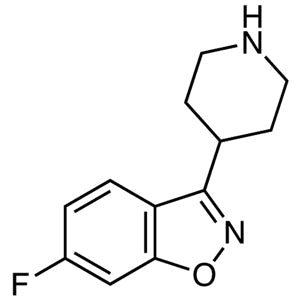
TCI F0735 is 6-Fluoro-3-(4-piperidinyl)-1,2-benzisoxazole, a heterocyclic compound that combines a fluorinated benzisoxazole core with a piperidine ring attached at the third position. This scaffold is widely recognised among medicinal chemistry researchers as a structural motif that appears in active compounds of the antipsychotic class. In the laboratory, the compound generally serves as an advanced synthetic intermediate: the free piperidine nitrogen provides a connection point for installing side chains, so the route toward a target molecule can be shortened meaningfully compared with building the heterocyclic core from scratch.
The property that makes this material valuable is the combination of a rigid aromatic core with a flexible, basic aliphatic ring. The benzisoxazole core supplies a planar, stable framework that governs molecular orientation, while the piperidine ring contributes basic character together with a reaction point that is easy to control. The piperidine nitrogen is nucleophilic, so it is ready to undergo alkylation or reductive amination without disturbing the isoxazole ring. The fluorine atom on the benzene ring improves metabolic stability and modulates lipophilicity, two factors that matter for compounds designed to act in biological systems.
In Indonesian laboratories, this building block is typically used in university and institutional research groups working on organic synthesis and medicinal chemistry, as well as in pharmaceutical development laboratories that prepare reference compounds and analogue series. Because the heterocyclic core arrives already assembled, working groups can focus their bench time on the derivatisation steps that actually differentiate their target molecules, which suits the scale and schedule of most academic and industrial research projects here.
TCI brochures (PDF)
- Fluorination Reagents, Fluorinated Building Blocks 2026-03-18 · p. 50
Related TCI products
- TCI F0944 84163-13-3 6-Fluoro-3-(4-piperidinyl)-1,2-benzisoxazole Hydrochloride
- TCI B6777 1402232-95-4 tert-Butyl 5'-Fluoro-1',4'-dihydro-2'H-spiro[piperidine-4,3'-quinoline]-1-carboxylate
- TCI B6776 1402232-83-0 tert-Butyl 7'-Fluoro-1',4'-dihydro-2'H-spiro[piperidine-4,3'-quinoline]-1-carboxylate
- TCI B4810 168828-81-7 Benzyl (3-Fluoro-4-morpholinophenyl)carbamate
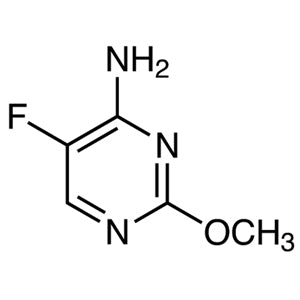
- TCI A2125 1993-63-1 4-Amino-5-fluoro-2-methoxypyrimidine
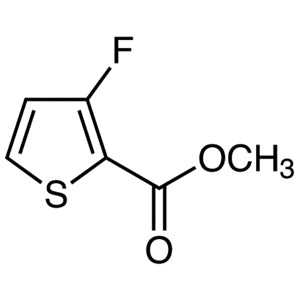
- TCI M2295 100421-52-1 Methyl 3-Fluoro-2-thiophenecarboxylate
- Advanced synthetic intermediate preparation — the assembled fluorinated benzisoxazole core removes several construction steps, letting chemists begin work directly at the derivatisation stage of a synthetic route.
- N-alkylation chemistry — the free, nucleophilic piperidine nitrogen readily accepts alkyl side chains under standard conditions, while the isoxazole ring remains untouched throughout the transformation.
- Reductive amination studies — the secondary amine of the piperidine ring is a suitable partner for reductive amination, giving researchers a controlled and reliable route for installing varied substituents.
- Medicinal chemistry analogue synthesis — as a motif found in antipsychotic-class active compounds, this scaffold supports the preparation of structural analogue series for structure–activity relationship investigations.
- Fluorinated building block research — the aromatic fluorine substituent allows study of how fluorination influences metabolic stability and lipophilicity within a defined and reproducible heterocyclic framework.
| Brand | TCI |
|---|---|
| CAS number | 84163-77-9 |
| Molecular formula | — |
| Purity | — |
| Category | Chemistry > Building Blocks > Fluorinated Building Blocks |
| Pack sizes | available in standard TCI research-scale packaging; please confirm the size required when ordering |
| Physical form | — |
| Storage | keep in the closed original container under the conditions stated on the product label and accompanying documentation |
- Chemical name: 6-Fluoro-3-(4-piperidinyl)-1,2-benzisoxazole
Store the container tightly closed in a cool, dry, well-ventilated area away from direct sunlight, heat sources, and incompatible materials, following the conditions indicated on the product label and safety data sheet. Keep the material in its original supplier container, or transfer it to a chemically compatible, clearly labelled vessel with a secure closure. Handle in a fume hood using safety glasses, gloves, and a laboratory coat, and avoid generating dust or inhaling vapours. Close the container promptly after weighing to limit moisture uptake, and dispose of residues and contaminated consumables through the laboratory's chemical waste procedure.
—
Produk Terkait
-
6-Fluoro-3-(4-piperidinyl)-1,2-benzisoxazoleHydrochloride TCI F0944
Regular price From Rp 477.750,00Regular price -
tert-Butyl5'-Fluoro-1',4'-dihydro-2'H-spiro[piperidine-4,3'-quinoline]-1-carboxylate TCI B6777
Regular price Rp 7.182.000,00Regular price -
tert-Butyl7'-Fluoro-1',4'-dihydro-2'H-spiro[piperidine-4,3'-quinoline]-1-carboxylate TCI B6776
Regular price Rp 7.182.000,00Regular price -
Benzyl(3-Fluoro-4-morpholinophenyl)carbamate TCI B4810
Regular price From Rp 664.650,00Regular price -
4-Amino-5-fluoro-2-methoxypyrimidine TCI A2125
Regular price Rp 2.491.650,00Regular price -
Methyl3-Fluoro-2-thiophenecarboxylate TCI M2295
Regular price Rp 2.068.500,00Regular price -
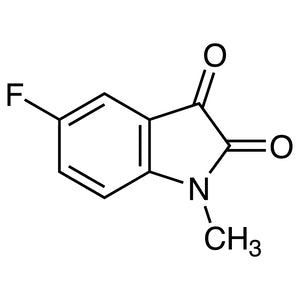
5-Fluoro-1-methylindoline-2,3-dione TCI F1390
Regular price From Rp 1.724.100,00Regular price -
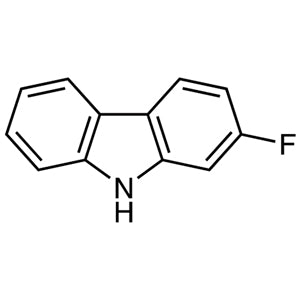
2-Fluoro-9H-carbazole TCI F1182
Regular price From Rp 1.378.650,00Regular price

![tert-Butyl 5'-Fluoro-1',4'-dihydro-2'H-spiro[piperidine-4,3'-quinoline]-1-carboxylate (CAS 1402232-95-4) - TCI B6777 - AMI Scientific](http://amiscientific.com/cdn/shop/files/TCI2510B6777.jpg?v=1768816103&width=533)
![tert-Butyl 7'-Fluoro-1',4'-dihydro-2'H-spiro[piperidine-4,3'-quinoline]-1-carboxylate (CAS 1402232-83-0) - TCI B6776 - AMI Scientific](http://amiscientific.com/cdn/shop/files/TCI2510B6776.jpg?v=1771058548&width=533)