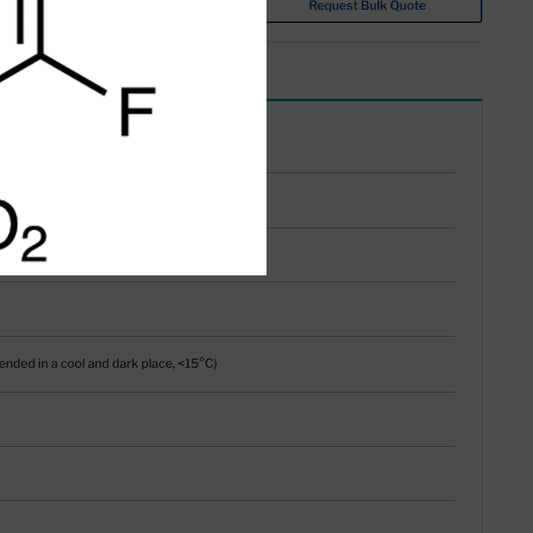
5-Fluoro-2-nitroaniline is a chemical compound widely used as a foundational building block in the synthesis of complex molecules. It plays a crucial role in organic chemistry and pharmaceutical research, where its unique structure enables the creation of diverse chemical entities. This compound is particularly valuable for its ability to undergo substitution reactions, making it a versatile reagent in the development of new compounds. Its presence in various chemical reactions highlights its importance in the laboratory setting, especially for researchers working on drug discovery and advanced chemical synthesis.
The compound's chemical properties, including its stability under controlled conditions and reactivity with various reagents, make it a preferred choice for synthetic chemists. Its fluorine and nitro groups contribute to its reactivity and functional versatility, allowing it to participate in a range of chemical transformations. These characteristics make it an essential component in the synthesis of pharmaceuticals and industrial chemicals. Its ability to react under specific conditions also makes it a key player in nitration and substitution reactions, enhancing its utility in laboratory applications.
In Indonesian laboratories, 5-Fluoro-2-nitroaniline is extensively used in scientific research, particularly in the fields of organic chemistry, pharmacology, and industrial chemistry. It supports the development of new drugs and chemical compounds with wide-ranging applications. Its role in the synthesis of complex molecules makes it a vital reagent for researchers aiming to innovate in chemical synthesis and pharmaceutical development.
TCI brochures (PDF)
- Fluorination Reagents, Fluorinated Building Blocks 2026-03-18 · p. 26
- Drug synthesis applications benefit from this compound's reactivity and structural versatility, enabling the creation of complex pharmaceutical molecules.
- Organic chemistry research relies on its ability to undergo substitution and nitration reactions, making it ideal for synthetic pathways.
- Industrial chemical development utilizes its functional groups for the production of specialized compounds with commercial value.
- Pharmaceutical research employs it as a building block for the design of new therapeutic agents with targeted biological activity.
- Analytical chemistry applications use it as a reference standard for the identification and quantification of related compounds.
| Brand | TCI |
|---|---|
| CAS number | 2369-11-1 |
| Molecular formula | — |
| Purity | — |
| Category | Chemistry > Building Blocks > Fluorinated Building Blocks |
| Pack sizes | Available in various quantities as per supplier specifications |
| Physical form | Solid, typically in crystalline form |
| Storage | Store in a cool, dry place away from direct sunlight and incompatible materials |
This compound should be stored in a cool, dry environment, away from direct sunlight and sources of heat. It is recommended to use airtight containers made of materials that are chemically inert, such as glass or high-density polyethylene. Due to its potential toxicity and irritant properties, it should be handled with appropriate personal protective equipment, including gloves, goggles, and a lab coat. Storage should be in a well-ventilated area to minimize exposure. Avoid contact with incompatible substances like strong oxidizers or acids. Always follow standard laboratory safety protocols when working with this compound to ensure a safe and controlled environment.
—
Produk Terkait
-
2-Bromo-4-fluoro-6-nitroaniline TCI B4872
Regular price Rp 1.140.300,00Regular price -
2-Fluoro-4-nitroaniline TCI F0798
Regular price From Rp 452.550,00Regular price -
3-Fluoro-4-nitroaniline TCI F0787
Regular price From Rp 795.900,00Regular price -
4-Fluoro-2-nitroaniline TCI F0380
Regular price From Rp 584.850,00Regular price -
2-Fluoro-5-nitroaniline TCI F0267
Regular price Rp 2.094.750,00Regular price -
4-Fluoro-3-nitroaniline TCI F0168
Regular price Rp 1.035.300,00Regular price -
5-Chloro-4-fluoro-2-nitroaniline TCI C3141
Regular price From Rp 769.650,00Regular price -
2,3,4-Trifluoro-6-nitroaniline TCI T2783
Regular price From Rp 1.008.000,00Regular price