

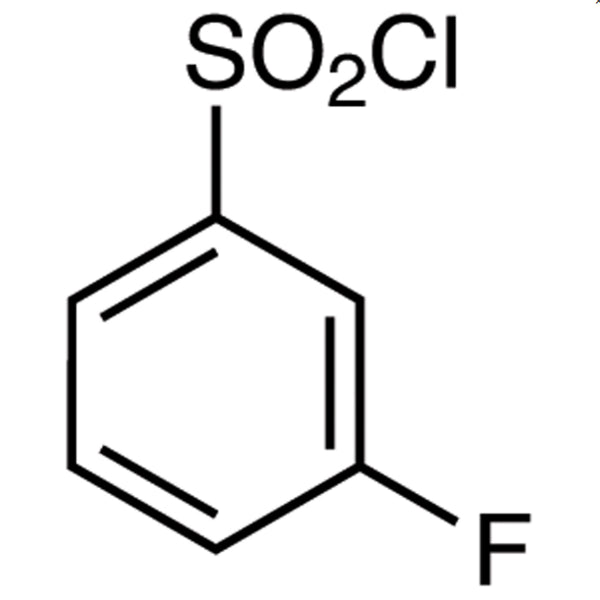
3-Fluorobenzenesulfonyl Chloride is a chemical compound widely used as a building block in the synthesis of complex organic compounds. It plays a crucial role in laboratory settings where researchers aim to create new molecules with specific structural and functional properties. This compound is particularly valuable for its ability to participate in various chemical reactions, making it a versatile reagent in organic chemistry. Its unique molecular structure, featuring a fluorobenzenesulfonyl group, allows it to interact with a range of substrates, enabling the formation of diverse chemical structures.
The compound's reactivity and stability make it a preferred choice for many synthetic processes. Its fluorinated group enhances its reactivity in substitution and replacement reactions, while its overall stability ensures it remains effective under controlled laboratory conditions. These properties make it a reliable component in both academic and industrial research. Its ability to act as an activating agent in catalytic reactions further expands its utility in chemical synthesis.
In Indonesian laboratories, 3-Fluorobenzenesulfonyl Chloride is commonly used in research related to organic chemistry, pharmaceutical development, and material science. It is a key reagent in the synthesis of new compounds with potential applications in medicine, industry, and technology. Its availability and effectiveness have made it a staple in scientific institutions across Indonesia, supporting ongoing research and innovation in various scientific fields.
TCI brochures (PDF)
- Fluorination Reagents, Fluorinated Building Blocks 2026-03-18 · p. 13
Related TCI products
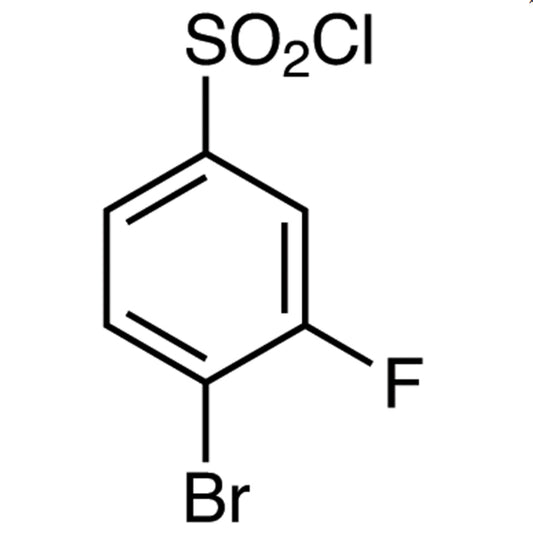
- TCI B3835 351003-51-5 4-Bromo-3-fluorobenzenesulfonyl Chloride
- TCI B3698 216159-03-4 4-Bromo-2-fluorobenzenesulfonyl Chloride
- TCI F0795 2905-21-7 2-Fluorobenzenesulfonyl Chloride
- TCI F0202 349-88-2 4-Fluorobenzenesulfonyl Chloride
- TCI C2553 351003-48-0 3-Chloro-2-fluorobenzenesulfonyl Chloride
- TCI C1772 91170-93-3 3-Chloro-4-fluorobenzenesulfonyl Chloride
- Organic synthesis: This compound is ideal for organic synthesis due to its reactivity and ability to form complex molecular structures.
- Pharmaceutical research: It is used in the development of new drugs, as it can participate in reactions that create bioactive compounds.
- Material science: Its unique chemical properties make it suitable for the synthesis of advanced materials with specific functional properties.
- Catalytic reactions: The compound acts as an activating agent, enhancing the efficiency of catalytic processes in laboratory settings.
- Academic research: It is frequently used in educational and research institutions for teaching and experimental purposes.
| Brand | TCI |
|---|---|
| CAS number | 701-27-9 |
| Molecular formula | — |
| Purity | — |
| Category | Chemistry > Building Blocks > Fluorinated Building Blocks |
| Pack sizes | Available in various quantities as per standard laboratory supply |
| Physical form | Solid |
| Storage | Store in a cool, dry place away from moisture and direct sunlight |
3-Fluorobenzenesulfonyl Chloride should be stored in a cool, dry environment to maintain its chemical integrity. It is recommended to keep it in a tightly sealed container to prevent exposure to moisture and air. Due to its reactivity, it should be handled with care, using appropriate personal protective equipment such as gloves and safety goggles. It is advisable to store it away from incompatible substances to ensure safety in the laboratory. Regular monitoring of storage conditions is essential to maintain the compound's effectiveness and prevent degradation. Proper labeling of containers is also important for safe handling and identification.
—
Produk Terkait
-
4-Bromo-3-fluorobenzenesulfonylChloride TCI B3835
Regular price From Rp 2.016.000,00Regular price -
4-Bromo-2-fluorobenzenesulfonylChloride TCI B3698
Regular price From Rp 823.200,00Regular price -
2-FluorobenzenesulfonylChloride TCI F0795
Regular price From Rp 1.485.750,00Regular price -
4-FluorobenzenesulfonylChloride TCI F0202
Regular price From Rp 505.050,00Regular price -
3-Chloro-2-fluorobenzenesulfonylChloride TCI C2553
Regular price Rp 717.150,00Regular price -
3-Chloro-4-fluorobenzenesulfonylChloride TCI C1772
Regular price From Rp 1.008.000,00Regular price -
2,4,5-TrifluorobenzenesulfonylChloride TCI T3128
Regular price From Rp 1.538.250,00Regular price -
1-[Bis(trifluoromethanesulfonyl)methyl]-2,3,4,5,6-pentafluorobenzene TCI B2291
Regular price From Rp 3.763.200,00Regular price



![405074-81-9 1-[Bis(trifluoromethanesulfonyl)methyl]-2,3,4,5,6-pentafluorobenzene - AMI Scientific](http://amiscientific.com/cdn/shop/files/TCI2510B2291_1d491266-8d39-418c-8071-bf7f7c3bd951.jpg?v=1767336434&width=533)