![N-[(9H-Fluoren-9-ylmethoxy)carbonyl]-L-cyclohexylglycine (CAS 161321-36-4) - TCI F1248 - AMI Scientific](http://amiscientific.com/cdn/shop/files/TCI2510F1248.jpg?v=1768360390&width=1946)
![N-[(9H-Fluoren-9-ylmethoxy)carbonyl]-L-cyclohexylglycine (CAS 161321-36-4) - TCI F1248 - AMI Scientific](http://amiscientific.com/cdn/shop/files/TCI2510F1248.jpg?v=1768360390&width=1445)
N-[(9H-Fluoren-9-ylmethoxy)carbonyl]-L-cyclohexylglycine is a chemical compound widely used in laboratory settings for its versatility in organic and biochemical applications. This compound is a derivative of an amino acid, making it a valuable reagent in peptide chemistry and molecular modification studies. Its complex structure enables specific chemical reactions, making it essential for researchers working on synthetic pathways and functional group manipulations. Due to its high reactivity and compatibility with various functional groups, it is a key component in the development of bioactive compounds and pharmaceutical research.
The compound's reactivity and structural stability make it a preferred choice for laboratory use. It exhibits strong interaction potential with other functional groups, which is crucial for controlled chemical transformations. Its ability to participate in a wide range of reactions allows for precise synthesis of complex molecules. Additionally, its consistent performance under laboratory conditions ensures reliable results in experiments involving peptide synthesis and molecular modifications. These properties make it a staple in modern biochemical research environments.
In Indonesian laboratories, this compound is commonly used in biochemistry, pharmacology, and organic chemistry research. Researchers in academic institutions and research centers rely on it for experiments requiring reactive and specific chemical compounds. Its availability in the local market supports ongoing scientific investigations, enabling scientists to conduct experiments that require high-quality reagents with predictable behavior. Its role in advancing research in these fields is well recognized among Indonesian scientists.
- Peptide Synthesis: This compound is ideal for solid-phase peptide synthesis due to its ability to form stable peptide bonds and its compatibility with standard coupling reagents.
- Molecular Modification: Its reactivity allows for the selective modification of biomolecules, making it useful in the development of new therapeutic agents.
- Biochemical Research: It is frequently used in studies involving enzyme inhibition and receptor interactions, providing insights into biological processes.
- Organic Chemistry Experiments: Its structural versatility supports a wide range of synthetic reactions, making it a valuable tool in organic synthesis protocols.
- Drug Discovery: The compound's ability to interact with functional groups aids in the design and synthesis of bioactive compounds for pharmaceutical applications.
| Brand | TCI |
|---|---|
| CAS number | 161321-36-4 |
| Molecular formula | — |
| Purity | — |
| Category | Chemistry > Chemical Biology > Peptide Chemistry |
| Pack sizes | Available in various quantities as per standard laboratory supply formats |
| Physical form | Solid |
| Storage | Store in a cool, dry place away from direct sunlight and moisture |
This compound should be stored in a cool, dry environment to maintain its chemical integrity and prevent degradation. It is recommended to use airtight containers to minimize exposure to moisture and air, which can affect its reactivity. Proper labeling of storage containers is essential for safe handling and identification. Laboratory personnel should wear appropriate personal protective equipment, such as gloves and safety goggles, when handling this material. Avoid direct contact with skin and eyes, and ensure adequate ventilation in the workspace. Regular monitoring of storage conditions ensures the compound remains suitable for use in research applications.
—
Produk Terkait
-
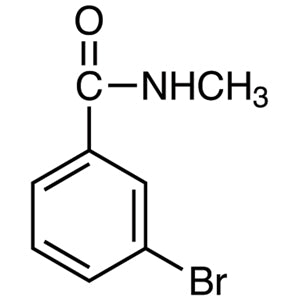
3-Bromo-N-methylbenzamide TCI B5644
Regular price From Rp 1.431.150,00Regular price -
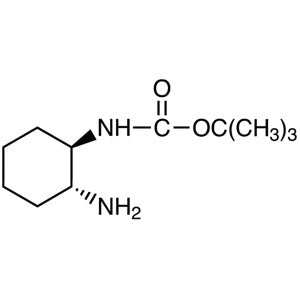
(1R,2R)-N1-(tert-Butoxycarbonyl)-1,2-cyclohexanediamine TCI B5647
Regular price Rp 3.367.350,00Regular price -
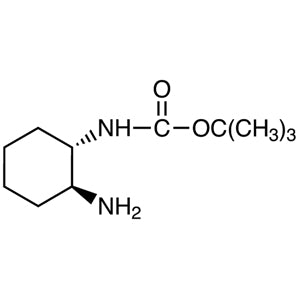
(1S,2S)-N1-(tert-Butoxycarbonyl)-1,2-cyclohexanediamine TCI B5648
Regular price From Rp 2.809.800,00Regular price -
N-Benzyl-2,2,2-trifluoroacetamide TCI B5705
Regular price From Rp 1.326.150,00Regular price -
SB-366791 TCI B5762
Regular price From Rp 5.485.200,00Regular price -
N-Carbobenzoxypropargylamine TCI B5958
Regular price Rp 4.849.950,00Regular price -
tert-Butyl(3-Oxo-3-phenylpropyl)carbamate TCI B5981
Regular price Rp 4.584.300,00Regular price -
SB297006 TCI B6053
Regular price From Rp 3.710.700,00Regular price