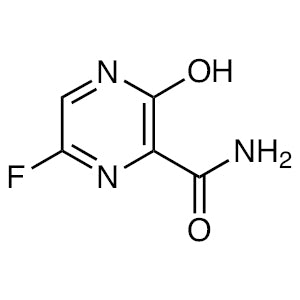
Favipiravir, with CAS number 259793-96-9, is a chemical compound widely used in scientific research, particularly in the fields of organic chemistry and pharmacology. As a building block, it plays a crucial role in the synthesis of heterocyclic compounds, which are essential in the development of pharmaceuticals and complex chemical materials. Its structural versatility allows researchers to create more intricate molecular structures through various chemical reactions, making it a valuable resource in laboratory settings.
The compound is known for its chemical stability and ability to participate in a range of reactions, including substitution, addition, and coupling reactions. These properties make it a preferred choice for researchers aiming to design molecules with specific functional groups or desired biological activities. Its compatibility with a wide array of reagents further enhances its utility, enabling flexibility in the synthesis of novel compounds.
In Indonesian laboratories, Favipiravir is commonly used in organic and pharmaceutical research. It serves as a key reagent for developing new compounds or studying specific chemical mechanisms. Its availability and reliability make it an essential tool for scientists working on drug discovery and chemical synthesis projects.
Advantages (TCI brochure)
- Potent and selective viral RNA polymerase inhibitor
TCI brochures (PDF)
- Antiviral Agents Targeting RNA-Dependent RNA Polymerase (RdRp) 2025-11-25 · p. 1
- Immunology Research Reagents 2026-06-03 · p. 9
- Nucleosides, Nucleotides, Nucleic Acids and Related Reagents 2026-03-23 · p. 10
- Antimicrobials and Antitumor Agents for Research and Experimental Use 2025-04-24 · p. 12
- Pharmaceutical Ingredients for Research and Experimental Use 2026-03-09 · p. 13
- Reagents for Biological Research 2025-03-11 · p. 61
- Organic synthesis applications benefit from Favipiravir’s role as a versatile building block for creating complex heterocyclic structures.
- Pharmaceutical research utilizes this compound to develop new drugs and understand the mechanisms of chemical reactions involved in drug design.
- Heterocyclic compound synthesis relies on Favipiravir’s stability and reactivity to form essential molecular frameworks.
- Chemical reaction mechanism studies use Favipiravir to explore how different reagents interact and influence reaction pathways.
- Drug development projects incorporate Favipiravir to test and optimize the properties of potential therapeutic agents.
From the TCI brochure
- Research on antiviral activity against RNA viruses
| Brand | TCI |
|---|---|
| CAS number | 259793-96-9 |
| Molecular formula | — |
| Purity | — |
| Category | Chemistry > Building Blocks > Heterocyclic Building Blocks |
| Pack sizes | Available in various quantities as per standard laboratory supply |
| Physical form | Solid |
| Storage | Store in a cool, dry place away from direct sunlight and moisture |
Favipiravir should be stored in a cool, dry environment, away from direct sunlight and moisture to maintain its chemical stability. It is recommended to use airtight containers to prevent exposure to air and humidity, which could affect its integrity. In a laboratory setting, it should be handled with appropriate personal protective equipment, such as gloves and safety goggles, to ensure safety during use. The compound is non-hazardous under normal conditions but should be kept in a secure location to prevent accidental contamination or exposure. Proper labeling of containers is essential to ensure safe handling and storage practices are maintained.
References cited in the TCI brochure
- Yousuke Furuta. T-705 (favipiravir) and related compounds: Novel broad-spectrum inhibitors of RNA viral infections Antiviral Research, 2009. doi:10.1016/j.antiviral.2009.02.198
- Sangita Venkataraman. RNA Dependent RNA Polymerases: Insights from Structure, Function and Evolution Viruses, 2018. doi:10.3390/v10020076
Product Categories
- Biochemicals and ReagentsAntibioticsAntibiotics (by Application)
- Biochemicals and ReagentsPharmaceutical Research Reagents (for Experimental Use)Antiviral Research Reagents (for Experimental Use)
- MicrobiologyAntibioticsAntibiotics (by Application)
- Pharmaceutical Development and Drug Discovery ResearchPharmaceutical Research Reagents (for Experimental Use)Antiviral Research Reagents (for Experimental Use)
- Pharmaceutical Development and Drug Discovery ResearchAntibioticsAntibiotics (by Application)
Produk Terkait
-
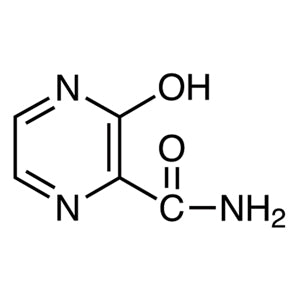
3-Hydroxypyrazine-2-carboxamide TCI H1485
Regular price From Rp 1.115.100,00Regular price -
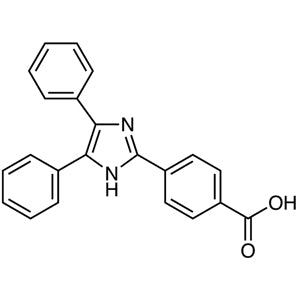
4-(4,5-Diphenyl-1H-imidazol-2-yl)benzoicAcid TCI D2816
Regular price From Rp 1.353.450,00Regular price -
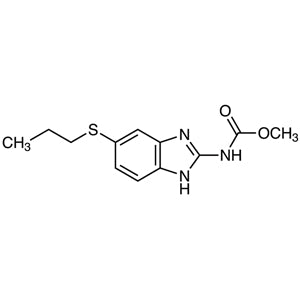
Albendazole TCI A1943
Regular price From Rp 928.200,00Regular price -
2-Acetamido-5-nitrothiazole TCI A0689
Regular price From Rp 1.060.500,00Regular price -
Diethylcarbamazine TCI D6042
Regular price From Rp 848.400,00Regular price -
DiethylcarbamazineCitrate TCI D1898
Regular price Rp 1.696.800,00Regular price -
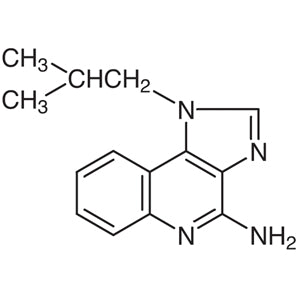
Imiquimod TCI I0747
Regular price Rp 2.094.750,00Regular price -
ZanamivirHydrate TCI Z0023
Regular price Rp 3.419.850,00Regular price