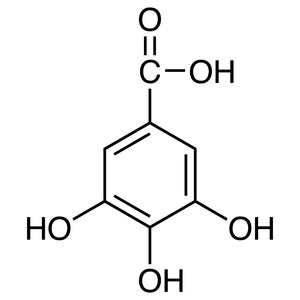
Gallic Acid (TCI G0011, CAS 149-91-7) is an organic compound with a phenolic structure, widely used in laboratory settings for its versatile chemical properties. As a fundamental building block in chemistry, it plays a crucial role in the synthesis of complex compounds and redox reactions. Its ability to form stable bonds with various substances makes it an essential component in many experimental processes. Gallic Acid is commonly found in natural products such as medicinal plants and food items, making it a valuable material for research and development in both academic and industrial laboratories.
Gallic Acid is known for its chemical stability under specific conditions, though it is highly reactive to environmental factors. It dissolves well in organic solvents like ethyl acetate and ethanol, but it is not soluble in water. These solubility characteristics make it ideal for reactions that require organic solvents. Additionally, its ability to bind with heavy metals enhances its utility in chemical analysis and the synthesis of complex compounds. This reactivity and solubility profile make it a preferred choice for a wide range of chemical applications.
In Indonesian laboratories, Gallic Acid is widely used for testing reactivity, enriching intermediate compounds, and supporting qualitative and quantitative analysis. Its role in natural product research and pharmaceutical development is particularly significant. Due to its chemical properties, it is a common material in both academic and industrial research settings, contributing to the advancement of various scientific fields.
TCI brochures (PDF)
- Antioxidants for Research and Experimental Use 2026-07-29 · p. 1
- Phytochemicals 2025-12-17 · p. 14
- Reagents for Biological Research 2025-03-11 · p. 41
- Redox Reaction Studies - Gallic Acid is ideal for redox experiments due to its ability to donate or accept electrons, making it a valuable reagent in oxidation-reduction processes.
- Natural Product Synthesis - Its phenolic structure makes it a key component in the synthesis of bioactive compounds found in medicinal plants and food products.
- Heavy Metal Analysis - Gallic Acid's ability to chelate heavy metals makes it useful in analytical chemistry for detecting and quantifying metal ions in samples.
- Intermediate Compound Enrichment - It is often used to enhance the formation of intermediate compounds in complex chemical syntheses.
- Qualitative and Quantitative Analysis - Its reactivity and solubility properties make it suitable for both types of chemical analysis in laboratory settings.
| Brand | TCI |
|---|---|
| CAS number | 149-91-7 |
| Molecular formula | — |
| Purity | — |
| Category | Chemistry > Building Blocks > Non-Heterocyclic Building Blocks |
| Pack sizes | Available in standard laboratory quantities |
| Physical form | Solid powder |
| Storage | Store in a cool, dry place away from light and moisture |
Gallic Acid should be stored in a cool, dry place, away from direct light and moisture to maintain its chemical stability. It is recommended to use airtight containers made of glass or polyethylene to prevent contamination and degradation. Due to its reactivity, it should be handled in a well-ventilated area, and appropriate personal protective equipment such as gloves and safety goggles should be worn. Avoid contact with incompatible substances such as strong oxidizers. Proper labeling and storage conditions are essential to ensure safety and maintain the integrity of the compound during handling and use in laboratory settings.
—
Product Categories
Produk Terkait
-
trans-FerulicAcid TCI H0267
Regular price From Rp 1.881.600,00Regular price -
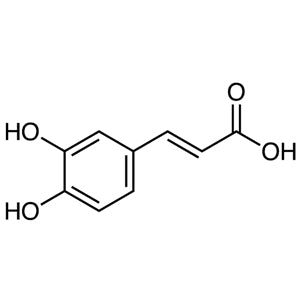
CaffeicAcid TCI C0002
Regular price From Rp 903.000,00Regular price -
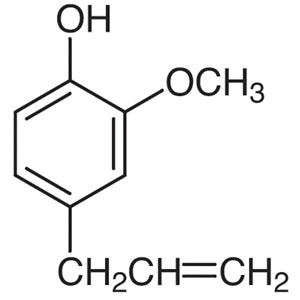
Eugenol TCI A0232
Regular price From Rp 505.050,00Regular price -
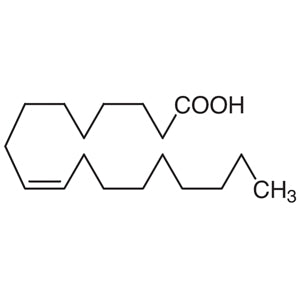
OleicAcid TCI O0180
Regular price From Rp 1.618.050,00Regular price -
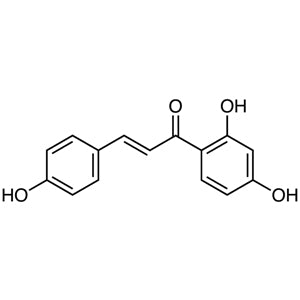
Isoliquiritigenin TCI I0822
Regular price From Rp 1.035.300,00Regular price -
Tetrahydrocurcumin TCI T3587
Regular price From Rp 2.386.650,00Regular price -
3',4',5,7-Tetrahydroxyflavone TCI T2682
Regular price From Rp 1.565.550,00Regular price -
Butein TCI B3803
Regular price From Rp 3.048.150,00Regular price