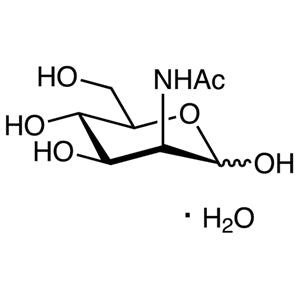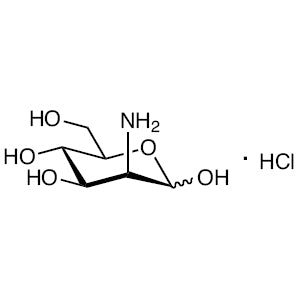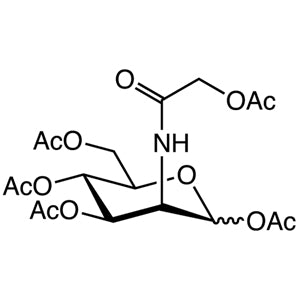
N-Glycolyl-D-mannosamine Pentaacetate is a chemical compound widely used in laboratory research within the fields of chemical biology and glycoscience. This compound is a penta-acetylated derivative of N-glycolyl-D-mannosamine, making it a valuable reagent for the synthesis of glycosidic compounds. Its structural complexity and functional versatility make it a key component in various biochemical studies. In the laboratory, it serves as a building block for the development of complex carbohydrates and glycoconjugates, which are essential for understanding molecular interactions and metabolic pathways.
The compound is known for its chemical stability and solubility in organic solvents, which are critical factors in its application. These properties allow it to be easily dissolved and incorporated into a wide range of chemical reactions. Additionally, its specific molecular structure enables precise control during synthetic processes, ensuring consistency and accuracy in research outcomes. This makes it an ideal choice for laboratories requiring high-quality, reliable reagents in advanced chemical and biological studies.
In Indonesian laboratories, N-Glycolyl-D-mannosamine Pentaacetate is commonly used in applied research projects such as vaccine development, neurodegenerative disease studies, and biomedical research. Its availability and reliability make it a preferred material for scientists working on complex molecular structures and metabolic studies. The compound’s role in these areas highlights its importance in both fundamental and applied scientific investigations.
TCI brochures (PDF)
Related TCI products
- TCI A3380 7784-54-5 alpha-D-Glucosamine Pentaacetate
- TCI T1733 68733-20-0 1,3,4,6-Tetra-O-acetyl-2-azido-2-deoxy-alpha-D-mannopyranose
- TCI A2160 3615-17-6 N-Acetyl-D-mannosamine Monohydrate
- TCI M3237 5505-63-5 D-Mannosamine Hydrochloride
- TCI A0522 497-76-7 Arbutin
- TCI V0011 63223-57-4 N-Valeryl-D-glucosamine
- Used in the synthesis of glycosidic compounds due to its penta-acetylated structure, enabling precise molecular construction for biochemical studies.
- Applied in metabolic pathway research as it helps in understanding carbohydrate metabolism and molecular interactions in biological systems.
- Utilized in vaccine development for the creation of glycoconjugate vaccines, which are essential for immunological studies and therapeutic applications.
- Employed in neurodegenerative disease research to study the role of glycosylation in disease mechanisms and potential therapeutic targets.
- Integrated into biomedical research for the development of novel drugs and the investigation of complex biological processes involving carbohydrates.
| Brand | TCI |
|---|---|
| CAS number | 258824-38-3 |
| Molecular formula | — |
| Purity | — |
| Category | Chemistry > Chemical Biology > Glycoscience |
| Pack sizes | Available in various quantities as per supplier specifications |
| Physical form | Solid powder |
| Storage | Store in a cool, dry place away from light and moisture |
Data from the TCI brochure
| Purity | >93.0%(HPLC) |
|---|---|
| Formula | C18H25NO12 = 447.39 |
Source: TCI brochure reagent_for_glyco_chemistry_&_biology_5th_ed ()
N-Glycolyl-D-mannosamine Pentaacetate should be stored in a cool, dry environment, away from direct light and moisture to maintain its chemical stability. It is recommended to use airtight containers to prevent exposure to humidity and contaminants. When handling the compound, laboratory personnel should wear appropriate personal protective equipment, including gloves and safety goggles, to ensure safety. The compound is non-hazardous under normal conditions but should be handled with care to avoid inhalation or contact with skin. It is suitable for use in standard laboratory settings with proper ventilation and storage conditions. Proper storage and handling protocols help preserve the compound’s integrity and ensure its effectiveness in research applications.
—
Product Categories
Produk Terkait
-
alpha-D-GlucosaminePentaacetate TCI A3380
Regular price From Rp 1.115.100,00Regular price -
1,3,4,6-Tetra-O-acetyl-2-azido-2-deoxy-alpha-D-mannopyranose TCI T1733
Regular price Rp 5.460.000,00Regular price -
N-Acetyl-D-mannosamineMonohydrate TCI A2160
Regular price From Rp 3.817.800,00Regular price -
D-MannosamineHydrochloride TCI M3237
Regular price From Rp 2.094.750,00Regular price -
Arbutin TCI A0522
Regular price From Rp 452.550,00Regular price -
N-Valeryl-D-glucosamine TCI V0011
Regular price Rp 1.565.550,00Regular price -
1,2,3,4-Tetra-O-acetyl-beta-D-xylopyranose TCI T4066
Regular price From Rp 1.644.300,00Regular price -
2-Acetamido-1,3,4,6-tetra-O-acetyl-2-deoxy-beta-D-galactopyranose TCI T4028
Regular price Rp 2.411.850,00Regular price