Ethyl 4-Hydroxybenzoate, also known as ethylparaben, is the ethyl ester of 4-hydroxybenzoic acid and occupies an important position as a short-chain member of the paraben family. In the laboratory it serves as a reference standard in preservative analysis, as a building block for organic synthesis, and as a model compound in the teaching of analytical chemistry. Its role is especially prominent in quality testing of cosmetic, pharmaceutical, and food products, where the identification and assay of preservatives must be carried out using a reference material whose identity is assured and consistent from lot to lot.
The characteristic that makes this compound a preferred choice is its relatively high polarity compared with its longer-chain homologues. The short ethyl chain maintains adequate solubility in aqueous-alcoholic solvents, so the preparation of standard solutions is quick and straightforward without requiring any special solvent system. The phenolic hydroxyl group in the para position gives a distinctive ultraviolet absorption and also acts as a reactive site for selective alkylation or acylation. In reversed-phase chromatography, ethylparaben elutes earlier than butyl-, hexyl-, or heptylparaben, which makes it crucial as an early reference peak.
In Indonesian laboratories, this material is routinely used by cosmetic and pharmaceutical quality control units, food testing laboratories, and university teaching and research laboratories. It is typically weighed out to prepare calibration series for preservative assays, used to confirm peak identity in mixed paraben systems, and employed as a starting material in small-scale organic synthesis work. Its ease of dissolution makes it practical for daily routine analysis where standard solutions must be prepared repeatedly.
Related TCI products
- Reference standard for preservative analysis: supplies an assured, lot-consistent identity so that identification and assay of parabens in cosmetic, pharmaceutical, and food samples remain reliable and reproducible.
- Reversed-phase chromatography system suitability: elutes earlier than butyl, hexyl, and heptyl parabens, providing a crucial early reference peak for confirming retention order in mixed paraben systems.
- Building block for organic synthesis: the para-positioned phenolic hydroxyl group acts as a reactive site for selective alkylation or acylation in the construction of more elaborate molecules.
- Model compound for analytical chemistry teaching: its distinctive ultraviolet absorption makes it well suited for demonstrating spectrophotometric and chromatographic principles to students in instructional laboratories.
- Preparation of calibration standard solutions: the short ethyl chain keeps solubility adequate in aqueous-alcoholic solvents, so standard series are prepared quickly without the need for any special solvent.
| Brand | TCI |
|---|---|
| CAS number | 120-47-8 |
| Molecular formula | — |
| Purity | — |
| Category | Chemistry > Building Blocks > Non-Heterocyclic Building Blocks |
| Pack sizes | available in the standard catalogue pack sizes offered for this item; please confirm the currently available options when ordering |
| Physical form | — |
| Storage | store according to the conditions stated on the product label and in the accompanying documentation |
- Product code: H0211
Store this product in a tightly closed original container, kept dry and protected from direct sunlight, and follow the storage conditions indicated on the product label and in the accompanying safety data sheet. Suitable containers include the original manufacturer packaging or clean, well-sealed glass bottles that are clearly labelled with the compound name, CAS number, and the date the container was opened. Handle the material in a well-ventilated area or in a fume hood, and wear standard laboratory personal protective equipment including safety glasses, gloves, and a laboratory coat. Avoid the generation of dust during weighing, close the container promptly after use to prevent moisture uptake, and keep separate from incompatible materials. Consult the safety data sheet before first use and before disposal of any residues.
—
Produk Terkait
-
Methyl4-Amino-3-hydroxybenzoate TCI A3639
Regular price From Rp 2.041.200,00Regular price -
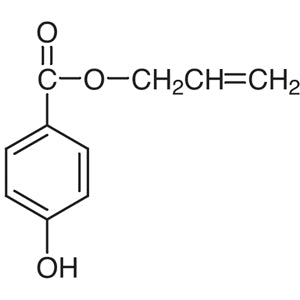
Allyl4-Hydroxybenzoate TCI A1846
Regular price Rp 3.843.000,00Regular price -
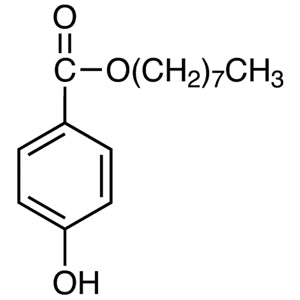
n-Octyl4-Hydroxybenzoate TCI O0443
Regular price Rp 1.724.100,00Regular price -
Methyl3-Chloro-4-hydroxybenzoate TCI M3513
Regular price From Rp 1.458.450,00Regular price -
Methyl3-Amino-4-hydroxybenzoate TCI M3498
Regular price From Rp 1.378.650,00Regular price -
Methyl2-Amino-5-hydroxybenzoate TCI M2796
Regular price From Rp 717.150,00Regular price -
Methyl4-Bromo-3-hydroxybenzoate TCI M2246
Regular price From Rp 1.670.550,00Regular price -
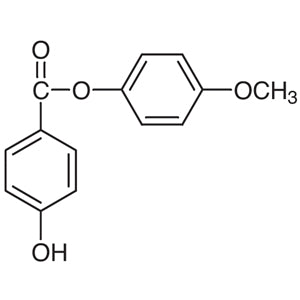
4-Methoxyphenyl4-Hydroxybenzoate TCI H0825
Regular price From Rp 4.531.800,00Regular price