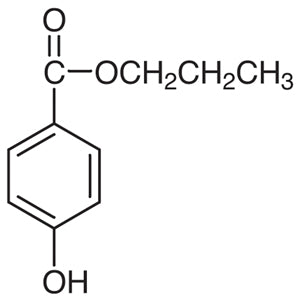
Propyl 4-Hydroxybenzoate, more widely known as propylparaben, is the propyl ester of 4-hydroxybenzoic acid and is among the most frequently encountered members of the paraben family in laboratory work. The compound presents as a white solid and serves as one of the principal reference materials when researchers study the behaviour of the paraben class, whether from the standpoint of synthesis, analysis, or stability. Within a chemical catalogue framework it is classified as a non-heterocyclic building block, because its structure is simple yet versatile, carrying an aromatic ring with a free hydroxyl group on one side and an aliphatic ester group on the other.
The reason this compound is so often selected lies in the combination of properties that favour laboratory work. The propyl chain makes it more soluble in organic solvents than shorter-chain members of the paraben family, so the preparation of stock solutions for analytical purposes becomes considerably more flexible. Its aromatic framework provides characteristic ultraviolet absorption, which means the compound is detected well by the UV detectors used in high performance liquid chromatography. Its solid form is stable at room temperature when stored appropriately, which simplifies both routine handling and longer-term retention on the shelf.
In Indonesian laboratories, this material is typically held as a working reference for analysts examining the paraben group, and it appears in academic research settings, quality control benches, and method development work. Because it is catalogued as a non-heterocyclic building block, it is also drawn upon by synthetic chemists who need a straightforward aromatic ester scaffold. Its stability as a room-temperature solid suits laboratories where storage space is shared and sample throughput varies from week to week.
Related TCI products
- Reference material for paraben class studies — researchers rely on this compound as a principal point of comparison when investigating the synthesis, analytical behaviour, and stability of the wider paraben family.
- High performance liquid chromatography with UV detection — the characteristic ultraviolet absorption of its aromatic framework allows the compound to be detected reliably on the UV detectors fitted to HPLC systems.
- Stock solution preparation for analytical work — the propyl chain confers greater solubility in organic solvents than shorter-chain parabens, giving analysts more flexibility when making up working solutions.
- Non-heterocyclic building block in synthetic chemistry — the simple yet versatile structure offers an aromatic ring bearing a free hydroxyl group alongside an aliphatic ester group on the opposite side.
- Stability and storage behaviour studies — because the solid form remains stable at room temperature under appropriate storage, it suits investigations into how paraben esters hold up over time.
| Brand | TCI |
|---|---|
| CAS number | 94-13-3 |
| Molecular formula | — |
| Purity | — |
| Category | Chemistry > Building Blocks > Non-Heterocyclic Building Blocks |
| Pack sizes | — |
| Physical form | white solid |
| Storage | stable at room temperature when stored under appropriate conditions |
- Catalogue number: H0219
Store the material at room temperature under the appropriate conditions described for the product, keeping the container tightly closed and protected from moisture so that the solid form remains stable throughout its shelf life. Use clean, dry, chemically compatible containers with well-sealing closures, and return any unused portion promptly rather than leaving the container open on the bench. Handle the solid with standard laboratory precautions: wear appropriate personal protective equipment, weigh and transfer the material in a well-ventilated area or fume hood to limit dust exposure, avoid contact with skin and eyes, and use dedicated clean spatulas to prevent cross-contamination of the reference material. Label all prepared stock solutions clearly with their contents and preparation date, and consult the manufacturer's safety data sheet before first use.
—
Produk Terkait
-
Methyl4-Amino-3-hydroxybenzoate TCI A3639
Regular price From Rp 2.041.200,00Regular price -
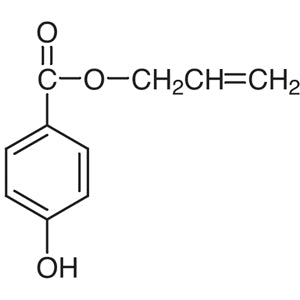
Allyl4-Hydroxybenzoate TCI A1846
Regular price Rp 3.843.000,00Regular price -
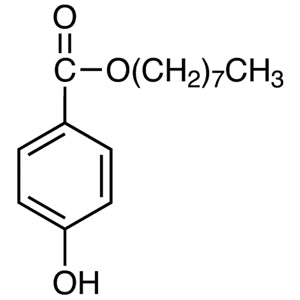
n-Octyl4-Hydroxybenzoate TCI O0443
Regular price Rp 1.724.100,00Regular price -
Methyl3-Chloro-4-hydroxybenzoate TCI M3513
Regular price From Rp 1.458.450,00Regular price -
Methyl3-Amino-4-hydroxybenzoate TCI M3498
Regular price From Rp 1.378.650,00Regular price -
Methyl2-Amino-5-hydroxybenzoate TCI M2796
Regular price From Rp 717.150,00Regular price -
Methyl4-Bromo-3-hydroxybenzoate TCI M2246
Regular price From Rp 1.670.550,00Regular price -
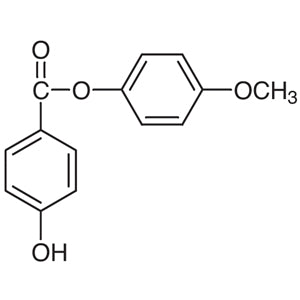
4-Methoxyphenyl4-Hydroxybenzoate TCI H0825
Regular price From Rp 4.531.800,00Regular price