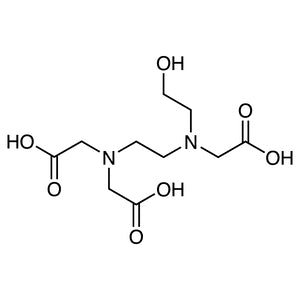
N-(2-Hydroxyethyl)ethylenediamine-N,N',N'-triacetic Acid (TEA) is a versatile chemical compound widely used in laboratory settings for its chelating properties. It plays a crucial role in synthetic reactions and complexation processes, particularly in the binding of metal ions. This compound is essential for maintaining control over metal ion concentrations in various chemical applications. Its ability to form stable complexes with multiple metal ions makes it a valuable tool in analytical and synthetic chemistry. TEA is commonly used in experiments where the presence of specific metal ions needs to be either removed or controlled.
One of the key properties that make TEA a preferred choice is its amphoteric nature, allowing it to function effectively in both acidic and basic environments. This versatility enhances its applicability across a wide range of laboratory procedures. Additionally, TEA exhibits high stability in forming complexes with ions such as iron, copper, and magnesium, ensuring consistent performance in different experimental conditions. Its chemical structure provides the necessary flexibility to adapt to various synthetic and analytical needs.
In Indonesian laboratories, TEA is frequently utilized in chemical research, qualitative analysis, and synthesis processes. It is a staple in academic and industrial research settings due to its reliability and effectiveness. Its safe handling profile and broad applicability make it an essential reagent for chemists working on diverse projects. The compound's role in metal ion complexation continues to be a cornerstone in both teaching and research laboratories across Indonesia.
TCI brochures (PDF)
- Titration Reagents and TLC Stains 2026-05-07 · p. 8
Related TCI products
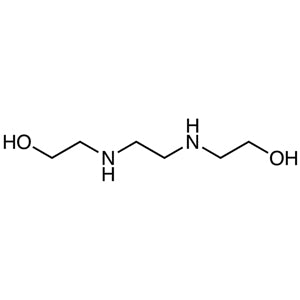
- TCI B3807 4439-20-7 N,N'-Bis(2-hydroxyethyl)ethylenediamine
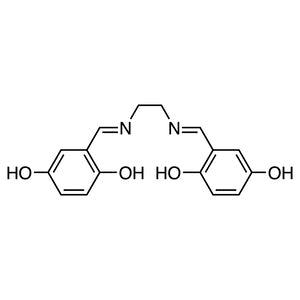
- TCI B3015 124061-43-4 N,N'-Bis(5-hydroxysalicylidene)ethylenediamine
- TCI B2776 (1S,2S)-1,2-Bis(3,5-dimethylphenyl)-1,2-ethylenediamine Phosphate
- TCI B2775 (1R,2R)-1,2-Bis(3,5-dimethylphenyl)-1,2-ethylenediamine Phosphate
- TCI B2318 1820706-16-8 (+/-)-1,2-Bis(2,4,6-trimethylphenyl)ethylenediamine Dihydrochloride
- TCI B2317 186769-18-6 (1S,2S)-1,2-Bis(2,4,6-trimethylphenyl)ethylenediamine
- Metal ion complexation in analytical chemistry for accurate detection and quantification of trace metals.
- Chelation in synthetic reactions to control metal ion interference and enhance reaction specificity.
- Use in qualitative analysis to precipitate or isolate specific metal ions from solution.
- Application in purification processes to remove unwanted metal contaminants from chemical compounds.
- Support in environmental analysis for the study of metal ion behavior in natural and industrial samples.
| Brand | TCI |
|---|---|
| CAS number | 150-39-0 |
| Molecular formula | — |
| Purity | — |
| Category | Chemistry > Synthetic Reagents > Chelation/Complexation Compounds |
| Pack sizes | Available in various quantities as per standard reagent packaging |
| Physical form | Solid powder |
| Storage | Store in a cool, dry place away from direct sunlight and moisture |
TEA should be stored in a cool, dry environment to maintain its chemical integrity and prevent degradation. It is recommended to keep the compound in airtight containers to minimize exposure to moisture and air. Due to its amphoteric nature, it is important to handle TEA with appropriate personal protective equipment, such as gloves and safety goggles. Avoid contact with skin and eyes, and ensure proper ventilation when working with the compound. Storage should be away from incompatible substances to prevent any potential chemical reactions. Regular inspection of storage conditions ensures the material remains safe and effective for laboratory use.
—
Produk Terkait
-
N,N'-Bis(2-hydroxyethyl)ethylenediamine TCI B3807
Regular price Rp 3.498.600,00Regular price -
N,N'-Bis(5-hydroxysalicylidene)ethylenediamine TCI B3015
Regular price From Rp 4.028.850,00Regular price -
(1S,2S)-1,2-Bis(3,5-dimethylphenyl)-1,2-ethylenediaminePhosphate TCI B2776
Regular price Rp 3.232.950,00Regular price -
(1R,2R)-1,2-Bis(3,5-dimethylphenyl)-1,2-ethylenediaminePhosphate TCI B2775
Regular price Rp 3.127.950,00Regular price -
(+/-)-1,2-Bis(2,4,6-trimethylphenyl)ethylenediamineDihydrochloride TCI B2318
Regular price From Rp 5.352.900,00Regular price -
(1S,2S)-1,2-Bis(2,4,6-trimethylphenyl)ethylenediamine TCI B2317
Regular price From Rp 2.147.250,00Regular price -
(1R,2R)-1,2-Bis(2,4,6-trimethylphenyl)ethylenediamine TCI B2316
Regular price From Rp 3.312.750,00Regular price -
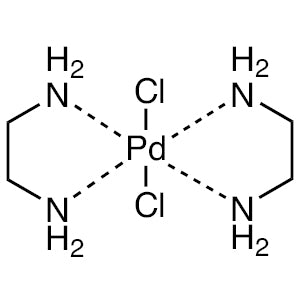
Bis(ethylenediamine)palladium(II)Dichloride TCI B2244
Regular price Rp 5.778.150,00Regular price